
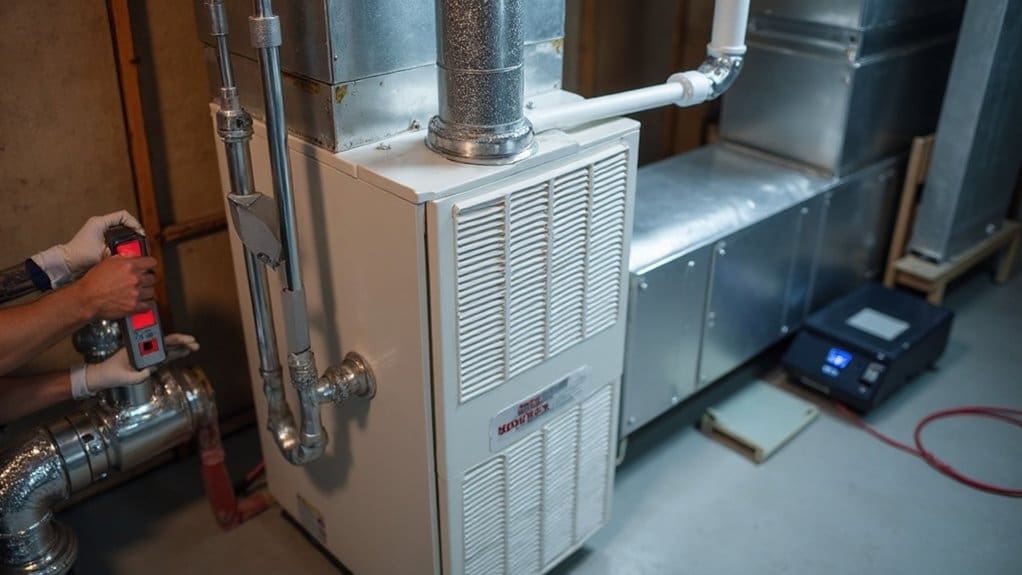
Your high-efficiency furnace requires specialized maintenance beyond standard heating systems. Replace air filters monthly with MERV 13 or higher ratings, clean flame sensors with fine sandpaper, and monitor condensate drains regularly. Schedule professional seasonal tune-ups for heat exchanger inspections and combustion testing that you can’t safely perform yourself. These advanced systems with sealed combustion chambers and variable-speed components demand precise care to maintain their 90%+ AFUE ratings. Discover thorough techniques below.
Key Takeaways
- Replace air filters with MERV 13 or higher monthly to maintain optimal airflow and energy efficiency in high-efficiency systems.
- Clean flame sensors with fine grit sandpaper regularly to ensure reliable ignition and prevent combustion issues.
- Schedule professional seasonal tune-ups for carbon monoxide testing, heat exchanger inspection, and specialized safety verification procedures.
- Monitor condensate drain systems to prevent water damage from the moisture produced by high-efficiency condensing furnaces.
- Maintain sealed combustion systems by keeping outside air intake vents clear of debris and obstructions.
Understanding High-Efficiency Furnace Technology and Components
When upgrading to a high-efficiency furnace, you’re investing in sophisticated technology that can achieve Annual Fuel Utilization Efficiency (AFUE) ratings up to 98% through advanced heat exchangers and modulating burners. These high-efficiency furnaces incorporate sealed combustion systems that draw outside air for combustion, eliminating indoor air quality concerns while maximizing energy performance.
The variable-speed blower motor automatically adjusts airflow based on heating demands, optimizing comfort and efficiency. However, this sophisticated technology requires specialized maintenance protocols. You’ll need to monitor the condensate drain system closely, as these units produce moisture that must drain properly to guarantee water damage is prevented. Regular flame sensor cleaning and air pressure verification are critical service procedures that differ from traditional furnace maintenance. Professional tune-ups verify these complex systems maintain peak performance throughout their 15-20 year lifespan.
Essential Monthly Maintenance Tasks for Peak Performance
High-efficiency furnaces demand consistent monthly maintenance to safeguard their advanced engineering and prevent costly breakdowns. Your heating system requires specific attention to critical components that directly impact energy efficiency and safe operation.
Essential monthly HVAC maintenance tasks include:
- Air filter replacement – Replace monthly to maintain optimum airflow and prevent system strain
- Blower compartment cleaning – Vacuum dust and debris to guarantee unrestricted airflow through your furnace
- Flame sensor maintenance – Clean with fine grit sandpaper to assure reliable ignition sequences
Additionally, inspect your blower motor’s bearings for wear indicators and lubricate as manufacturer specifications require. Monitor burner flames during operation—they should burn blue and stable. Yellow or flickering flames indicate combustion issues requiring immediate professional attention. These proactive maintenance steps protect your investment while maximizing energy efficiency.
Seasonal Tune-Up Requirements for Modern HVAC Systems
While monthly maintenance keeps your high-efficiency furnace running smoothly, holistic seasonal tune-ups address deeper system requirements that guarantee peak performance year-round. Your heating and air conditioning systems rely on extensive HVAC maintenance to maintain ideal furnaces efficiency.
| Season | Primary Focus | Key Components |
|---|---|---|
| Spring | System cleaning and airflow optimization | Blower compartment, ignition system, heat exchanger |
| Fall | Safety verification and operational readiness | Carbon monoxide testing, venting inspection, system functionality |
Regular HVAC preventative maintenance prevents dust and debris accumulation while ensuring components like capacitors function correctly. Professional technicians maintain HVAC heating systems through specialized procedures that monthly tasks can’t address. Neglecting seasonal maintenance compromises energy efficiency, increases utility costs, and creates safety hazards. These professional tune-ups extend system lifespan and guarantee reliable operation throughout heating seasons.
Advanced Filter Selection and Air Quality Management
Because your high-efficiency furnace depends on ideal airflow to maintain peak performance, selecting the correct air filter becomes critical for both system longevity and indoor air quality. Air filters with a MERV rating of 13 or higher are essential for maintaining system performance while capturing harmful airborne particles.
Consider these advanced filtration strategies:
- MERV 16 filters capture up to 95% of airborne particles but may require system adjustments to prevent excessive pressure drop
- Professional consultation guarantees ideal filter compatibility with your high-efficiency furnace specifications
- Whole-home air purifiers and enhanced ventilation systems reduce filter burden while improving indoor air quality
Regular filter changes every 1-3 months prevent airflow restrictions that compromise energy savings. An HVAC professional can assess your system’s capabilities and recommend the optimal balance between filtration efficiency and airflow optimization.
When to Call Professionals for Specialized Service Needs
Professional HVAC technicians possess specialized training, certifications, and equipment that homeowners simply cannot replicate for advanced furnace maintenance tasks. When refrigerant handling, electrical component servicing, or heat exchanger inspections arise, schedule a service call immediately. These complex procedures present serious safety hazards without proper expertise.
Your trusted partner—a reputable HVAC contractor—ensures proper system maintenance while preventing warranty voidance. Professional inspection identifies potential issues early, preventing costly system damage. The right professional possesses specialized tools and qualifications necessary for safe repairs and maintenance.
Attempting DIY approaches on complex systems often exacerbates problems rather than solving them. Professional technicians keep your system operating efficiently through thorough assessments and appropriate solutions. Their expertise guarantees work completion meets safety standards and manufacturer specifications, protecting both your investment and household safety.
Conclusion
Your high-efficiency furnace‘s ideal performance hinges on meticulous maintenance—but there’s something most homeowners don’t realize. While you’ve mastered monthly tasks and seasonal tune-ups, the real threat to your system’s longevity lurks in overlooked details. You can’t afford to ignore subtle warning signs or delay professional interventions. The difference between a fifteen-year system lifespan and premature failure? It’s not just about following protocols—it’s about recognizing when your expertise reaches its limits.