
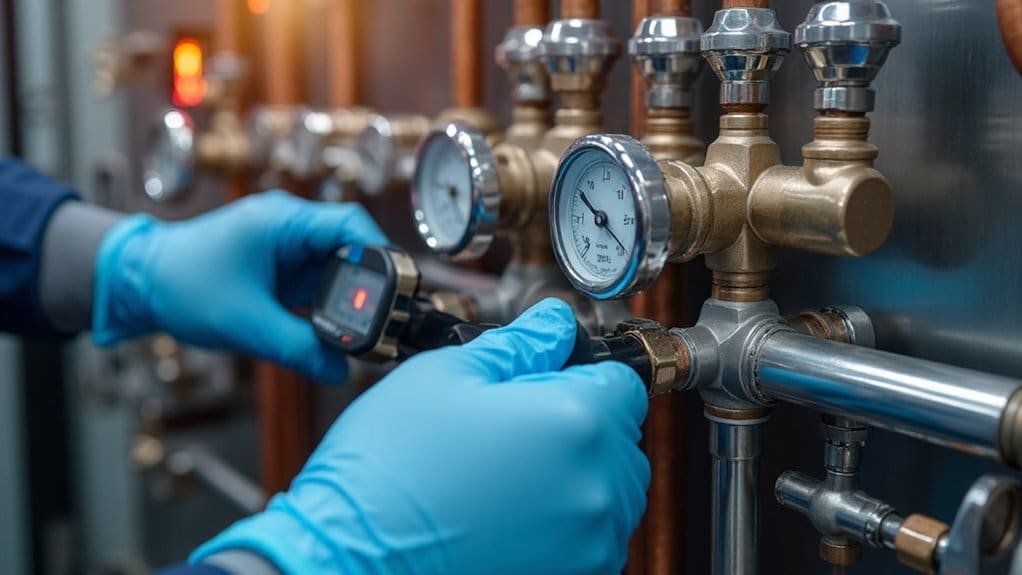
High-efficiency furnaces with AFUE ratings above 90% require specialized diagnostic equipment and advanced technical expertise that standard HVAC technicians typically don’t possess. You’ll need technicians certified in NATE condensing systems who understand secondary heat exchangers, modulating gas valves, and variable-speed blower motors. Standard repairs can void warranties and create safety hazards when performed incorrectly. Proper servicing demands combustion analysis tools, static pressure testing equipment, and manufacturer-specific training protocols that separate qualified specialists from general contractors.
Key Takeaways
- High-efficiency furnaces require technicians with NATE certification and specialized training beyond standard HVAC credentials.
- Dual heat exchanger systems and variable-speed components demand advanced diagnostic skills not covered in basic certification.
- Common issues like electronic ignition failures and control board malfunctions require manufacturer-specific repair procedures and tools.
- Improper repairs by unqualified technicians can void warranties, reduce efficiency, and create serious safety hazards.
- Verify contractors have experience with condensing units, access to OEM parts, and follow manufacturer service protocols.
Understanding High-Efficiency Furnace Components and Technology
What sets high-efficiency furnaces apart from conventional models? You’ll find dual heat exchanger systems that achieve up to 98% efficiency ratings. The primary heat exchanger transfers combustion heat to airflow, while the secondary heat exchanger condenses water vapor for additional heat recovery. Your sealed combustion system draws outside air, preventing indoor air quality contamination and backdrafting hazards.
Advanced components include variable-speed blower motors and modulating gas valve technology that adjusts output based on demand. These systems require specialized diagnostics for condensate drainage issues, heat exchanger inspection protocols, and combustion system analysis. Safety concerns multiply with high-efficiency furnaces due to complex venting requirements and moisture management systems. Following manufacturer’s recommendations becomes critical when servicing these sophisticated units, as improper repairs can compromise both efficiency and occupant safety.
Why Standard HVAC Technicians May Not Be Qualified for High-Efficiency Repairs
How can you determine if your HVAC technician possesses the specialized expertise required for high-efficiency furnace repairs? Standard HVAC certification doesn’t cover advanced components like secondary heat exchangers, condensate drainage systems, or variable-speed blowers found in high-Fuel Utilization Efficiency units. Your technician must understand modulating gas valves, advanced controls, and proper blower compartment servicing procedures.
Unqualified technicians can’t properly diagnose issues with Flame Sensor calibration or detect a cracked heat exchanger in condensing units. They lack training on manufacturer-recommended service procedures specific to high-efficiency models. Improper repairs void warranties, reduce efficiency, and create safety hazards.
You need technicians with specialized certification in high-efficiency systems. They understand complex electronics, condensate management, and variable-speed technologies that standard HVAC training doesn’t address.
Essential Certifications and Training for High-Efficiency Furnace Specialists
The most critical certification for high-efficiency furnace specialists is NATE (North American Technician Excellence) certification, which validates their expertise in servicing complex condensing systems with secondary heat exchangers and advanced combustion technology. This certification guarantees technicians possess specialized training in diagnostic procedures and repair methods specific to high-efficiency units.
Beyond NATE certification, technicians must master handling critical components like induced draft fans, modulating gas valves, and advanced controls. These systems require precise calibration and understanding of their interaction with condensing technology. Indispensable skills include combustion analysis proficiency, static pressure testing capabilities, and condensate drainage system troubleshooting.
Continuous education remains crucial as manufacturers constantly update high-efficiency furnace models and features. Technicians must stay current with evolving diagnostic procedures and repair methods to effectively service these sophisticated heating systems.
Common High-Efficiency Furnace Issues That Require Professional Expertise
Several critical malfunctions in high-efficiency furnaces demand specialized diagnostic expertise that goes beyond standard HVAC troubleshooting. You’ll encounter complex issues involving secondary heat exchangers, electronic ignition systems, and variable-speed blower motor diagnostics that require advanced testing equipment.
| Component | Professional-Required Issues |
|---|---|
| Ignitor/Flame Sensor | Electronic ignition failures, flame sensor contamination affecting control board operations |
| Combustion Chamber Door | Seal integrity compromising gas valve performance when burners are dirty |
| Venting Systems | Flue pipe blockages, improper sizing requiring specialized inspection tools |
Unlike older pilot light systems, these units need precise gas-air mixture adjustments and specialized troubleshooting of control board malfunctions. You can’t safely diagnose blower motor variable-speed issues or venting systems problems without proper training and equipment.
How to Find and Verify Qualified High-Efficiency Furnace Repair Services
Finding qualified repair services for high-efficiency furnaces requires evaluating contractors’ specialized certifications and technical capabilities beyond standard HVAC credentials. You’ll need an HVAC contractor with manufacturer-specific certifications for high-efficiency furnace systems, as these units demand specialized diagnostic equipment and repair techniques that differ from conventional gas furnace servicing.
Verify your HVAC technician’s licenses, insurance, and experience with high-efficiency models. Ask about their access to OEM parts and ability to test critical components like modulating heat exchangers and variable-speed blowers. Inquire whether they follow manufacturer’s recommendations for annual service protocols and can perform thorough furnace servicing beyond basic air conditioner maintenance.
Select contractors offering satisfaction guarantees on their annual furnace repair work, ensuring they’re accountable for proper high-efficiency system restoration and long-term performance reliability.
Conclusion
You’re dealing with equipment where 92% of high-efficiency furnace failures stem from condensate system malfunctions—issues that standard technicians often misdiagnose. Don’t risk compromising your AFUE ratings or voiding warranties by settling for generalist repair services. You need certified specialists who understand modulating gas valves, secondary heat exchangers, and variable-speed ECM motors. Your high-efficiency system’s complex technology demands technicians with manufacturer-specific training and proper diagnostic equipment to maintain ideal performance and prevent costly component failures.