
You can reduce your AC energy consumption by up to 35% annually through strategic maintenance practices. Replace air filters every 1-3 months to improve system performance by 15% and prevent unnecessary energy waste. Schedule biannual professional tune-ups including condenser coil cleaning and refrigerant level checks. Seal air leaks around windows and doors while upgrading attic insulation to R-38 minimum. Install smart thermostats with setback schedules and consider HVAC zoning systems for targeted cooling efficiency. These extensive strategies will open up substantial savings.
Key Takeaways
- Replace air filters every 1-3 months to improve system performance by up to 15% and reduce energy consumption immediately.
- Schedule biannual professional tune-ups including condenser coil cleaning and refrigerant checks to boost efficiency by up to 20%.
- Seal air leaks around windows, doors, and ductwork while upgrading insulation to reduce HVAC energy usage by 20%.
- Install smart thermostats with optimized settings (68°F winter, 78°F summer) to decrease energy bills by 10% annually.
- Implement HVAC zoning systems to target specific areas and reduce overall energy consumption by 20% per year.
Regular Filter Changes: The Foundation of Efficient Cooling
Every HVAC technician knows that air filter maintenance directly impacts system performance and operational costs. You’ll achieve ideal energy efficiency by replacing air filters every 1-3 months, which can improve your system’s performance by up to 15%. A clogged air filter forces your air conditioning unit to consume 15% more energy than necessary, drastically increasing energy costs.
When you install fresh filters, you’ll reduce energy consumption by 5-15% immediately. High-quality filters capture 90% of particles as small as 0.3 microns, maintaining proper airflow while protecting internal components. For homes with pets or allergy sufferers, you’ll need more frequent replacements to sustain peak performance.
Whether you’re operating a new air conditioner or maintaining an existing system, consistent filter replacement remains the most cost-effective maintenance procedure for maximizing energy efficiency.
Professional Tune-ups and System Inspections
While regular filter changes form the foundation of system maintenance, professional tune-ups deliver extensive performance optimization that homeowners can’t achieve independently. Scheduling biannual inspections keeps your HVAC system running efficiently through thorough diagnostics and calibration procedures.
| Service Component | Performance Impact | Energy Savings |
|---|---|---|
| Condenser Coil Cleaning | Restores heat transfer efficiency | Up to 15% reduction |
| Refrigerant Level Check | Prevents system strain | Up to 10% improvement |
| Airflow Optimization | Maximizes distribution | Up to 20% enhancement |
Regular inspections identify refrigerant leaks and ductwork inefficiencies that compromise ideal performance. Certified technicians clean condenser coils, clear drain lines, and verify Energy Star-certified components function properly. High-quality filters combined with professional maintenance guarantee clean air circulation while extending system lifespan by several years. The investment pays dividends through reduced energy costs and prevented breakdowns.
Sealing Air Leaks and Improving Insulation
Although professional maintenance optimizes your HVAC system’s mechanical components, addressing thermal envelope deficiencies through strategic air sealing and insulation upgrades delivers complementary energy savings that compound these benefits.
Target these critical areas to reduce your air conditioners’ energy consumption:
- Seal penetrations around windows, doors, and ductwork using weatherstripping or caulk to eliminate infiltration losses
- Upgrade attic insulation with blown-in cellulose or fiberglass to R-38 minimum for ideal thermal resistance
- Apply spray foam to basement rim joists and crawl spaces where traditional insulation proves inadequate
- Insulate HVAC ductwork in unconditioned spaces to prevent thermal losses during refrigerant distribution
Make sure you address both air sealing and insulation simultaneously—this thorough approach can reduce HVAC energy usage by 20% while delivering $250 annual savings on utility bills. These upgrades save money through decreased runtime cycles and improved system efficiency.
Smart Thermostat Installation and Optimal Settings
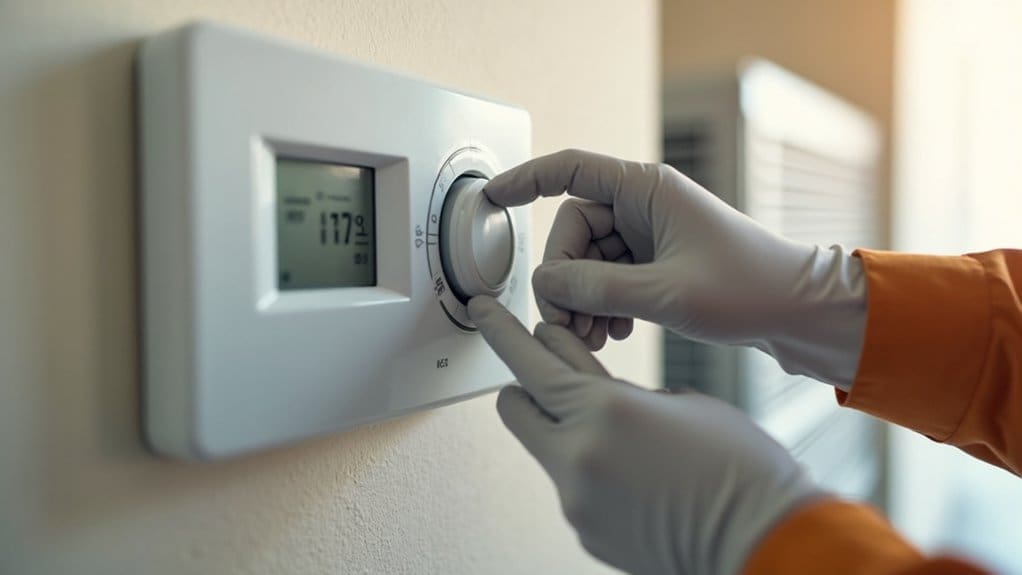
How can you maximize your HVAC system’s operational efficiency beyond mechanical maintenance and envelope improvements? Installing a smart thermostat represents the next critical step in home energy optimization. These devices enable remote temperature changes while providing detailed energy usage analytics, typically generating $180 in annual savings. Advanced models utilize machine learning algorithms to automatically optimize heating and cooling cycles based on occupancy patterns.
Consult local HVAC professionals to guarantee proper installation and system compatibility. Configure appropriate setpoints at 68°F during winter and 78°F in summer. Implement setback schedules that reduce temperatures by 10-15 degrees during sleep periods and extended absences. This strategy can decrease energy bills by 10% while maintaining comfort levels. Smart thermostats transform passive temperature control into active home energy management, maximizing efficiency through intelligent automation of your using air conditioning system.
HVAC Zoning Systems for Targeted Cooling
HVAC zoning systems transform single-temperature homes into multi-climate environments by dividing your property into independently controlled zones, each equipped with dedicated thermostats and motorized dampers. These systems drastically reduce energy consumption by targeting specific areas rather than conditioning your entire home uniformly.
Implementation requires strategic planning for ideal airflow distribution:
- Zone Assessment: Evaluate room usage patterns, sun exposure, and thermal load requirements for each area
- Damper Installation: Install motorized dampers in existing ductwork or configure a new one during system replacement
- Thermostat Configuration: Position zone thermostats away from heat sources and keep sensors free of debris
- Maintenance Protocol: Regular damper calibration guarantees consistent performance
You’ll save up to 20 percent less energy annually while maintaining precise temperature control throughout multi-story homes and properties with varying environmental conditions.
Additional Maintenance Practices for Maximum Savings
Beyond routine filter changes and thermostat adjustments, several advanced maintenance practices can dramatically boost your system’s efficiency and slash operating costs. Properly insulating ductwork eliminates unnecessary energy loss by up to 30%, reducing cooling costs by 20%. Annual condenser coil cleaning improves AC unit efficiency by 15% while extending equipment lifespan. Professional HVAC tune-ups every 1-2 years optimize system performance, reducing energy consumption by 5-15%. Upgrading to variable-speed compressors cuts energy use by 30-50% compared to single-stage models. Keep outdoor units clean and free from debris, ensuring adequate airflow around window units. Strategic shading prevents direct sunlight exposure, boosting efficiency by 10%. These practices prevent warm air infiltration and optimize refrigerant cycles, maximizing your system’s energy-saving potential.
Conclusion
You’ve learned that implementing these maintenance protocols can slash your energy consumption by up to 40% annually—equivalent to removing your system’s electrical load for nearly five months. When you’re executing regular filter replacements, conducting bi-annual inspections, optimizing refrigerant levels, and calibrating thermostat parameters, you’re maximizing coefficient of performance (COP) ratings. Don’t underestimate the cumulative impact: proper maintenance transforms your HVAC system from an energy-intensive liability into a precision-engineered asset that delivers consistent BTU output while minimizing kilowatt consumption.