
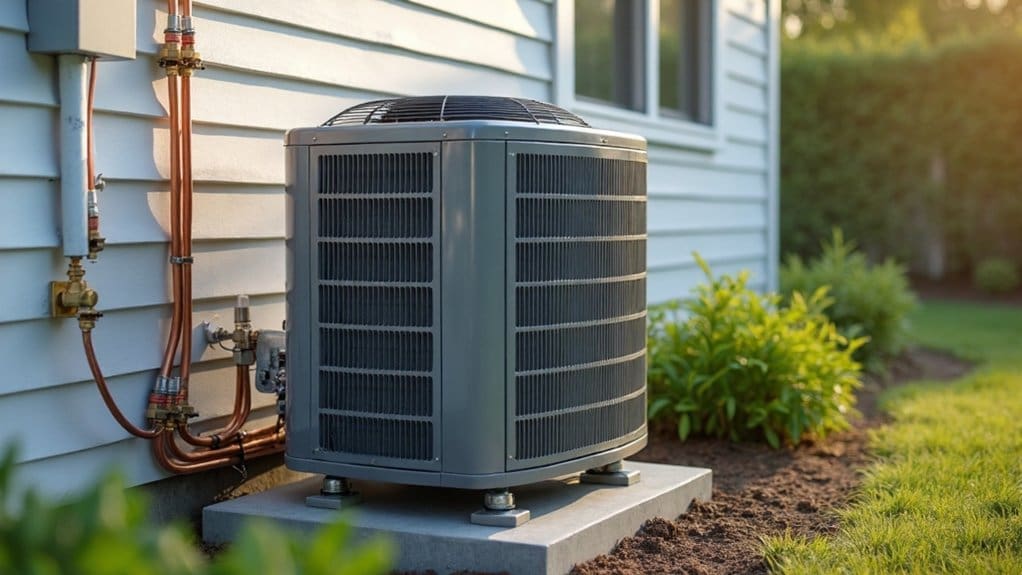
When you’re installing a heat pump in 2025, you’ll need to understand the three main types: air-source, ground-source, and water-source systems that transfer thermal energy through refrigeration cycles. You’ll achieve 400% efficiency ratings while reducing energy costs by 50% compared to traditional HVAC systems. Proper sizing calculations based on your home’s square footage, insulation R-values, and climate conditions guarantee ideal performance. This thorough guide covers everything from system selection to maximizing long-term savings.
Key Takeaways
- Heat pumps transfer thermal energy through refrigeration cycles, providing both heating and cooling without generating heat directly.
- Air-source, ground-source, and water-source configurations offer different efficiency levels based on climate and installation requirements.
- Proper sizing calculations using home square footage, insulation levels, and climate conditions prevent oversizing and ensure optimal performance.
- SEER, HSPF, and EER efficiency ratings directly impact operational costs and determine long-term energy savings potential.
- Government rebates and tax credits significantly reduce initial investment costs for qualifying heat pump installations.
Understanding Heat Pump Systems and How They Work
Before you begin planning your heat pump installation, you must understand the fundamental operating principles that make these systems exceptionally efficient. Heat pumps utilize a refrigeration cycle to transfer thermal energy between locations, delivering both heating and cooling through a single integrated system. Unlike conventional HVAC equipment, these energy efficient units don’t generate heat—they relocate it from external sources.
You’ll encounter three primary configurations: air-source systems extract heat from ambient air, ground-source units tap into stable subsurface temperatures, and water-source models utilize nearby water bodies. Each type operates on identical thermodynamic principles but requires specific sizing and installation protocols.
Proper system selection directly impacts performance and efficiency ratings, which can exceed 400% under ideal conditions, making heat pumps superior to traditional resistance heating methods.
Types of Heat Pumps: Air-Source, Ground-Source, and Water-Source
When selecting your heat pump system, you’ll need to evaluate three distinct technologies that each leverage different heat exchange sources to achieve excellent performance.
Air source heat pumps extract thermal energy from ambient air, delivering cost-effective heating and cooling through streamlined installation procedures. These systems maintain strong efficiency ratings in moderate climates but experience reduced performance during extreme cold conditions.
Ground source heat pumps utilize stable subsurface temperatures through buried loop systems, achieving exceptional energy efficiency exceeding 400%. Installation requires significant excavation work and higher upfront investment, though long-term operational savings offset initial costs.
Water source heat pumps harness thermal energy from accessible water bodies like lakes or aquifers. These systems provide consistent heating and cooling efficiency but limit installation locations to properties with suitable water access for proper system operation.
Key Benefits of Installing a Heat Pump in Your Home
While traditional heating systems consume substantial energy through combustion or electrical resistance, heat pumps deliver exceptional value through multi-faceted operational advantages that directly impact your home’s performance and financial efficiency.
Modern heat pump design extracts heat from the outside air, ground, or water sources, achieving remarkable efficiency ratings up to 400%. This renewable energy approach can lower your energy bills by 50% compared to conventional systems.
Three primary advantages define heat pump installation:
- Dual-Function Operation: Single system provides both heating and cooling capabilities, eliminating separate equipment requirements
- Extended Service Life: Properly installed pumps operate 20-30 years with minimal maintenance interventions
- Financial Incentives: Government rebates and tax credits greatly reduce initial investment costs
Heat pumps represent code-compliant, efficient technology that transforms how your home manages thermal comfort while reducing operational expenses.
Essential Factors to Consider When Choosing a Heat Pump
Understanding heat pump advantages establishes the foundation for making informed equipment decisions, but selecting the right system requires careful evaluation of specific technical parameters that directly affect performance and cost-effectiveness.
You’ll need to assess various types of heat pumps, including air-source and ground source heat pump configurations, against your home’s specific heating and cooling loads. Proper sizing calculations guarantee optimal capacity matching for your square footage and insulation levels.
Seasonal Energy Efficiency Ratio (SEER), Heating Seasonal Performance Factor (HSPF), and Energy Efficiency Ratio (EER) ratings directly impact operational costs. Higher efficiency ratings translate to reduced energy consumption.
Climate conditions determine whether an electric heat pump system requires supplemental heating. Your local weather patterns influence which type of heat pump delivers maximum performance while maintaining code compliance throughout seasonal temperature variations.
Heat Pump Sizing and Capacity Requirements
The cornerstone of successful heat pump installation lies in accurate sizing calculations that match equipment capacity to your home’s specific thermal demands. Electric heat pumps require precise BTUs calculations based on your home’s thermal load requirements. Air source systems demand professional assessment of your outdoor unit’s capacity relative to indoor conditioning needs.
Your HVAC system sizing depends on three critical factors:
- Home square footage – Primary determinant for baseline capacity requirements
- Insulation levels – R-values directly impact heat pump capacity needs
- Climate conditions – Regional temperature extremes influence equipment specifications
Heat pump capacity typically ranges from 1.5 to 5 tons for residential applications. Professional load calculations prevent oversizing issues like short-cycling and energy waste, while ensuring adequate heating performance during peak demand periods.
Energy Efficiency Ratings and Performance Metrics
Once you’ve determined proper sizing, evaluating energy efficiency ratings becomes essential for selecting equipment that delivers ideal, excellent, or preferred performance and operating costs.
SEER2 and HSPF2 represent updated testing standards that provide more accurate real-world performance data compared to previous SEER and HSPF metrics. These equipment ratings directly impact your long-term energy costs and system performance.
| Rating Type | Application |
|---|---|
| SEER2 | Cooling efficiency measurement |
| HSPF2 | Heating efficiency for heat pumps |
| AFUE | Furnace/boiler efficiency rating |
Your system’s actual energy efficiency depends on multiple factors beyond equipment ratings. Climate conditions, proper installation techniques, and home insulation quality significantly influence performance. Advanced heat pump sizing calculations must account for these variables to guarantee, verify, or confirm efficient operation throughout seasonal cycles.
Installation Costs and Long-Term Savings Analysis
Installation costs for heat pump systems range from $3,000 to $15,000 or more, with significant variations based on system type, home size, ductwork requirements, and regional labor rates. Installing a Heat Pump requires careful financial analysis to guarantee return on investment through professional heat pump installation.
Your cost-benefit analysis should evaluate these critical factors:
- System Type Economics – Ground-source systems extract heat more efficiently than air source alternatives, delivering 30-50% energy savings despite higher upfront costs
- Performance Optimization – Proper sizing during professional heat pump installation confirms maximum efficiency, generating potential annual savings exceeding $1,500
- Incentive Integration – Government rebates and tax credits substantially offset initial investment costs for Efficient Heat pump systems
Air and ground source heat pumps require different installation approaches, but both deliver substantial long-term savings when properly sized and installed according to manufacturer specifications.
Climate Considerations and Insulation Requirements
Although installation costs represent the initial investment, your heat pump’s long-term performance depends critically on matching the system to your specific climate conditions and home’s thermal envelope. Heat pumps use refrigerant systems that take heat from one location and transfer it elsewhere, making them inherently dependent on outside temperature conditions. This guide emphasizes that heat pumps transfers heat instead of creating it through combustion, reducing your carbon footprint compared to traditional Air Conditioning systems.
In colder climates, you’ll need specialized cold-climate models or ground-source systems for ideal performance. Proper insulation and air-sealing are mandatory before installation—these upgrades reduce required system capacity and installation costs. Conduct energy audits to determine appropriate heat pump sizing, as heat instead of creating it through resistance heating maximizes efficiency and long-term savings.
Selecting Qualified Installers and Certification Requirements
Your heat pump system’s performance hinges on professional installation by certified technicians who understand both the technical requirements and regulatory standards. MCS-certified professionals possess the expertise to navigate complex installation procedures while guaranteeing compliance with current building codes and safety protocols.
When selecting your installer, verify these essential certification requirements:
- MCS Certification Status – Confirm your installer holds current Microgeneration Certification Scheme accreditation, which qualifies them for Boiler Upgrade Scheme applications and grants and incentives up to £7,500.
- Technical Competency – Verify they can conduct thorough heat loss surveys and assess whether your property requires larger radiators or additional insulation for well-insulated homes.
- System Expertise – Choose installers experienced with advanced technologies like NIBE’s exhaust air heat pump with cooling capabilities for ideal system performance and efficiency.
Maintenance, Warranties, and Maximizing System Performance
Once your heat pump system becomes operational, establishing a thorough maintenance schedule becomes critical for sustaining excellent performance throughout its 20-30 year lifespan. Annual checkups by qualified technicians guarantee your system maintains peak efficiency, often exceeding 300% under optimal conditions. Most manufacturers provide comprehensive warranties covering major components for up to 10 years, safeguarding against unexpected repair costs.
Maximizing performance requires proper insulation and accurate sizing during installation. These factors directly impact your system’s efficiency and energy consumption. Integrating renewable energy sources like solar PV creates synergistic benefits, potentially generating four times more energy than your heat pump consumes.
Government incentives, including the current Boiler Upgrade Scheme, drastically improve cost-effectiveness. Combined with proper maintenance protocols, these elements ensure your heat pump investment delivers maximum returns while maintaining code-compliant operation standards.
Conclusion
While heat pump installation might seem complex, you’ll find that proper system design and code-compliant installation deliver exceptional performance and efficiency. Don’t let initial costs deter you—your heat pump system will provide decades of reliable heating and cooling while drastically reducing energy consumption. Follow manufacturer specifications, guarantee proper refrigerant line sizing, and verify electrical compliance. You’re investing in proven technology that’ll maximize comfort while minimizing operational costs through precise thermal management.