
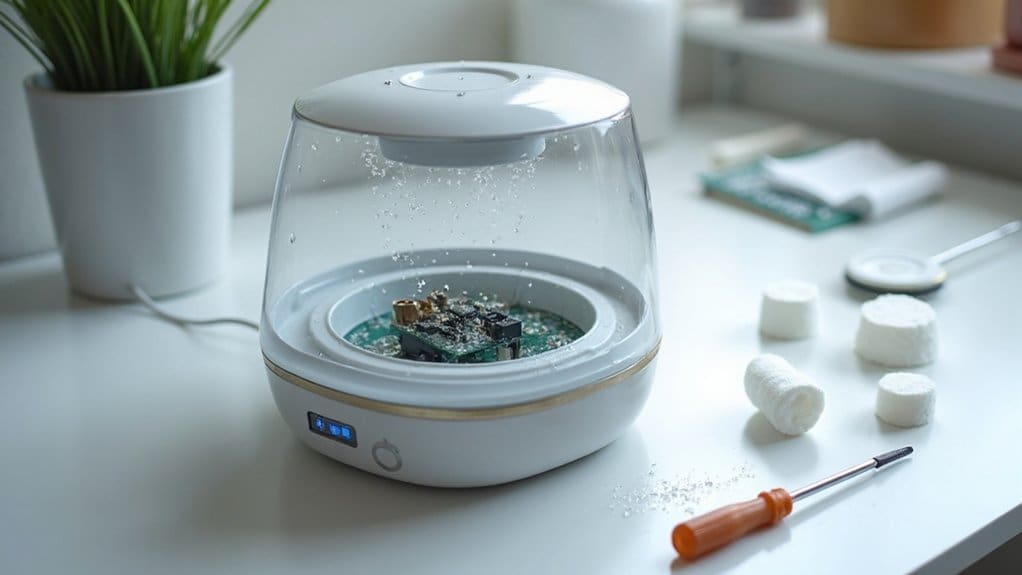
Your humidifier’s repair costs depend on system type and complexity, with portable units requiring $15-50 for membrane cleaning while whole-home systems average $250 for extensive repairs. Professional HVAC technicians charge $50-100 per hour plus minimum service fees of $100-200. Common replacement parts include solenoid valves ($20-80), float valves ($15-30), and tanks ($20-300). Regular maintenance—weekly vinegar cleaning, monthly filter changes, and bi-weekly evaporator pad inspection—significantly reduces repair frequency and extends operational lifespan, though specific troubleshooting protocols vary considerably.
Key Takeaways
- Whole-home humidifier repairs average $250, while portable tabletop and console models cost significantly less to service.
- Professional HVAC technicians charge $50-$70 per hour, with premium metropolitan providers charging $100+ plus minimum service fees.
- Common replacement parts include solenoid valves ($20-$80), float valves ($15-$30), tanks ($20-$300), and fan motors ($55).
- Regular weekly tank cleaning, monthly filter replacement, and bi-weekly evaporator pad inspection reduce repair frequency.
- Typical problems include no moisture production, clogged drains, dirty coils, and structural failures requiring specialized solutions.
Humidifier Repair Costs by Type and System
Humidifier repair costs vary considerably depending on your system type and complexity. Whole-home and furnace-integrated units present higher repair expenses due to their sophisticated components and integration with your HVAC system. You’ll find tabletop and console models cost markedly less to service since they’re simpler mechanisms with fewer parts.
Ultrasonic portable units frequently require membrane cleaning or replacement due to mineral buildup from hard water. Your repair technician will charge $50-$70 per hour for labor, with many establishing minimum fees of $100-$200 per service call.
Whole-home humidifier repairs average $250, though costs fluctuate based on unit type, required parts, problem severity, and local labor rates. Regular maintenance drastically reduces repair frequency and extends your system’s operational lifespan.
Labor Costs and Service Fees for Professional Repairs
When engaging professional HVAC technicians for humidifier repairs, you’ll encounter standardized hourly rates ranging from $50-$70, though premium service providers in metropolitan areas often command $100+ per hour. Your total labor cost depends on geographic location, repair complexity, and service provider expertise.
Most contractors structure home humidifier repairs using flat-rate repair pricing that bundles the initial service call, diagnostic assessment, parts, and labor into all-inclusive repair fees. This approach eliminates hourly billing uncertainties while providing transparent cost expectations.
Complex repairs on older humidifier units typically generate higher labor costs compared to routine humidifier maintenance tasks. Minimum service fees of $100-$200 apply regardless of repair duration, covering technician dispatch and diagnostic procedures. Factor these baseline costs into your repair budget calculations.
Common Replacement Parts and Their Costs
Although labor costs constitute a significant portion of professional repair expenses, replacement parts represent the primary variable affecting your total humidifier repair investment. Solenoid valve replacements typically cost $20-$80, while float valve components range from $15-$30. Your humidifier tank replacement investment varies dramatically from $20-$300, depending on unit specifications and water reservoir capacity. Fan motor replacements average $55, requiring skilled technicians for proper installation. Humidistat components cost $30-$100, affecting humidity control precision. Evaporative filter replacements remain relatively affordable compared to major electrical components. Float assemblies integrate with water reservoir systems, influencing overall repair complexity. Understanding these part costs helps you evaluate repair versus replacement decisions effectively, particularly when multiple components require simultaneous service interventions.
Typical Humidifier Problems and Repair Solutions
Eventually, most humidifier owners encounter predictable failure patterns that manifest through specific symptoms requiring targeted repair approaches. When your unit fails to produce moisture, you’ll likely need solenoid valve replacement or water and float valve servicing. Mineral deposits create clogged drain lines, requiring mechanical clearing or chemical dissolution. Dirty coils reduce efficiency and demand thorough cleaning protocols. Ultrasonic units develop membrane buildup that impairs transducer function, necessitating specialized cleaning procedures.
Structural failures involve humidifier tank cracking or fan motor burnout, both requiring complete component replacement. Control system malfunctions typically stem from faulty humidistat calibration or evaporative pad deterioration. Each problem demands specific diagnostic procedures: checking electrical continuity, measuring water flow rates, and testing sensor accuracy. Proper troubleshooting identifies root causes before implementing targeted repair solutions.
Regular Cleaning and Maintenance Requirements
Preventive maintenance forms the cornerstone of reliable humidifier operation, requiring you to establish consistent cleaning schedules that address both visible contamination and hidden bacterial growth. Weekly cleaning prevents mineral deposits, algae, and slime accumulation that compromise performance and indoor air quality.
| Maintenance Task | Frequency |
|---|---|
| Tank cleaning with vinegar solution | Weekly |
| Filter replacement | Monthly |
| Evaporator pad inspection | Bi-weekly |
| Complete system disinfection | Monthly |
You’ll need white vinegar or citric acid solutions to dissolve limescale effectively. When you clean a humidifier, disassemble all removable components and soak them thoroughly. Replace filters and evaporator pads according to manufacturer specifications to maintain excellent efficiency.
Regular maintenance extends your unit’s lifespan greatly while preventing costly repairs. Clean your humidifier consistently to avoid bacterial colonization and mechanical failures that require professional intervention.
DIY Troubleshooting vs. Professional Service Options
When your humidifier malfunctions, determining whether to tackle the issue yourself or call a professional technician depends on the complexity of the problem and your technical expertise. DIY troubleshooting effectively addresses common issues like clogging, water leaks, and insufficient steam production, considerably reducing humidifier repair costs. Basic maintenance tasks including filter changes and routine cleaning extend equipment lifespan while preventing costlier repairs.
However, complex problems require professional help from qualified HVAC technicians who possess specialized tools, diagnostic equipment, and replacement parts access. Attempting advanced repairs without proper knowledge risks further damage and safety hazards. Professional humidifier services become essential when addressing HVAC system integration issues or maintaining warranty coverage. For home humidifiers experiencing persistent humidifier issues beyond basic troubleshooting, consulting certified technicians guarantees proper diagnosis and repair.
Conclusion
You’ll find that 68% of humidifier failures stem from inadequate maintenance protocols rather than component defects. When you implement systematic cleaning schedules and monitor water quality parameters, you’re greatly reducing long-term repair expenditures. Execute regular filter replacements, inspect solenoid valves quarterly, and maintain proper water panel alignment. You can’t ignore these preventive measures—they’re your primary defense against costly system breakdowns. Professional diagnostics become necessary when basic troubleshooting procedures fail to restore ideal humidity output levels.