
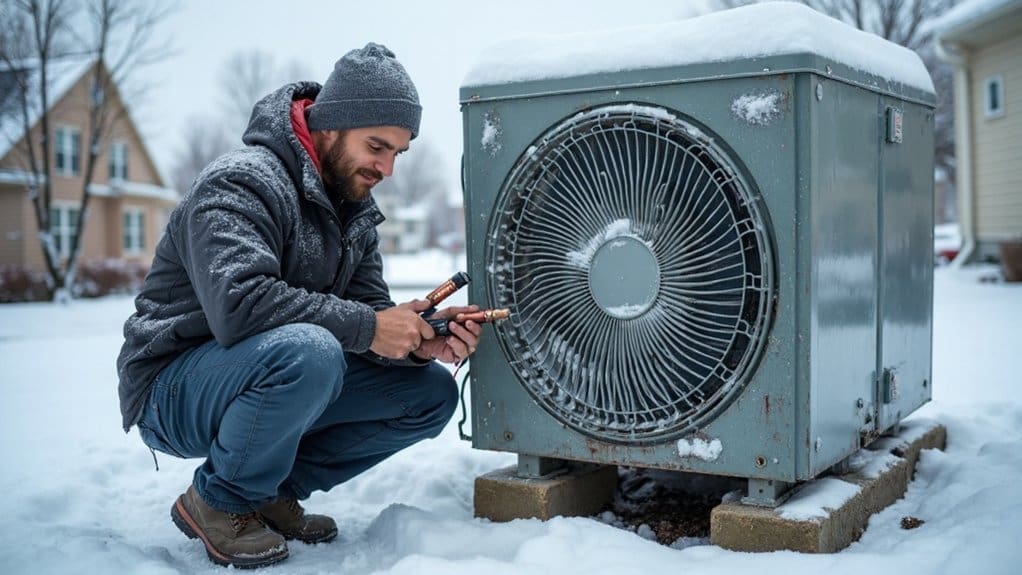
When installing a heat pump in St. Louis, you’ll need to account for Missouri’s extreme temperature swings from sub-20°F winters to 100°F+ summers with high humidity. Your system should be properly sized between 2-5 tons based on thorough load calculations, with variable-capacity units offering superior performance across seasonal extremes. Cold climate heat pumps with backup heating guarantee reliable winter operation, while proper refrigerant charging and airflow optimization handle summer cooling demands. Continue exploring these climate-specific strategies below.
Key Takeaways
- Choose cold climate heat pumps sized 2-5 tons with variable-capacity systems to handle Missouri’s extreme temperature swings efficiently.
- Install backup electric furnaces to maintain heating performance when temperatures drop below 20°F during harsh winters.
- Select high SEER and HSPF rated equipment with variable-speed technology for superior humidity control during hot summers.
- Ensure proper refrigerant line insulation and correct charge levels to optimize performance in Missouri’s fluctuating weather conditions.
- Conduct thorough load calculations considering home orientation, insulation, and air leakage to prevent oversizing or undersizing issues.
Understanding Missouri’s Humid Continental Climate and Heat Pump Performance
When you’re evaluating heat pump systems for your St. Louis property, you’ll need to understand Missouri’s humid continental climate and its direct impact on system performance. The Louis climate presents unique challenges with hot, humid summers and cold winters that can strain heating and cooling systems. During summer months, your heat pumps work against high humidity levels and temperatures reaching 90°F+, while winter conditions can drop below 20°F, reducing energy efficiency considerably.
These extreme weather fluctuations demand robust system design and proper sizing calculations. St. Louis weather conditions require heat pumps with enhanced defrost cycles and backup heating elements. The region’s temperature swings create thermal stress on components, affecting long-term reliability and operational costs throughout the system’s lifecycle.
Sizing Heat Pumps for St. Louis Temperature Extremes
Since St. Louis faces significant temperature extremes, you’ll need precise sizing to handle the region’s climate challenges effectively. Your heat pump capacity should range from 2 to 5 tons based on detailed load calculation that evaluates square footage, insulation levels, and structural factors.
You can’t afford oversizing, which causes short-cycling and reduced efficiency, or undersizing, which compromises comfort during peak conditions. Variable-capacity and multi-stage systems offer superior performance by adapting to temperature fluctuations throughout Missouri’s demanding seasons.
Your HVAC professional must account for home orientation, shading patterns, and air leakage during sizing calculations. These factors directly impact your system’s ability to maintain consistent comfort while operating efficiently through St. Louis’s hot summers and cold winters.
Winter Heating Efficiency Strategies for Cold Weather Operation
After determining the proper heat pump capacity for your St. Louis installation, you’ll need strategic approaches to maximize winter heating efficiency during Missouri’s harsh conditions. Cold climate heat pumps maintain ideal heating performance through advanced defrost cycles, but you should integrate complementary heat sources like electric furnaces for extreme weather backup. Proper sizing guarantees your system operates efficiently without overworking during temperature drops.
Regular professional maintenance becomes critical for sustained efficiency—clean coils and proper refrigerant levels prevent costly breakdowns. You’ll achieve up to 50% energy savings compared to traditional systems when combining correctly-sized equipment with routine upkeep.
Enhance your heat pump’s effectiveness by improving your building envelope through insulation and air sealing, allowing better warm air distribution throughout winter months.
Summer Cooling Solutions for High Humidity and Heat
St. Louis’s extreme summer conditions demand strategic heat pump installations that address both temperature and humidity challenges. Heat pumps use variable-speed technology to deliver precise cooling while managing 60-90% humidity levels effectively. Unlike traditional air conditioning units, heat pumps offer superior dehumidification capabilities through continuous operation at lower speeds, resulting in reduced energy consumption and lower utility bills.
| Heat Pump Type | Energy Savings | Humidity Control |
|---|---|---|
| Air-Source Variable | 20-30% | Excellent |
| Geothermal | Up to 50% | Superior |
| Standard Fixed-Speed | 10-15% | Good |
Proper sizing requires careful planning to handle 100°F+ temperatures efficiently. Geothermal systems leverage consistent underground temperatures, using less energy than conventional systems. Regular maintenance guarantees peak performance during demanding summer months, preventing costly breakdowns when you need cooling most.
Professional Installation Best Practices for Missouri Weather Conditions
Achieving ideal heat pump performance in St. Louis requires precise installation techniques tailored to Missouri’s climate extremes. You’ll need certified technicians who understand proper refrigerant line insulation to prevent ice buildup during winter operations. Critical installation factors include maintaining correct refrigerant charge levels and optimizing airflow for both heating and cooling modes.
Your system’s efficiency depends on selecting equipment with high SEER and HSPF ratings, safeguarding year-round energy performance. Professional services must address Missouri’s temperature swings through strategic component placement and weatherproofing approaches. Proper ductwork installation directly impacts indoor air quality and system longevity.
Installation best practices include extensive load calculations, precise electrical connections, and thorough system testing across operating modes. These technical requirements guarantee your heat pump installation delivers consistent air conditioning and heating performance throughout St. Louis’s demanding seasonal shifts.
Maximizing System Longevity Through Climate-Specific Maintenance
Three critical maintenance protocols extend your St. Louis heat pump’s operational lifespan against Missouri’s demanding climate conditions. Your routine maintenance schedule must address seasonal temperature fluctuations that accelerate wear and tear on system components.
| Maintenance Task | Frequency | Climate Impact |
|---|---|---|
| Filter replacement | Monthly | Reduces airflow restriction |
| Coil cleaning | Bi-annually | Prevents ice formation |
| Refrigerant check | Annually | Maintains efficiency ratings |
Professional maintenance plans guarantee your system can operate at peak performance through extreme weather cycles. Your service provider should identify minor issues before they escalate into costly performance issues. This preventive approach guarantees maximal energy efficiency and extends beyond basic troubleshooting—it’s systematic protection against Missouri’s climate challenges that threaten long-term system reliability.
Conclusion
You’ve navigated Missouri’s climate maze—now your heat pump stands as a thermal sentinel against the Show-Me State’s weather extremes. Through precise sizing, strategic winter operation, and humidity-focused cooling protocols, you’ve engineered a system that won’t buckle under pressure. Your installation isn’t just equipment; it’s a performance-tuned machine calibrated for Missouri’s demanding conditions. With climate-specific maintenance as your compass, you’ll maintain peak efficiency while your system weathers every seasonal storm.