
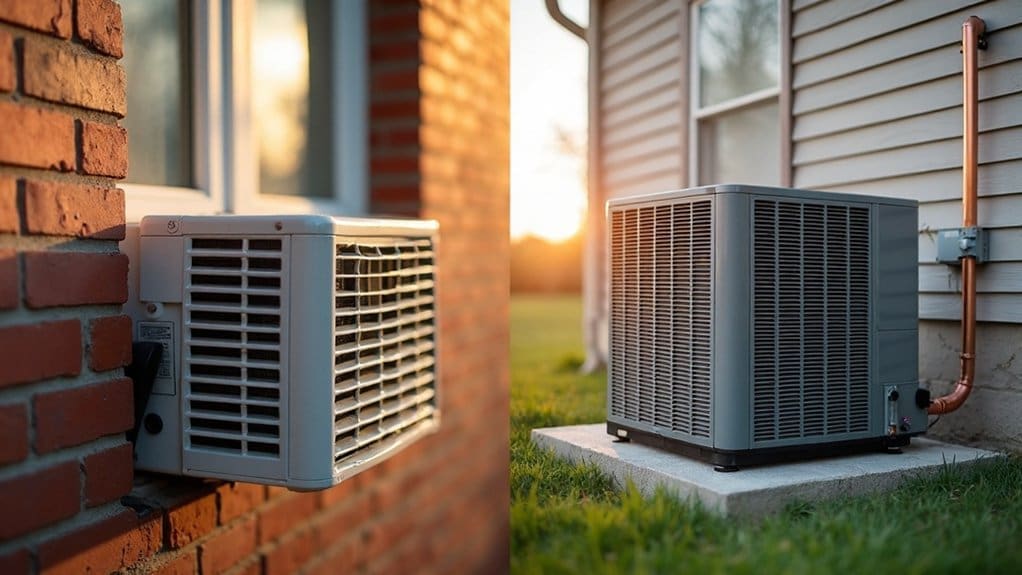
Window AC units cost $150-$550 and provide targeted single-room cooling with easy DIY installation, while central air systems require $3,500-$7,500 investment plus professional installation for whole-home climate control. You’ll get immediate cost savings with window units but face energy inefficiency and uneven cooling patterns. Central systems deliver superior air filtration, consistent temperature distribution, and 15-20 year lifespans with enhanced property values. Understanding installation requirements and long-term operational costs will help you make the best HVAC decision for your specific needs.
Key Takeaways
- Window AC units cost $150-$550 with easy DIY installation, while central air systems require $3,500-$7,500 plus professional installation.
- Window units provide targeted single-room cooling with portability, but central systems offer consistent whole-home temperature control.
- Central air systems deliver superior energy efficiency for large spaces and last 15-20 years versus frequent window unit replacements.
- Window AC units generate noise and create uneven cooling with poor filtration compared to central systems’ quiet, filtered operation.
- Central air installation increases property value up to 10% and qualifies for tax credits, offsetting higher upfront costs.
Understanding Window AC Units and Central Air Systems
The fundamental distinction between window AC units and central air systems lies in their operational scope and infrastructure requirements. Window AC units are self-contained cooling devices that mount directly into your window frame, delivering localized conditioning to a single room. You’ll need minimal installation expertise and can typically handle the setup yourself. Conversely, central air systems utilize extensive ductwork infrastructure to distribute conditioned air throughout your entire home via strategically positioned vents.
Your cost considerations differ vastly between these systems. Window units require lower upfront investment, ranging from $150 to $550, while central air conditioning demands substantial initial expenditure of $3,500 to $7,500. Central systems necessitate professional installation due to their complex refrigerant lines, electrical connections, and ductwork integration. Window units offer immediate cooling solutions, whereas central systems provide all-encompassing whole-home climate control.
Window AC Unit Advantages and Benefits
When evaluating cooling solutions for your residence, window AC units deliver several compelling advantages that make them perfect for specific applications. Window air conditioners offer superior cost-effectiveness, with the cost of a window unit ranging from $150 to $550, making them considerably less expensive than central systems. You’ll find these units easy to install, often requiring no professional HVAC technician intervention. Window AC units excel at targeted cooling, allowing you to cool one room or cool a single room efficiently while minimizing energy consumption in unoccupied spaces. The flexibility of window units surpasses portable AC unit alternatives, as you can relocate them between rooms or properties. This zone-based cooling approach reduces operational costs while maintaining excellent comfort levels in frequently used areas.
Window AC Unit Drawbacks and Limitations
Several significant limitations restrict window AC units’ effectiveness in extensive home cooling applications. You’ll encounter single room cooling constraints requiring multiple window units for cooling your entire home, creating operational complexity and higher aggregate costs. Each window AC unit produces uneven cooling patterns within its designated space, generating uncomfortable temperature variations and hot spots.
| Limitation Category | Impact | Solution Required |
|---|---|---|
| Air Filtration | Poor contaminant removal | Central air conditioning system |
| Noise Operation | Disruptive compressor sounds | Professional HVAC installation |
| Energy Inefficiency | Year-round heating losses | Seasonal removal protocols |
You’ll experience noisy operation from internal compressors disrupting your living environment. The compromised air filtration capabilities can’t match central air conditioning system performance standards. Additionally, permanent window space occupation creates energy inefficiency through thermal bridging and air leakage during heating seasons.
Central Air Conditioning Advantages and Benefits
Central air conditioning systems address these window unit limitations through complete whole-home climate control technology. You’ll experience consistent temperature distribution across all rooms, eliminating hot spots that plague individual window units. Your central AC unit operates with superior energy efficiency, reducing energy bills while maintaining crucial comfort in larger spaces. The enhanced HVAC filtration system protects indoor air quality, pivotal for respiratory health and allergen control.
When you install a central AC system, you’re investing in long-term value—these units typically last 15-20 years with proper maintenance. Unlike when you install a window AC, central air conditioning systems increase property resale value by up to 10%. The cost considerations favor central systems for whole-home applications, delivering better performance per square foot. Weighing the pros and cons, central AC provides comprehensive climate control that window units simply can’t match.
Central Air Conditioning Drawbacks and Limitations
While central air conditioning systems offer superior whole-home comfort, they present considerable financial and logistical challenges that you must carefully evaluate.
The upfront costs averaging $5,700 greatly exceed window units‘ initial investment. You’ll face a reduced lifespan of 10-15 years, requiring more frequent system replacement compared to individual window units. When malfunctions occur, repair costs escalate due to complex refrigerant lines, ductwork, and integrated components requiring professional installation expertise.
- Space Requirements: The outdoor compressor unit consumes valuable yard space and requires proper clearance zones
- Installation Complexity: Professional installation disrupts home operations, unlike DIY-friendly window units
- Maintenance Demands: Thorough system servicing requires specialized technicians and higher service fees
- Energy Consumption: Higher electric bills result from cooling unused spaces, reducing overall efficiency compared to targeted window unit operation.
Installation Process and Requirements Comparison
Although both cooling systems achieve the same fundamental goal, their installation requirements differ dramatically in complexity, cost, and technical expertise needed. You can purchase and install a window unit air conditioner yourself by securing it in a prepared window opening and connecting to standard electrical outlets. These units effectively cool one or two rooms without requiring specialized knowledge.
However, when you Install Central air conditioning systems, you’ll need professional assistance from local HVAC technicians. Central air conditioning units demand extensive ductwork installation throughout your entire house, outdoor compressor connections, and indoor air handler integration. While you might need multiple units for every room with window systems, central air provides whole-home cooling through one extensive system. Both systems require regular maintenance, but central air installation involves considerably higher upfront costs and technical complexity.
Upfront Costs and Long-Term Financial Impact
The financial commitment for air conditioning systems varies drastically between window units and central air installations, creating substantial budget implications for homeowners. Window Air Conditioning units typically cost $150-$550, while a new central system in top installations ranges from $3,000-$7,000. The average cost differential creates immediate affordability concerns, though your new HVAC investment offers extensive long-term benefits. Central Air Conditioner systems can cost immensely more upfront but provide energy efficiency that reduces monthly utility expenses.
Key Financial Considerations:
- Cons of Window Air: Higher cumulative energy costs when operating multiple units
- Cons of Central Air: Substantial initial capital investment requiring financing options
- Long-term ROI: Professional installation maximizes efficiency, reducing operational costs
- Incentive Programs: Federal tax credits and utility rebates offset the cost of a new central system
Energy Efficiency and Performance Analysis
Energy efficiency ratings and performance metrics reveal significant disparities between window AC units and central air systems that directly impact your operational costs and comfort levels. Window units consume one-third the energy of central air conditioning when operating for identical durations, making them exceptionally energy-efficient for single-room applications. However, central air systems demonstrate superior whole-home efficiency through regulated runtime cycles and automatic shutoff features that maximize energy consumption across larger spaces.
Central air conditioning systems deliver cost-effective long-term performance with lifespans extending 15-20 years through proper maintenance protocols. While window units offer immediate energy savings, their shorter operational lifespans require more frequent replacement cycles. Professional installation guarantees appropriate system sizing and configuration, directly influencing efficiency ratings and safety compliance. Your cooling requirements and square footage determine which technology provides the most energy-efficient solution for your specific application.
Choosing the Right System for Your Home
Selecting an appropriate cooling system requires thorough evaluation of your home’s square footage, thermal load calculations, and operational requirements to guarantee ideal performance and safety compliance. If you need to cool one room occasionally, a window unit delivers targeted comfort without substantial infrastructure modifications. However, multiple occupants benefit from central systems providing consistent temperature control throughout the dwelling. People with allergies should prioritize central air’s superior filtration capabilities over individual unit performance. While you’ll face higher electric bills initially, an efficient system reduces long-term operational costs. Central installations dramatically boost resale value, whereas you can’t run a window unit year-round in most climates.
- Spatial Coverage Analysis: Assess room-by-room cooling requirements versus whole-house thermal management needs
- Infrastructure Compatibility: Evaluate existing ductwork, electrical capacity, and structural modifications required
- Occupancy Patterns: Consider usage frequency, seasonal demands, and multi-zone temperature preferences
- Financial ROI Calculations: Compare installation costs against energy savings and property value enhancement
Conclusion
Your cooling system selection demands careful evaluation of BTU requirements, installation complexity, and operational efficiency metrics. Window units offer zone-specific climate control with minimal electrical modifications, while central air systems provide thorough temperature regulation through engineered ductwork distribution. Haven’t you considered the long-term SEER ratings and maintenance protocols? Central systems require professional refrigerant handling and electrical upgrades, whereas window units present simpler installation but potential safety concerns regarding proper mounting and electrical load calculations for ideal performance.