
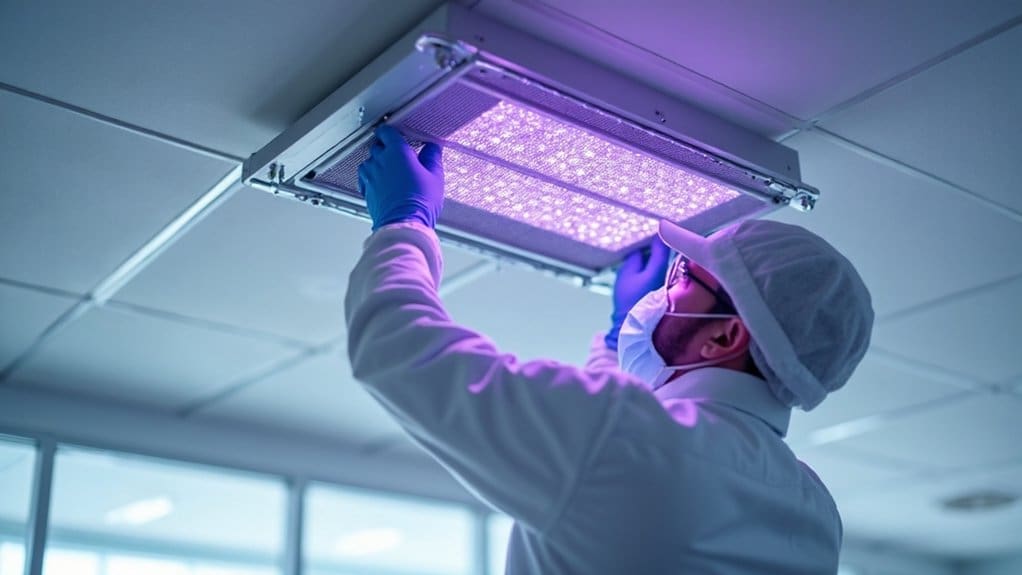
You can safeguard your business environment with commercial UV light sanitizers that eliminate 99.9% of pathogens within 15 minutes using UVC wavelengths to destroy viral and bacterial DNA. These systems integrate into HVAC infrastructure or function as standalone units, providing chemical-free disinfection while improving indoor air quality and reducing employee sick days. Proper installation requires adherence to CDC guidelines, electrical infrastructure planning, and EPA compliance protocols. Strategic implementation guarantees ideal pathogen exposure and regulatory alignment for extensive environmental protection.
Key Takeaways
- UV-C light systems eliminate 99.9% of pathogens within 15 minutes, providing chemical-free disinfection for air and surfaces.
- Strategic HVAC integration or standalone units offer continuous air purification tailored to your facility’s specific requirements.
- Proper installation requires assessing airflow patterns, temperature conditions, and electrical infrastructure for optimal UV lamp placement.
- Safety protocols mandate employee evacuation during operation, proper signage, and compliance with EPA registration requirements.
- Regular lamp replacement and UV intensity monitoring ensure consistent disinfection performance and regulatory compliance.
Understanding UV Light Technology for Business Applications
How can businesses effectively harness UV light technology to create safer indoor environments? UV light disinfection employs UVC wavelengths to destroy viral and bacterial DNA, rendering pathogens inactive through proven germicidal action. You’ll find UV Technology most effective when integrated into your HVAC system, where it continuously treats circulating air and prevents microbial contamination.
Commercial applications require strategic placement of UV units within ductwork or as standalone surface disinfection systems. Your UV disinfection strategy must balance efficacy with safety protocols, ensuring proper shielding prevents direct human exposure. This chemical-free approach provides measurable pathogen reduction across healthcare facilities, offices, and hospitality environments.
Integration with existing HVAC system infrastructure allows for customized solutions tailored to your facility’s specific air quality requirements and regulatory compliance standards.
Key Benefits of Commercial UV Light Sanitizers
Multiple operational advantages position commercial UV light sanitizers as strategic investments for business facilities seeking enhanced pathogen control. You’ll achieve 99.9% pathogen elimination within 15 minutes, targeting viruses, bacteria, and fungi through proven germicidal properties. Your indoor air quality improves greatly as UV light reduces airborne contaminants and allergens throughout occupied spaces.
Integration with your HVAC System’s infrastructure delivers dual benefits: enhanced equipment longevity through reduced biofilm accumulation and improved operational efficiency. You’ll experience lower maintenance costs while maintaining ideal air circulation performance.
Employee health outcomes improve measurably as reduced pathogen exposure decreases illness transmission rates. Your workforce benefits from decreased sick days and enhanced productivity in cleaner environments.
Installation requires minimal complexity, with straightforward mounting procedures and low-maintenance operational requirements, ensuring consistent performance without disrupting daily business operations.
Types of UV Light Systems for Different Business Environments
Which UV light system configuration delivers ideal pathogen control for your specific business environment depends on facility size, occupancy patterns, and operational requirements. Healthcare and food service facilities benefit from UV-C light fixtures that disinfect air and surfaces effectively. Mobile UV light towers provide flexible disinfection for larger spaces like lobbies, conference rooms, and warehouses where manual sanitization proves challenging. HVAC system’s integration with UV lighting enables continuous air purification throughout commercial buildings, ensuring consistent pathogen control. Portable UV light wands and lamps offer targeted disinfection capabilities for high-touch surfaces and equipment requiring frequent sanitization. Utilizing UV far-UVC ceiling-mounted devices provides whole-room disinfection that maintains safety standards for continuous human occupancy, making them ideal for office environments and hospitality settings where uninterrupted operations are essential.
Installation Considerations for Maximum Effectiveness
Before installing commercial UV light sanitizers, you must evaluate critical environmental factors that directly impact disinfection efficacy and regulatory compliance. Your HVAC System’s airflow patterns determine ideal UV-C lamp placement for maximum pathogen exposure time. You’ll need to calculate air velocity, duct dimensions, and dwell time to guarantee lethal UV doses reach target microorganisms.
Temperature and humidity levels substantially affect UV output and lamp performance. You must maintain operating temperatures between 32-100°F for optimal germicidal effectiveness. In healthcare facilities, installation requires strict adherence to CDC guidelines and occupational safety protocols.
Light systems demand proper electrical infrastructure with dedicated circuits and surge protection. You’ll need professional dosimetry testing to verify installation meets manufacturer specifications. Following best practices includes regular lamp replacement schedules and UV intensity monitoring to preserve consistent disinfection performance throughout your facility.
Safety Protocols and Compliance Requirements
Commercial UV light sanitizer installations require stringent safety protocols that protect personnel while maintaining regulatory compliance throughout operation. You must evacuate all employees and occupants before activating UV Light systems, as exposure causes severe skin and eye damage. Install proper safety signage, access controls, and administrative procedures to prevent accidental exposure during disinfection cycles.
Your equipment must carry EPA registration, with suppliers maintaining valid EPA establishment numbers for compliance requirements. You’ll need to implement ongoing maintenance schedules, performance validation, and inspection protocols to guarantee continued efficacy. Critical operational parameters including UV intensity, exposure duration, and distance from light sources require precise calibration for effective pathogen inactivation. Stainless Steel surfaces often require specific exposure protocols due to their reflective properties affecting UV distribution patterns.
Choosing the Right UV Light Partner for Your Business
How do you identify a UV light partner capable of delivering both technical excellence and regulatory compliance for your commercial installation? Start by evaluating their healthcare industry expertise and commitment to evidence-based infection prevention solutions. Your partner’s UV technology should align with current far-UVC research, which offers superior efficacy and human safety profiles.
Examine their installation track record in critical environments like healthcare facilities and cleanrooms. You’ll need seamless integration capabilities with your commercial HVAC systems for ideal air purification and pathogen mitigation.
Verify credentials including EPA establishment numbers and relevant certifications. These guarantee compliance with government regulations governing antimicrobial products. Choose a partner who demonstrates proven performance in mission-critical spaces while maintaining strict regulatory adherence for your UV light sanitization system.
Cost Analysis and Return on Investment
While evaluating UV light sanitizer installations requires significant upfront capital, the financial returns demonstrate compelling value through measurable reductions in operational costs and productivity losses. Your investment yields $3-6 returns per dollar spent through decreased healthcare expenditures and enhanced workforce productivity. UV light implementation in high-traffic areas reduces healthcare-associated infections by 50-90%, generating substantial cost savings. Integrating UV treatment into your HVAC system’s operations improves air quality while extending equipment lifespan, cutting replacement and repair expenses by 25-40%. The typical payback period ranges from 12-24 months, establishing UV sanitization as a cost-effective investment. Long-term benefits include reduced absenteeism, lower maintenance costs, and improved HVAC system efficiency, creating sustainable operational advantages that justify initial capital expenditure.
Maintenance and Performance Optimization
Although UV light sanitizers require minimal maintenance compared to traditional disinfection methods, establishing systematic maintenance protocols guarantees peak performance and extends equipment lifespan. You’ll need to monitor UVC Light intensity levels quarterly using calibrated radiometers, as output diminishes approximately 10-15% annually. Replace germicidal lamps according to manufacturer specifications—typically every 8,000-12,000 operating hours—before reaching 80% original output threshold.
Your HVAC System’s integration demands regular filter inspections to prevent dust accumulation on UV fixtures, which reduces sanitization effectiveness. Commercial air purification systems require monthly cleaning of reflective surfaces and lamp housings using approved solvents. Document all maintenance activities for regulatory compliance verification. Performance optimization involves adjusting exposure times based on airflow velocity measurements and pathogen log-reduction requirements, ensuring consistent sanitization efficacy throughout your facility.
Conclusion
You’ve evaluated the technical specifications, regulatory requirements, and implementation protocols—now it’s time to pull the trigger on your commercial UV sanitization system. Your investment decision must align with EPA guidelines, OSHA safety standards, and manufacturer specifications for maximum pathogen inactivation rates. Don’t compromise on certified installation procedures or ongoing maintenance protocols. Your business environment’s microbial load reduction depends on evidence-based system selection and compliant operational practices that guarantee consistent 99.9% disinfection efficacy rates.