
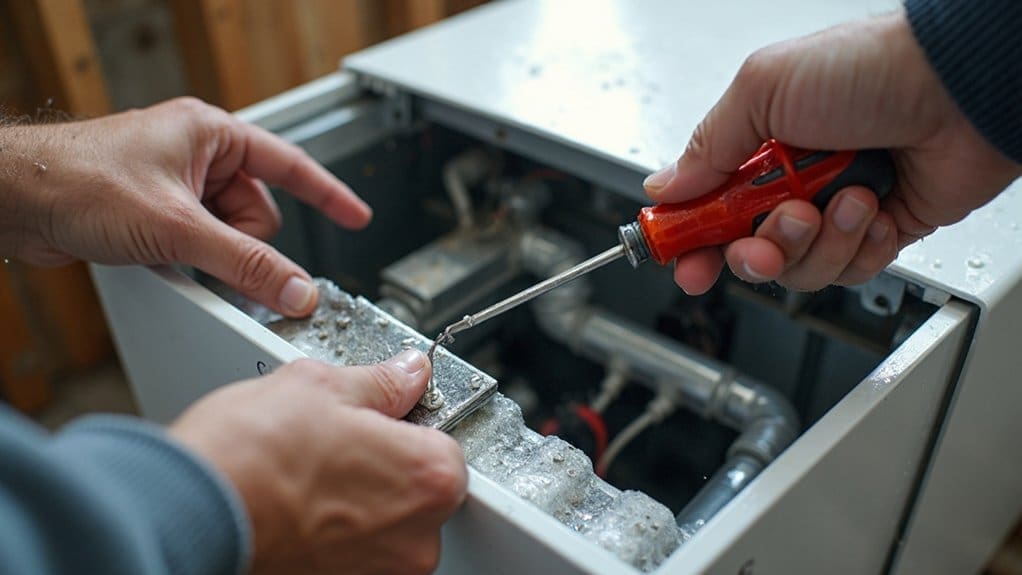
Before calling a technician, you can troubleshoot most whole house humidifier issues yourself. Start by checking electrical power and circuit breakers, then inspect water supply lines for kinks or disconnections. Examine the humidifier pad for mineral buildup and test your humidistat’s response. Replace clogged filters annually and clean water distribution trays regularly. Always disconnect power before working on components and wear safety gear. Understanding these systematic diagnostic steps will help you identify whether repairs require professional intervention.
Key Takeaways
- Check electrical power by verifying circuit breakers and connections before assuming the humidifier has mechanical problems.
- Inspect and clean the humidifier filter, as mineral buildup often causes poor performance and unusual noises.
- Test the humidistat by adjusting settings and monitoring system response to ensure proper humidity control operation.
- Examine water supply lines for kinks, freezing, or disconnection that could prevent adequate water flow.
- Always disconnect power at the unit and circuit breaker before performing any maintenance or repairs.
Signs Your Whole House Humidifier Needs Attention
Often, homeowners overlook the subtle warning signs that indicate their whole house humidifier requires immediate attention. Your heating system’s humidifier may be failing if you’re experiencing persistent dry skin, static electricity, or frequent nosebleeds despite the unit running. These symptoms indicate your whole-house humidifier isn’t maintaining proper humidity levels.
Conversely, musty odors or visible mold growth signal excessive moisture and contamination within the system. Your whole house humidifiers require immediate cleaning when these conditions appear, as they pose serious health risks.
Monitor for inconsistent humidity levels throughout your home—rooms shouldn’t feel alternately dry or damp. Unusual mechanical noises like banging or gurgling indicate internal component failure. Water leaks around the unit or ductwork demand immediate repair to prevent structural damage and maintain your heating system’s integrity.
Basic Diagnostic Steps for Humidifier Problems
The most effective diagnostic approach begins with systematic power and water supply verification before examining individual components. First, confirm your whole house humidifier receives adequate electrical power by checking circuit breakers and connections. Next, verify water supply lines aren’t kinked, frozen, or disconnected from your HVAC system. Examine the humidifier pad or filter for mineral buildup, which creates common problems during heating season. Test the humidistat by adjusting settings and monitoring system response. Check drain lines for clogs that prevent proper water flow. If these steps don’t restore good working order, internal components like solenoid valves or transformers may have failed. Complex electrical issues and refrigerant-related problems typically require professional intervention to diagnose and repair safely.
Simple Maintenance Tasks You Can Perform
While professional repairs address complex failures, regular maintenance prevents most humidifier problems and extends equipment lifespan considerably. You should replace your humidifier filter annually to eliminate mineral and scale buildup that restricts water flow and reduces efficiency. Scrub the water distribution tray and other components thoroughly to remove stubborn deposits that can clog the water line or drain line.
During spring shutdown, close the dampers to prevent your cooling system from drawing air through the whole humidifier assembly. This prevents unnecessary moisture during off-season operation. Don’t allow debris to accumulate on humidifier components throughout summer months, as this creates maintenance issues when you restart the system.
Schedule professional HVAC maintenance after each heating season to verify your whole house humidifier operates correctly before the next winter cycle begins.
When to Replace Humidifier Components
Even with diligent maintenance, humidifier components reach their operational limits and require replacement to maintain system performance and indoor air quality. You’ll need to change your filter when it’s clogged beyond cleaning or shows mineral buildup that restricts airflow. The solenoid valve requires replacement when water flow becomes inconsistent or stops entirely. A malfunctioning saddle valve that leaks or fails to supply adequate water pressure needs immediate attention. Control Board failures manifest through erratic operation or complete system shutdown. Common Reasons for component replacement include normal wear, mineral deposits, and electrical deterioration. When your humidifier works intermittently despite proper maintenance, systematic component evaluation helps identify replacement needs before complete system failure occurs.
Safety Precautions During DIY Repairs
Before attempting any humidifier repairs, you must disconnect electrical power at both the unit’s switch and the circuit breaker to prevent electrocution. Make sure you’ve turned off your heating and cooling system completely before starting work. Wear safety glasses and gloves when handling components, as metal edges can be sharp and mineral deposits irritating.
Never work on a pressurized system without proper training. If you encounter gas lines or complex electrical connections within your heating and air conditioning setup, stop immediately and contact licensed HVAC technicians. Water and electricity create deadly combinations, so guarantee all surfaces are dry before reconnecting power.
Complex repairs often require specialized tools and expertise that only qualified HVAC technicians possess. When in doubt about any procedure involving your house’s heating system, prioritize safety over cost savings.
Knowing When Professional Help Is Required
Although basic maintenance tasks like filter replacement and cleaning fall within most homeowners’ capabilities, several situations demand professional HVAC intervention. Attempting complex humidifier repair without proper expertise creates significant risks including water damage, electrical hazards, and voided warranty coverage.
Professional installation and repair become essential when you encounter:
- Electrical integration issues – Faulty wiring connections between your humidifier and furnace controls require licensed expertise to prevent fire hazards and guarantee code compliance.
- Ductwork modifications – Improper airflow integration can compromise your entire HVAC system’s efficiency and create moisture problems throughout your home.
- Water supply complications – Leaking connections or pressure irregularities need specialized knowledge to prevent costly water damage and assure optimal humidity regulation.
HVAC technicians possess the specialized expertise for proper maintenance, guaranteeing your system operates safely and efficiently.
Conclusion
You’ve now equipped yourself with the essential knowledge to address your humidifier’s occasional temperamental behavior. While these troubleshooting steps will resolve most minor hiccups, don’t hesitate to call in the cavalry when electrical issues arise or components reach their twilight years. Remember, there’s no shame in seeking professional assistance—it’s simply prudent maintenance management. Your home’s comfort system deserves proper care, and you’ll know when it’s time to pass the torch to qualified technicians.