
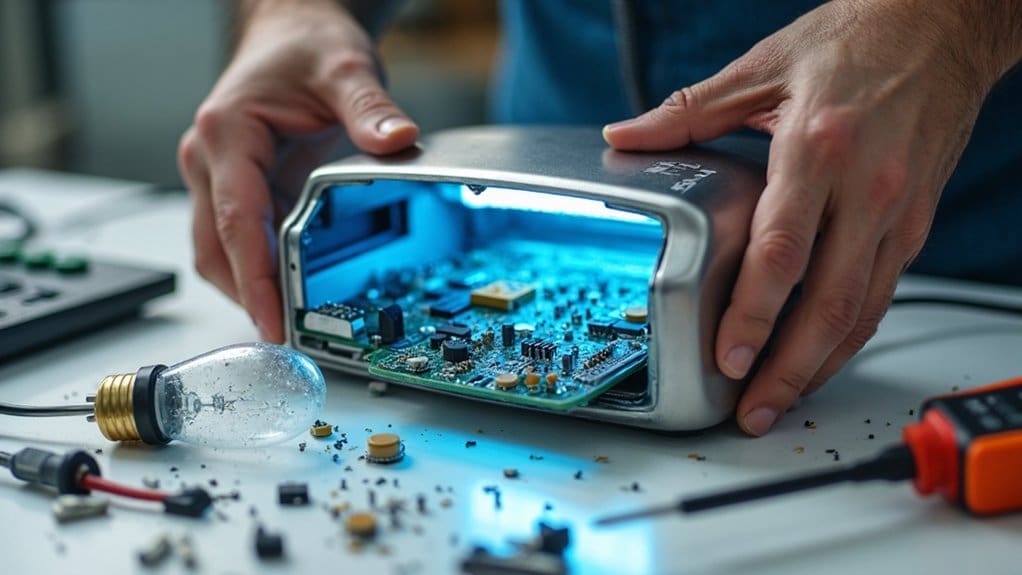
When your UV air purifier malfunctions, you’ll need to systematically check the power supply connections and examine the cord for damage. Replace UV bulbs every 8,000-12,000 hours and verify their functionality with detection cards. Assess filter blockages and guarantee proper installation to prevent airflow bypass. Locate your model’s reset button and hold for 10-15 seconds with stable power. Test fan functionality and confirm adequate clearance around vents. Further diagnostic procedures can pinpoint more complex issues.
Key Takeaways
- Check power connections, inspect cords for damage, and test with alternative outlets to isolate electrical issues.
- Replace UV lamps every 8,000-12,000 hours and verify functionality using UV detection cards with genuine parts.
- Ensure proper filter installation, assess blockage levels, and follow replacement schedules to maintain optimal performance.
- Perform unit reset by holding the filter reset button for 10-15 seconds following model-specific protocols.
- Examine filters for contamination, test fan operation, and verify adequate clearance around intake and exhaust vents.
Power Supply and Electrical Connection Problems
When your UV air purifier fails to operate, power supply and electrical connection issues represent the most common culprits behind system malfunctions. Begin diagnostics by verifying the air purifier’s electrical connection to a functioning outlet and examining the power cord for damage. Check your electrical panel for tripped circuit breaker switches or blown fuse components that interrupt power flow. Perform internal inspection of wiring and connections, identifying loose, damaged, or corroded elements causing electrical faults. Test the unit using alternative power sources like surge protectors or extension cords to isolate whether the malfunction originates from the air purifier or power supply system. When troubleshooting efforts prove unsuccessful, contact the manufacturer’s customer support team for advanced diagnostic guidance or repair coordination services.
UV Bulb Replacement and LED Indicator Issues
Beyond electrical system malfunctions, UV bulb degradation and indicator light failures constitute the second most frequent maintenance requirements in air purification systems. You’ll need to replace UV lamps every 8,000-12,000 hours of operation, regardless of visible light emission. When LED indicators malfunction, they can’t accurately signal bulb status or filter replacement intervals.
To diagnose these issues, you’ll first verify lamp functionality using a UV detection card. If the bulb produces insufficient germicidal output, install genuine replacement parts matching your model’s specifications. Malfunctioning LED indicators often stem from circuit board failures or sensor defects.
When Service documentation indicates complex diagnostic procedures, seek professional assistance. Guarantee your new UV system components are functioning correctly through proper testing protocols before resuming normal operation.
Filter Installation and Blockage Complications
Although UV bulbs may function correctly, compromised filter systems create the third major category of purification failures that’ll undermine your unit’s performance. Blocked or improperly installed filters restrict airflow, preventing UV light from effectively neutralizing airborne pathogens. Your air purifier’s diagnostic efficiency depends on maintaining unobstructed filtration pathways.
Execute these systematic filter maintenance procedures:
- Verify compatibility – Confirm filters match your specific model specifications and haven’t exceeded replacement intervals
- Assess obstruction levels – Check for clogged filter media that impedes UV light penetration and particle capture
- Evaluate installation integrity – Guarantee proper seating without gaps that bypass filtration systems
- Implement upgrade protocols – Consider higher-quality filters that enhance airflow while maintaining superior particle capture capabilities
Follow manufacturer recommendations for replacement schedules to sustain ideal UV light performance and prevent filtration system degradation.
Unit Reset Procedures for Different Models
Since filter maintenance alone won’t resolve persistent malfunctions, you’ll need to execute model-specific reset procedures that restore your UV air purifier’s operational parameters to factory defaults. When experiencing issues with system responsiveness, try resetting the unit before pursuing advanced air purifier repair diagnostics.
Locate the filter reset button on your control panel—typically positioned near the display interface. Press and hold this button for 10-15 seconds while ensuring you check the power supply remains stable. Different manufacturers implement varying reset protocols, so follow the manufacturers’ specifications outlined in your user manual precisely.
Some models require simultaneous button combinations or specific power cycling sequences. Make sure you’ve identified your exact model number before initiating reset procedures. This systematic approach will help you troubleshoot most software-related malfunctions effectively.
Air Circulation and Performance Deficiencies
Several factors can compromise your UV air purifier’s circulation effectiveness, requiring systematic diagnostic evaluation to identify the root cause. Performance deficiencies typically manifest through reduced airflow, diminished air quality improvement, and inadequate pollutant removal throughout your space.
Execute these diagnostic procedures to assess air circulation performance:
- Filter Assessment – Examine filters for excessive contamination that restricts airflow and compromises circulation patterns within the unit.
- Fan Operation Analysis – Test fan functionality for mechanical issues including bearing wear, blade damage, or electrical issues affecting motor performance.
- Placement Evaluation – Verify adequate clearance around intake/exhaust vents to prevent airflow obstructions that limit circulation effectiveness.
- Capacity Verification – Confirm your air purifier’s specifications match room dimensions for proper air exchange rates and pollutant management.
Odor Problems and Filter Maintenance Solutions
Persistent odors emanating from your UV air purifier indicate underlying maintenance issues or component degradation that requires immediate attention. Clogged filters represent the primary culprit, as saturated HEPA filter media accumulates contaminants and generates malodorous compounds. Execute immediate filter replacement using genuine manufacturer components to restore ideal air quality performance.
Implement preventive protocols by allowing new filters to air-dry for twenty-four hours before installation, eliminating residual manufacturing odors. Establish frequent filter maintenance schedules based on usage intensity and environmental conditions. Your UV purifier requires adequate room ventilation to prevent stagnant air circulation that exacerbates odor concentration.
Monitor filter saturation indicators and replace components before maximum capacity threshold. Degraded filters compromise both air purification efficiency and introduce secondary contamination sources, creating persistent odor problems that standard cleaning procedures cannot resolve effectively.
Conclusion
You’ve systematically diagnosed your UV air purifier’s core malfunctions—coincidentally, the same sequence most technicians follow during professional service calls. Whether you’ve resolved power connectivity faults, replaced deteriorated UV lamps, cleared filter obstructions, executed proper reset protocols, restored ideal airflow parameters, or eliminated persistent odor sources, you’ve now mastered the diagnostic procedures that coincidentally mirror factory troubleshooting standards. Your unit’s performance should return to manufacturer specifications through these targeted interventions.