
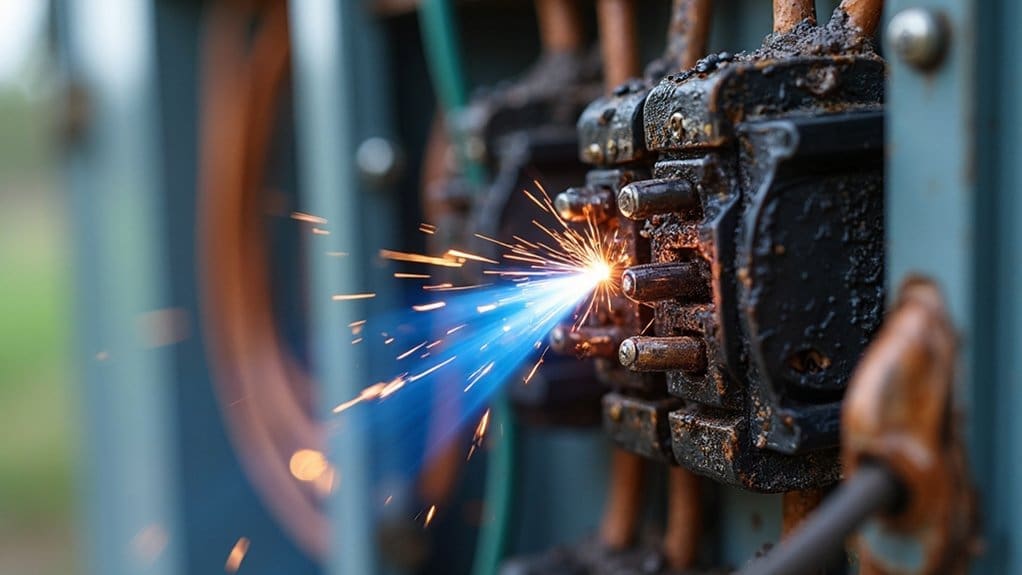
You should call a professional when your heat pump experiences frequent circuit breaker trips, unusual electrical odors, or inconsistent heating performance. Don’t attempt DIY repairs on thermostats, contactors, or capacitors—these require systematic diagnosis to prevent safety hazards and code violations. Professional technicians can pinpoint exact failure points, properly size components, and guarantee all connections meet local electrical standards. This precision approach reduces repair costs while maintaining warranty coverage and optimizing system efficiency for long-term performance.
Key Takeaways
- Call a professional when experiencing frequent electrical component failures like thermostats, contactors, or capacitors to ensure proper diagnosis.
- Contact an expert if you notice burning smells, sparking, or loose electrical connections that pose safety hazards.
- Seek professional help when your heat pump trips breakers repeatedly or shows signs of improper voltage levels.
- Call a technician if your system shows decreased efficiency or increased energy bills indicating underlying electrical issues.
- Contact professionals for any electrical work to ensure code compliance, proper sizing, and warranty protection.
Common Electrical Problems That Affect Heat Pump Performance
When your heat pump fails to operate properly, electrical issues often serve as the underlying culprit. Several critical components can malfunction, disrupting your system’s performance and compromising your comfort.
Faulty thermostat wiring prevents proper signal transmission, leaving your heat pump unresponsive to temperature commands. Circuit breakers that’ve tripped or become overloaded cut off the power supply entirely, forcing immediate system shutdown. Within your heat pump’s electrical panel, malfunctioning contactors and relays can prevent the compressor from starting, even when power’s available.
Damaged or corroded electrical connections create poor continuity throughout the system, leading to intermittent failures or complete breakdowns. Your heat pump’s control board and associated electronic components represent the system’s brain—when these fail, you’ll experience erratic operation, incorrect temperature readings, or total system failure.
These electrical issues require professional diagnosis and repair to guarantee safe, code-compliant restoration of your heat pump’s performance.
Signs Your Heat Pump Has Electrical Issues
Recognizing electrical problems early protects your heat pump from costly damage and prevents potential safety hazards. Several warning signs indicate your system requires immediate professional attention.
Tripped circuit breakers and blown fuses signal overloaded circuits or short circuits within your heat pump’s electrical components. Don’t reset breakers repeatedly—this creates fire risks and indicates underlying electrical issues requiring expert diagnosis.
Monitor your system for buzzing or clicking sounds, which often indicate failing electrical components like contactors, capacitors, or relay switches. These noises shouldn’t be ignored as they typically worsen rapidly.
Erratic or inconsistent operation suggests electrical wiring problems or control board malfunctions. If your heat pump cycles unpredictably or fails to maintain set temperatures, electrical components likely need replacement.
Unexplained increases in energy bills often reflect inefficient electrical system operation. When electrical wiring deteriorates or control boards fail, your heat pump works harder while delivering poor performance, dramatically increasing operating costs.
Thermostat Malfunctions and Their Impact on System Operation
The thermostat serves as your heat pump‘s communication hub, transmitting vital temperature and operational commands that control when your system activates, deactivates, and switches between heating and cooling modes. When your thermostat begins malfunctioning, it disrupts this essential communication pathway, preventing proper signal transmission to your heat pump’s control systems.
A faulty thermostat delivers inaccurate temperature readings, causing your system to cycle inefficiently and driving up energy costs. Compromised wiring connections create intermittent or complete communication failures between your control panel and heat pump components. Outdated thermostats often can’t interface properly with modern heat pump technology, requiring immediate replacement to restore functionality.
These malfunctions manifest as erratic cycling, failure to switch operating modes, or complete system shutdowns. Professional diagnosis is indispensable to determine whether your thermostat requires calibration, wiring repair, or complete replacement. Attempting DIY thermostat work violates electrical codes and compromises system safety, making professional intervention vital for proper operation restoration.
Circuit Breaker Trips and Power Supply Problems
Circuit breaker trips signal serious electrical disturbances within your heat pump system that demand immediate professional diagnosis. When your circuit breaker repeatedly trips, you’re facing an electrical issue that extends beyond simple overload conditions.
Inconsistent power supply creates operational malfunctions that compromise your system’s performance and safety. The root cause often involves faulty wiring, overloaded circuits, or main electrical panel defects that require a licensed electrician’s expertise.
Don’t attempt resetting a continuously tripping circuit breaker without identifying underlying problems. This practice creates dangerous conditions and risks additional equipment damage. Your heat pump’s electrical components operate under strict specifications—improper voltage or intermittent power delivery causes compressor damage and control system failures.
Professional heat pump technicians possess specialized diagnostic equipment to isolate complex electrical problems affecting your unit’s operation. They’ll coordinate with licensed electricians when necessary, ensuring code-compliant repairs that restore safe, reliable power supply to your system.
Faulty Wiring and Component Connections
Faulty wiring and loose component connections represent the most common electrical failures within heat pump systems, creating cascading operational problems that jeopardize both performance and safety. Loose parts in electrical connections disrupt power flow to critical components, preventing your system from maintaining proper working condition.
When faulty connections develop between your compressor and reversing valve, your heat pump can’t effectively switch between heating or cooling modes. These connection failures often manifest as intermittent operation or complete system shutdowns. Worn-out components compound these problems, creating resistance that generates dangerous heat buildup.
Issues arise when overloaded circuits mask underlying wiring deterioration, causing breakers to trip repeatedly. You shouldn’t attempt diagnosing these complex electrical problems yourself—improper handling can worsen damage and create serious safety hazards. Professional technicians possess specialized equipment to identify connection failures, measure electrical loads accurately, and restore your system’s electrical integrity while ensuring code compliance.
When DIY Troubleshooting Becomes Dangerous
Electrical hazards escalate dramatically when homeowners attempt DIY repairs on heat pump systems carrying 240-volt circuits and amperage loads exceeding 30 amps. Professional maintenance expertise becomes critical when electrical components interact with refrigerant systems under pressure.
These common heat pump issues require immediate professional intervention:
- High-voltage shock risks from exposed wiring during component access
- Arc flash dangers when working near energized contactors and capacitors
- Refrigerant line damage causing toxic exposure during electrical troubleshooting
- Fire hazards from improper wire connections in junction boxes
- System destruction through incorrect voltage applications to control boards
Call a professional when you encounter tripped breakers, burning odors, or sparking components. Licensed technicians possess insulated tools, voltage meters, and lockout/tagout procedures essential for safe heat pump repairs. They’ll diagnose the problem using proper safety protocols while preventing catastrophic system damage. Don’t risk electrocution—call qualified HVAC professionals for all electrical maintenance tasks.
Benefits of Professional Electrical Diagnosis and Repair
While homeowners may feel tempted to tackle heat pump electrical problems themselves, professional technicians provide thorough diagnostic capabilities that prevent costly mistakes and assure code-compliant repairs.
Licensed professionals possess specialized tools and expertise to identify common electrical issues that homeowners typically miss. They’ll systematically test thermostats, contactors, capacitors, and wiring connections to pinpoint exact failure points. This precision prevents unnecessary component replacement and reduces overall repair costs.
Professional heat pump repair technicians guarantee all electrical work meets local codes and safety standards. They’ll properly size fuses, verify correct voltage levels, and secure all connections to prevent future failures. This code-compliant approach protects your family and maintains warranty coverage.
Expert diagnosis also optimizes system performance, reducing energy bills through improved efficiency. Professionals can identify underlying issues that cause increased power consumption, ensuring your heating system operates at peak performance while preventing premature component failure and extending equipment lifespan considerably.
Conclusion
You’ve now seen how electrical issues can cripple your heat pump’s performance and threaten your safety. The theory that “simple fixes save money” proves dangerously false when you’re dealing with high-voltage systems, complex wiring, and NEC compliance requirements. You’ll protect your investment and family by recognizing when problems exceed your expertise. Don’t risk electrocution or code violations—trust licensed professionals for electrical diagnosis and repairs that meet safety standards.