
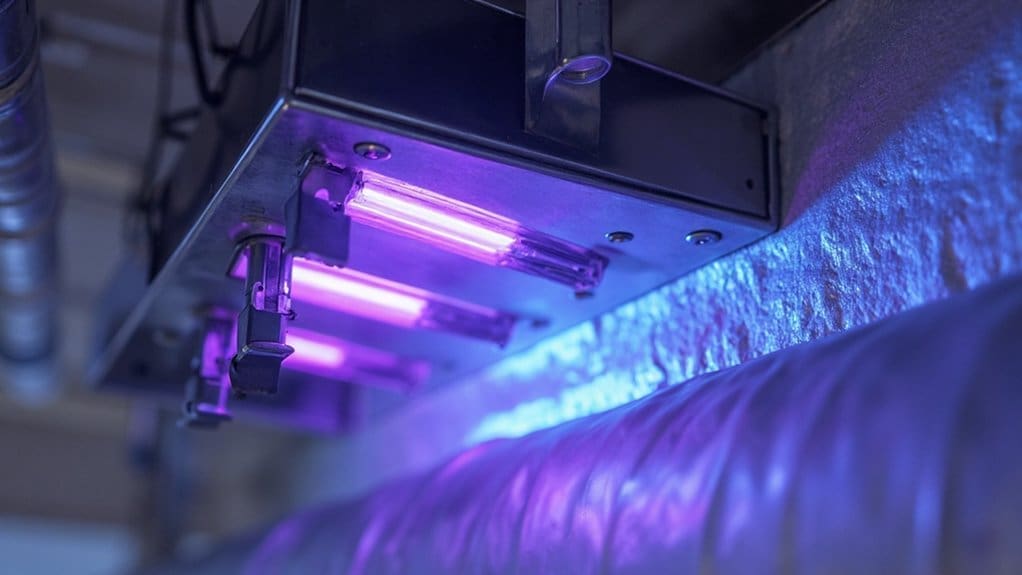
UV-C lights installed in your HVAC system’s air handler emit 254-nanometer radiation that disrupts DNA structures in allergens, bacteria, and mold spores, achieving up to 99.9% elimination rates. You’ll mount the unit above your evaporator coil using self-tapping screws for sheet metal ducts or mounting plates for duct board installations. Connect power through 24V furnace terminals or 120V outlets, verifying transformer capacity beforehand. This strategic placement transforms your ventilation system from allergen distributor into continuous purification network, requiring proper electrical safety procedures for ideal performance.
Key Takeaways
- UV-C light at 254 nanometers disrupts DNA/RNA structures, eliminating up to 99.9% of bacteria, viruses, and mold spores.
- Install UV lights in supply duct above A-coil or near evaporator coil for optimal airborne pathogen targeting.
- Sheet metal ducts require template cutting and self-tapping screws; duct board needs mounting plates for proper sealing.
- Connect 24V models to furnace R and C terminals; 120V versions use standard plugs with pre-molded connections.
- UV lights reduce allergen circulation, extend filter life, improve HVAC efficiency, and provide continuous air disinfection.
How Allergens Spread Through Your Home’s HVAC System
Your home’s HVAC system functions as an unintentional allergen distribution network, actively circulating irritants throughout every room. When your system operates, it pulls airborne allergens like pollen, dust mites, and mold spores directly into filters, system components, ducts, and cooling coils.
These contaminants don’t simply disappear—they accumulate within your HVAC systems, creating persistent indoor air quality issues. Your return vents collect additional allergens over time, establishing a cumulative effect that worsens seasonal allergy symptoms.
The distribution process occurs when your system blows conditioned air through contaminated ductwork, delivering irritants directly into your living spaces. Natural air currents and daily movement patterns compound this problem by disturbing settled allergens and introducing new contaminants from outside.
This continuous cycle means your HVAC system inadvertently transforms from a comfort solution into an allergen amplification system, requiring targeted intervention to restore healthy indoor air quality throughout your home.
Understanding UV-C Light Technology for Air Purification
When properly implemented within HVAC systems, UV-C light technology operates by emitting short-wavelength ultraviolet radiation at 254 nanometers—the ideal frequency for disrupting cellular DNA and RNA structures in microorganisms. This disruption effectively kills or inactivates up to 99.9% of bacteria, viruses, mold, and other harmful contaminants that compromise your home’s air quality.
You’ll find UV-C systems installed strategically within your furnace near the air handler or coils, where they continuously treat circulating air. The technology targets airborne pathogens that trigger allergic reactions, creating a cleaner indoor environment.
Critical performance factors include exposure intensity and duration. Insufficient UV-C exposure won’t achieve proper disinfection, while maximum levels guarantee optimal pathogen elimination. Your system’s effectiveness depends on proper lamp positioning and adequate exposure time as air passes through the treatment zone.
Regular maintenance protocols require cleaning UV-C lamps and monitoring their output intensity to maintain peak performance over time.
Optimal Placement and Mounting Positions for UV Lights
Proper UV light placement directly impacts the system’s ability to eliminate airborne allergens and maintain peak disinfection performance. You’ll need to mount your UV light in the center of the supply duct above the A-coil, positioning it to shine on all three slabs. For end coils, place the unit slightly off-center to guarantee complete coverage.
Install the primary UV light above the evaporator coil in your air handler. Consider a dual configuration with a secondary unit between the evaporator coil and blower motor for enhanced allergen elimination. This positioning maximizes exposure time as contaminated air passes through the system.
For sheet metal ducts, mark and cut the mounting hole using the provided template, then secure with four self-tapping screws. Duct board installations require the supplied mounting plate for proper sealing. Connect power using either 24V or 120/240V sources. The 120V model’s pre-molded plug can utilize a separate circuit or connect near the furnace.
Step-by-Step Installation Process for Different Duct Types
The installation process varies noticeably between sheet metal and duct board systems, requiring specific techniques for each material type.
For sheet metal ducts, you’ll mark and cut a precise hole using the manufacturer’s template. Once you’ve created the opening, secure the UV light unit with four self-tapping screws, ensuring a tight seal against air leaks. Install the UV bulb carefully, avoiding direct skin contact with the glass surface.
Duct board installations require a different approach. You’ll use the supplied mounting plate to create a secure seal, then apply specialized tape around the perimeter to prevent air bypass and maintain system efficiency.
Both air conditioning and furnaces accommodate UV systems through two electrical configurations. The 120V model features a pre-molded plug for standard outlet connection, while the 24V version connects directly to your furnace’s R and C terminals. Always verify your existing transformer capacity before proceeding with 24V installations to prevent electrical overload.
Electrical Requirements and Wiring Considerations
Successfully installing UV lights requires careful evaluation of your HVAC system’s electrical capacity and proper wire connections. You’ll encounter two primary UV light models: 24V units that connect directly to your furnace’s R and C terminals, and 120/240V versions with pre-molded plugs for standard outlets.
For 24V installations, you must assess your existing transformer capacity and fuse rating before proceeding. Adding UV accessories without verifying these specifications can overload your system, causing equipment failure. Make sure your transformer can handle the additional electrical load.
The 120V model offers simpler installation since you can plug it directly into an outlet. However, you still need to verify circuit capacity to prevent overloading.
Regardless of voltage selection, both UV light types activate whenever there’s power to the furnace, ensuring continuous air purification. Always follow proper electrical safety procedures and consider consulting a qualified technician if you’re uncertain about your system’s electrical capacity.
Health Benefits and Long-Term Maintenance Advantages
Beyond eliminating airborne contaminants, UV-C light installation delivers measurable health improvements that directly benefit allergy sufferers and household occupants. You’ll experience up to 99.9% reduction in bacteria, viruses, and mold spores that traditional filtration systems miss. This continuous disinfection process targets allergens at their source, providing sustained relief from respiratory irritation.
Your home’s HVAC system becomes more efficient with UV Lights maintaining cleaner cooling coils. You’ll notice reduced maintenance costs as the technology prevents microbial buildup that typically degrades system performance. Filter life extends considerably, requiring fewer replacements throughout the year.
The installation addresses volatile organic compounds and persistent odors that affect indoor air quality. You’ll benefit from enhanced air purity without safety concerns, as UV-C light remains contained within the HVAC system. This long-term solution reduces allergen exposure while improving overall system efficiency, creating a healthier indoor environment for sensitive individuals.
Conclusion
You’ll vastly reduce airborne allergens by installing UV-C lights in your HVAC system, as studies show these units eliminate up to 87% of airborne microorganisms in a single pass. Follow manufacturer specifications precisely during installation, ensuring proper electrical connections and ideal lamp positioning. Remember to disconnect power before beginning work and wear appropriate PPE. With correct placement and regular maintenance, you’ll achieve noticeable improvements in indoor air quality while extending your HVAC system’s operational efficiency.