
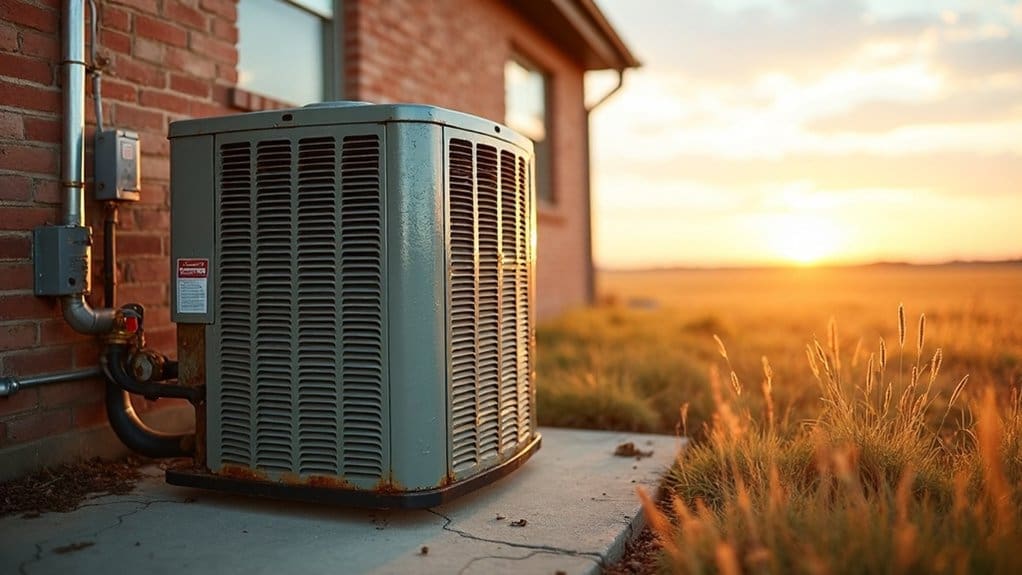
St. Louis’s extreme weather patterns wreak havoc on your AC system through multiple pathways. You’ll face refrigerant leaks from high humidity accelerating deterioration, electrical problems from power surges during severe thunderstorms, and frozen evaporator coils when humid conditions restrict airflow. Clogged filters from seasonal debris reduce efficiency, while thermal expansion in winter creates additional stress on components. These climate-specific challenges require proactive maintenance and professional diagnosis to prevent extensive damage and costly repairs that could compromise your system’s performance.
Key Takeaways
- St. Louis’s extreme weather patterns, including sweltering summers and severe storms, cause power surges and thermal expansion damage to AC systems.
- High humidity accelerates refrigerant deterioration, leading to leaks, reduced cooling capacity, and frozen evaporator coils that restrict airflow.
- Electrical problems like tripped breakers, faulty capacitors, and damaged wiring frequently occur due to storm damage and system overload.
- Humid conditions worsen frozen evaporator coils, causing warm air output, musty odors, and potential compressor damage if ignored.
- Clogged filters and seasonal debris reduce airflow efficiency, while ductwork leaks allow contaminants into the system affecting air quality.
How St. Louis Weather Patterns Impact Your Air Conditioning System
When St. Louis’s extreme weather patterns collide with your AC unit in St. Louis, you’ll face predictable yet challenging problems. The city’s sweltering summers with 90°F highs force your system into overdrive, compromising cooling performance and accelerating component wear. High humidity creates moisture buildup that leads to water leaks around indoor units and promotes mold growth within ductwork.
Winter’s freezing temperatures cause thermal expansion issues, while seasonal shifts stress your HVAC systems through constant temperature cycling. These conditions commonly produce refrigerant leaks as connections loosen and seals deteriorate. Missouri’s severe thunderstorms and tornadoes create power surges that damage electrical components and debris that creates clogged filters.
AC problems in St. Louis multiply when humidity combines with overworked systems, causing coil icing and reduced efficiency. You’ll stay comfortable all summer by addressing these climate-specific challenges through routine maintenance that targets humidity control, filter replacement, and electrical component inspection before peak seasons arrive.
Refrigerant Leaks and High Humidity Challenges
Two critical factors converge in St. Louis to create significant AC challenges: high humidity and refrigerant leaks. The humid climate accelerates refrigerant deterioration, causing your cooling system to lose capacity and efficiency rapidly. When refrigerant levels drop, your evaporator coils can freeze, restricting airflow and creating a cascade of performance issues.
You’ll notice decreased cooling capacity as the primary symptom, but the underlying refrigerant leak requires professional diagnosis to locate and repair properly. The St. Louis region’s oppressive humidity forces your AC to work harder, increasing leak probability and system stress.
Frozen evaporator coils from low refrigerant create airflow restrictions that compound cooling problems. Without prompt repair, minor leaks escalate into major system failures. Regular maintenance becomes essential in this humid climate – professional technicians can identify early leak indicators before they compromise your entire cooling system. Proactive inspection prevents extensive damage and maintains ideal refrigerant levels.
Electrical Problems That Plague Missouri AC Units
Why do Missouri AC units experience such frequent electrical failures? The state’s extreme weather conditions create significant stress on electrical components, leading to multiple system malfunctions that can shut down your air conditioner completely.
Your HVAC system’s electrical issues typically manifest in these common ways:
- Tripped circuit breakers and blown fuses prevent your unit from receiving power
- Faulty capacitors cause your AC to cycle erratically or fail during startup
- Damaged wiring from age or rodent interference disrupts normal operation
- Malfunctioning thermostats create communication breakdowns between components
- Overloaded circuits from dirty filters forcing your system to work harder
These electrical issues demand immediate attention from trained HVAC technicians who can safely diagnose and resolve problems. When your system runs efficiently with properly functioning electrical components, you’ll avoid costly emergency repairs and maintain consistent cooling throughout Missouri’s challenging climate conditions.
Frozen Evaporator Coils During Peak Summer Months
Although Missouri’s scorching summer heat demands maximum cooling performance from your AC system, frozen evaporator coils create a frustrating paradox that prevents proper air conditioning when you need it most. St. Louis’s humid conditions exacerbate this problem when clogged air filters restrict airflow or low refrigerant levels compromise your cooling equipment’s operation.
When frozen evaporator coils develop, your air conditioning system can’t maintain a comfortable indoor environment. You’ll notice warm air output, musty odors, and water leaks around your unit. These symptoms indicate your system’s struggling to keep your home cool and comfortable during peak summer months.
Common culprits include dirty filters, refrigerant deficiencies, and blockages preventing proper airflow. Ignoring these frozen coils worsens the situation and risks expensive compressor damage.
Regular maintenance services in St. Louis are essential for maintaining ideal performance. Professional technicians identify potential issues before they escalate, ensuring your cooling equipment operates efficiently throughout Missouri’s demanding summer season.
Airflow Issues Caused by Dust and Seasonal Debris
St. Louis’s humid, dusty climate creates significant airflow challenges for your air conditioning unit. Dirty air filters become clogged rapidly, restricting airflow and forcing your AC system to work harder. Seasonal debris from surrounding vegetation accumulates around your outdoor condenser unit, while neglected dirty components compromise cooling performance.
Common airflow problems include:
- Clogged filters reducing system efficiency within weeks
- Leaves, seeds, and grass clippings blocking condenser airflow
- Dirt buildup on coils restricting heat transfer
- Ductwork leaks allowing contaminants into the system
- Poor indoor air quality from insufficient filtration
These issues compound quickly in Missouri’s challenging climate. Your AC system struggles against restricted airflow, leading to increased energy consumption and potential component failure. Regular maintenance prevents these problems from escalating.
Change filters every three months minimum, clear debris from your outdoor condenser unit monthly, and schedule professional cleaning for ideal performance. Proactive maintenance guarantees your system effectively manages St. Louis’s demanding summer conditions.
Thermostat Malfunctions in Extreme Temperature Swings
Beyond mechanical components, your thermostat becomes increasingly unreliable when subjected to St. Louis’s extreme temperature swings. These rapid shifts from scorching summers to frigid winters disrupt thermostat sensors, causing your cooling system to cycle improperly or fail to maintain comfortable temperatures in your home.
Calibration issues rank among the most Common AC Problems in Missouri’s variable climate. When sensors can’t accurately read temperature changes, your system struggles to cool effectively. Direct sunlight exposure or drafts further compound these issues, creating false readings that prevent ideal performance.
Thermostat malfunctions often manifest as erratic cycling, inconsistent temperature regulation, or complete system failures. These Problems directly impact your home’s comfort levels and energy efficiency. Regular thermostat maintenance and proper placement away from heat sources solve most issues. Additionally, keep your filters clean, as restricted airflow can cause temperature sensors to misread actual conditions, creating cascading thermostat Problems throughout your cooling system.
When Your AC Struggles to Cool Your Entire Home
Three primary factors typically cause your AC system to struggle with whole-home cooling in St. Louis’s sweltering heat: improper sizing, airflow restrictions, and refrigerant issues.
When your unit can’t cool your home efficiently and effectively, these problems often lead to system malfunctions that compromise maintaining a comfortable indoor environment:
- Undersized units – Systems too small for your home’s square footage can’t handle Missouri’s extreme temperatures
- Duct leaks and blockages – Damaged ductwork prevents conditioned air from reaching all rooms consistently
- Frozen evaporator coils – Ice buildup drastically reduces cooling capacity and air circulation
- Refrigerant leaks – Low refrigerant levels cause warm air circulation instead of proper cooling
- Thermostat synchronization problems – Faulty communication creates temperature inconsistencies between rooms
Regular maintenance with clean air filters and professional inspections help identify and address these issues before they escalate. Prompt repairs won’t just restore whole-home cooling—they’ll prolong the lifespan of your entire HVAC system.
Why Professional HVAC Service Is Essential in St. Louis
Missouri’s relentless heat and humidity consistently push your air conditioning system beyond normal operating parameters, creating wear patterns that only experienced HVAC professionals can accurately diagnose and repair. These extreme conditions accelerate component degradation, making maintenance is indispensable for preventing system failures during peak cooling seasons.
Professional technicians understand how St. Louis’s temperature fluctuations affect your equipment. They’ll identify potential issues before they become major problems, replacing dirty filters every maintenance visit while inspecting critical components for climate-related stress. This proactive approach will help you avoid costly emergency repairs when you need cooling most.
Local HVAC experts know Missouri’s unique climate challenges and develop tailored service strategies essential for maintaining ideal performance. Regular professional maintenance extends the lifespan of your AC system while maximizing energy efficiency. Without expert care, your system works harder against environmental demands, resulting in premature failure and higher operating costs. Professional service helps guarantee that your AC delivers reliable comfort year-round.
Conclusion
You’ve navigated the minefield of St. Louis AC challenges, from refrigerant leaks battling humid summers to frozen coils during peak heat. Don’t let electrical faults, airflow restrictions, or thermostat failures compromise your system’s performance. When temperature swings push your unit beyond its limits and cooling becomes inadequate, you’ll need professional intervention. Missouri’s demanding climate requires expert diagnostics and precision repairs—attempting DIY solutions often escalates problems and increases operational costs.