
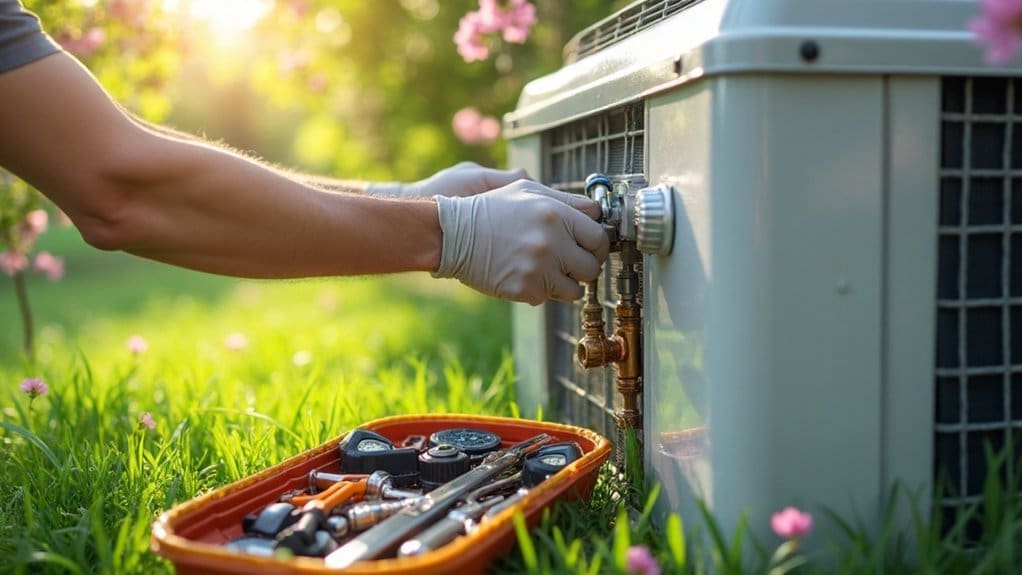
You’ll need to replace or clean your air filters monthly, schedule a professional tune-up to verify refrigerant levels and electrical connections, and clear debris from your outdoor unit while maintaining two-foot clearance around it. Set your thermostat between 74°F-78°F and consider upgrading to a programmable model for 10% annual savings. Inspect ductwork for leaks that cause up to 30% energy loss, and address minor repairs before peak season demand. This extensive approach will reveal additional optimization strategies.
Key Takeaways
- Replace or clean air filters monthly to prevent restricted airflow and reduce energy consumption by up to 15%.
- Schedule professional HVAC maintenance to verify refrigerant levels, test electrical connections, and clean outdoor units thoroughly.
- Clear debris around outdoor condenser unit and maintain 2-foot clearance from vegetation for optimal airflow.
- Optimize thermostat settings to 74°F-78°F when home and consider upgrading to programmable models for better control.
- Inspect ductwork for air leaks that can cause up to 30% energy loss and uneven cooling.
Replace or Clean Your Air Filters for Optimal Performance
The air filter serves as your HVAC system‘s first line of defense against airborne contaminants, trapping dust, pet dander, pollen, and debris before they circulate throughout your home. This critical component directly impacts your air conditioning system‘s performance and longevity.
Clogged air filters restrict airflow, forcing your system to work harder and increasing energy consumption by up to 15%. This reduced cooling efficiency translates to higher energy bills and compromised ideal performance. During your HVAC system maintenance routine, inspect filters monthly and replace or clean them every 1-3 months.
If you have pets or family members with allergies, you’ll need more frequent filter maintenance to maintain air quality and efficiency. Mark your calendar to establish a consistent replacement schedule. Clean reusable filters with mild soap and water, ensuring they’re completely dry before reinstallation. This simple step maximizes your system’s efficiency while protecting indoor air quality.
Schedule a Professional AC Tune-Up Before Peak Season
Beyond basic filter maintenance, thorough professional servicing addresses the complex mechanical and electrical components that determine your AC system’s reliability during summer’s most demanding conditions. Schedule a Professional HVAC maintenance appointment during spring to ascertain optimal seasonal performance when temperatures rise.
Regular AC tune-ups involve extensive system inspection, refrigerant level verification, and electrical connection testing. Technicians Clean Your Outdoor unit, removing debris that restricts airflow and forces your system to work harder. This spring maintenance approach helps Prepare Your AC for peak cooling schedules ahead.
Professional HVAC maintenance includes ductwork assessment, thermostat calibration, and condenser coil cleaning. These preventive measures prevent breakdowns that typically occur during high-demand periods. No matter how high summer temperatures climb, properly maintained systems deliver consistent cooling while consuming less energy.
Scheduling your tune-up before peak season guarantees availability with qualified technicians and prevents the inconvenience of emergency repairs when you need your cooling system most.
Clean Your Outdoor Unit and Remove Debris
Two critical steps confirm your outdoor condenser unit operates at peak efficiency: turning off power and clearing accumulated debris. Your outdoor AC unit accumulates dirt, leaves, and contaminants that restrict airflow and force your cooling system to work harder, consuming excessive energy.
Before starting maintenance, shut off power to prevent electrical hazards. Trim vegetation around your outdoor condenser, maintaining at least two feet of clearance on all sides. This verifies proper air circulation and prevents future debris accumulation.
Clean your unit systematically:
- Remove visible debris – Clear leaves, twigs, and dirt from fins and surrounding area
- Gently rinse components – Use low-pressure water to wash away stubborn contaminants
- Inspect for damage – Check for bent fins or blocked passages affecting airflow
- Restore power safely – Verify all connections are dry before reactivating system
Regular outdoor condenser maintenance dramatically improves efficiency, reduces energy consumption, and extends your cooling system’s lifespan through optimized airflow performance.
Check Your Thermostat Settings and Consider Smart Upgrades
After completing exterior maintenance tasks, your thermostat becomes the next component requiring attention to maximize your air conditioning system’s performance and energy efficiency. Begin by examining your current thermostat settings and establishing ideal indoor temperature parameters. Set your thermostat to 74°F-78°F when home and increase the temperature when away to achieve substantial cost savings.
If you’re using a basic manual thermostat, consider upgrading to a programmable thermostat or smart thermostat for enhanced control capabilities. Programmable thermostats allow you to create cooling schedules that automatically adjust temperatures based on your daily routine, reducing energy usage without sacrificing comfort.
Smart thermostats provide advanced features including remote adjustment capabilities, energy monitoring, and customized optimization tips. These devices can reduce cooling costs by up to 10% annually while offering detailed insights into system performance. The investment in upgrading to a programmable or smart unit typically pays for itself through reduced energy bills and improved operational efficiency.
Inspect and Clean Air Ducts for Maximum Efficiency
Your home’s ductwork often harbors hidden inefficiencies that can substantially impact your air conditioning system’s performance and energy consumption. Professional duct inspection reveals critical issues affecting your HVAC systems’ effectiveness.
Air leaks in ductwork cause up to 30% energy loss, forcing your AC to work harder while failing to maintain consistent cooling. These system vulnerabilities compromise indoor air quality and strain your air conditioner unnecessarily.
Watch for these warning signs that demand immediate attention:
- Uneven cooling – Rooms that never reach comfortable temperatures despite constant HVAC operation
- Excessive dust accumulation – Surfaces requiring frequent cleaning due to compromised air conditioning filtration
- Musty odors – Unpleasant smells indicating mold or debris buildup in your ductwork
- Skyrocketing energy bills – Dramatic cost increases from inefficient system performance
Professional duct cleaning and sealing address these problems directly. Properly maintained ductwork guarantees efficient conditioned air distribution throughout your home, dramatically improving your HVAC system’s performance while reducing energy consumption and enhancing indoor air quality.
Address Minor AC Repairs Before They Become Major Problems
When should you tackle those seemingly insignificant AC issues that whisper rather than scream for attention? The answer is now, during your spring AC tune-up. Minor AC repairs addressed early prevent costly breakdowns when you need your system most.
Start by examining refrigerant levels. Low refrigerant indicates leaks that’ll worsen under summer stress. Check electrical connections for corrosion or looseness—these cause frequent repairs and system failures. Inspect the condensate drain for clogs that can damage components and reduce systems performance.
Listen for unusual sounds during operation. Grinding, squealing, or clicking noises signal worn bearings or belts requiring immediate attention. A proactive approach to these issues maintains peak functioning and extends equipment life.
Document all findings during regular maintenance checks. This AC maintenance record helps identify patterns and prevents recurring problems. Professional technicians can address complex issues, but homeowners can handle basic inspections. Your diligence now guarantees optimal overall performance throughout summer’s demanding months.
Evaluate Whether Your System Needs an Upgrade
Three key indicators signal it’s time to evaluate your AC system for replacement rather than repair. Systems over 10-15 years old require increasingly frequent maintenance, forcing your system to work harder while struggling to reduce cooling costs effectively.
Time to Upgrade when you notice:
- Skyrocketing energy bills that drain your budget month after month
- Inconsistent temperatures leaving family members uncomfortable in sweltering heat
- Constant repairs creating stress and unexpected financial burdens
- Outdated refrigerants harming the environment your children will inherit
Preparing Your HVAC System for summer demands proactive decision-making. Schedule professional evaluation to determine upgrade necessity. Newer systems deliver superior energy efficiency, quieter operation, and extended lifespans. Eco-friendly refrigerants reduce environmental impact while enhancing performance.
Position your new unit at least two feet from obstructions for maximum airflow. Integrate a programmable or smart thermostat for greatest efficiency. Professional installation guarantees proper system integration. Perform system maintenance annually to maintain peak performance and reliability throughout demanding summer months.
Essential Steps to Keep Your System Running Efficiently
Why does maintaining peak AC efficiency require systematic attention to multiple system components? Your spring AC maintenance must address critical elements that directly impact performance and energy consumption.
Replace your systems air filter every 1-3 months to guarantee proper airflow and achieve up to 15% energy efficiency improvements. This prevents higher energy bills while maintaining consistent cool air delivery.
Schedule an AC professional inspection annually to examine coils, refrigerant levels, and electrical connections. These important aspects of heating and air conditioning maintenance optimize system performance.
Clear debris around your outdoor condenser unit, maintaining two-foot clearance for adequate airflow. This reduces energy consumption drastically.
Install programmable thermostats to save 10% annually on cooling costs through efficient temperature scheduling.
Inspect air ducts for dust buildup, mold, and leaks that waste up to 30% of conditioned air. When you prepare your air distribution system properly, you’ll prevent energy losses while safeguarding effective heating or cooling throughout your home.
Benefits of Spring Maintenance for Year-Round Comfort
While summer’s peak temperatures test your cooling system’s limits, spring maintenance establishes the foundation for consistent year-round comfort and operational reliability. This perfect time allows technicians to thoroughly inspect your outdoor unit before scorching summer heat arrives, guaranteeing your system operates at peak efficiency when you need it most.
Professional spring tune-ups deliver measurable benefits that protect your investment:
- Prevent costly emergency repairs during the hottest days when your family needs reliable cooling most
- Reduce energy bills by up to 30% through optimized performance and Clean Air filtration efficiency
- Extend system lifespan to 15-20 years by addressing minor issues before they escalate into major failures
- Maintain consistent indoor comfort with properly calibrated temperature controls and airflow distribution
Consider upgrading worn components during spring maintenance rather than waiting for failure. This proactive approach ensures your system delivers dependable cooling performance throughout summer while maximizing your long-term HVAC investment value.
Conclusion
You’ve now covered the essential maintenance procedures to maximize your AC system’s performance. By following these systematic steps—filter replacement, professional servicing, component cleaning, and preemptive repairs—you’ll safeguard safe, efficient operation throughout summer’s demanding conditions. Why risk system failure during peak heat when proper spring preparation prevents costly breakdowns? Execute these maintenance protocols consistently, and you’ll maintain ideal cooling capacity while extending your equipment’s operational lifespan. Your proactive approach guarantees dependable performance when you need it most.