
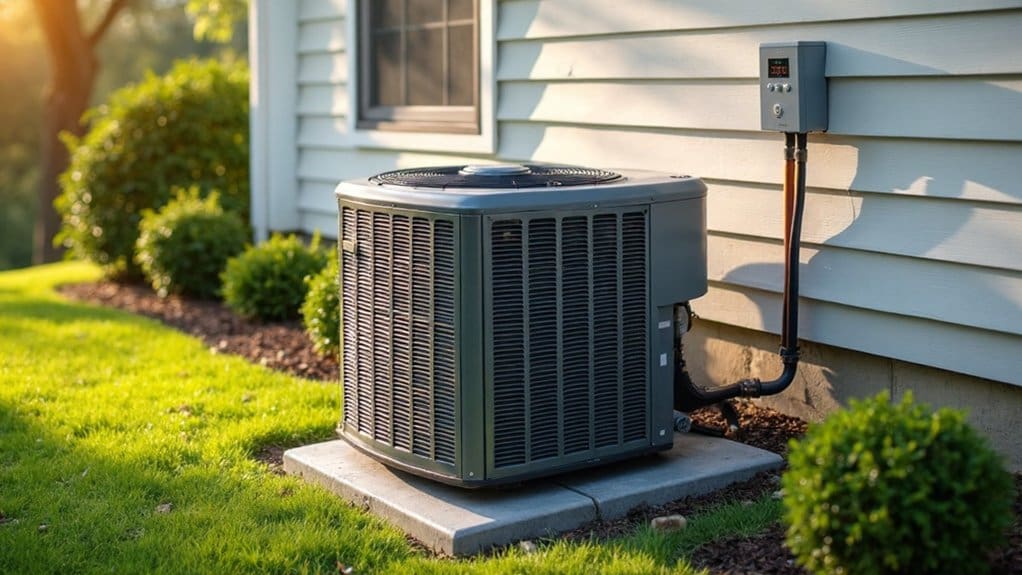
You’ll extend your heat pump’s lifespan by implementing five essential practices: proper sizing through Manual J calculations, professional installation with thorough commissioning, annual maintenance by certified technicians, monthly filter replacements, and regular outdoor unit cleaning. These preventative measures can reduce repair costs by 40% and add 5-10 years to your system’s operational life. Regular maintenance improves efficiency by up to 25%, while clean condenser coils boost performance by 30%. Master these techniques to maximize your investment’s longevity.
Key Takeaways
- Choose properly sized heat pump through Manual J load calculation to prevent short cycling and component overwork
- Schedule annual professional maintenance and tune-ups to improve efficiency by 25% and extend lifespan 5-10 years
- Replace air filters every 1-3 months to maintain optimal airflow and reduce system strain
- Keep outdoor units clean and debris-free, focusing on condenser coils for up to 30% efficiency improvement
- Ensure professional installation and commissioning to maintain warranty protection and prevent safety hazards
Choose the Right Size Heat Pump for Your Home
Your heat pump’s lifespan depends heavily on proper sizing from day one. Heat pumps range from one-and-a-half to five tons, but you can’t rely on square footage alone to determine the right size. A Manual J load calculation considers your home’s orientation, size, and occupancy patterns to guarantee proper sizing.
An oversized unit will short cycle, reducing energy efficiency and system lifespan through constant on-off cycling. An undersized system struggles to maintain your set temperature, overworking components and shortening their life. Both scenarios void your warranty despite having a well-maintained system.
Choose an experienced HVAC contractor who performs accurate load calculations and follows manufacturer specifications. After installation, demand a thorough commissioning procedure to verify proper heat pump operation. This verification process catches installation errors before they damage your system. Remember, manufacturers can void warranties due to poor installation practices, making contractor selection critical for safeguarding your investment.
Ensure Professional Installation and Proper Commissioning
Professional installation forms the foundation of your heat pump’s long-term performance and warranty protection. Choosing qualified HVAC professionals guarantees proper system commissioning and prevents costly efficiency problems that reduce heat pumps lifespan.
Improper installation immediately voids manufacturer warranties, even with professional maintenance afterward. Your contractor must follow thorough commissioning procedures to verify key components operate correctly, preventing future comfort issues and higher energy bills.
Incorrect installation creates defective machine behavior, triggering safety hazards and premature system failure. HVAC professionals confirm proper refrigerant levels, electrical connections, and airflow calibration during initial setup. This prevents efficiency problems that seasonal maintenance can’t resolve later.
Extending the Lifespan requires professional verification of ductwork integrity and proper system sizing. Even well-maintained systems fail prematurely when installed incorrectly. Validate efficient operation by selecting experienced contractors who guarantee proper commissioning procedures. Don’t let poor installation destroy your investment—professional setup and Duct Cleaning verification protect your warranty and maximize system longevity.
Schedule Regular Professional Maintenance and Tune-Ups
While proper installation establishes your heat pump’s foundation, scheduled professional maintenance determines whether it reaches its full lifespan potential. Annual tune-ups by certified HVAC technicians involve thorough system inspections, refrigerant level verification, electrical component testing, and complete cleaning of coils and filters.
Regular professional maintenance dramatically improves your heat pump’s energy efficiency by up to 25%, translating to substantial long-term cost savings. Technicians identify potential issues before they escalate into major repairs, preventing costly component failures that could compromise your system’s performance.
Skipping maintenance voids manufacturer warranties and accelerates system deterioration. Professional service guarantees optimal refrigerant levels, clean heat exchangers, and properly calibrated controls—all critical for maximizing lifespan and maintaining peak efficiency.
Consider investing in a preventative maintenance agreement. This proactive approach extends your heat pump’s operational lifespan by 5-10 years on average, delivering consistent performance while minimizing unexpected repairs and energy waste.
Replace Air Filters Every 1-3 Months
The most overlooked yet critical maintenance task involves replacing your heat pump’s air filters every 1-3 months, depending on filter type and household conditions. Clogged air filters restrict airflow, forcing your heat pump to work harder and accelerating wear and tear throughout the entire HVAC system.
This simple filter replacement prevents your system from straining to maintain temperature, which directly impacts energy efficiency and system performance. When airflow becomes restricted, your heat pump compensates by running longer cycles, increasing energy consumption and utility costs while shortening equipment lifespan.
You can handle this essential maintenance task yourself or have an HVAC technician perform it during routine service visits. Regular filter replacement ranks among the most cost-effective maintenance tasks for preventing costly repairs. Clean filters guarantee optimal airflow, reduce system stress, and preserve peak energy efficiency. This straightforward preventive measure dramatically extends your heat pump’s operational life while keeping energy bills manageable.
Keep Outdoor Units Clean and Free of Debris
Although your heat pump’s outdoor unit operates reliably in all weather conditions, it requires consistent cleaning to maintain peak performance and prevent costly breakdowns. Regular debris removal is critical for your heat pump’s longevity and efficiency.
Clear away leaves, twigs, and accumulated debris from around your outdoor unit monthly. This simple maintenance task prevents airflow restrictions that cause overheating and system strain. Remove vegetation growing within two feet of the unit to ascertain proper heat exchange.
Focus particular attention on your condenser coils during seasonal cleanings. Dirty coils dramatically reduce heat transfer efficiency, forcing your heat pump to work harder and consume more energy. Clean coils can improve your system’s efficiency by up to 30% compared to neglected ones.
Schedule thorough outdoor unit cleanings at least twice yearly—spring and fall work best. This proactive maintenance approach prevents dirt buildup, maximizes your heat pump’s lifespan, and maintains ideal performance while avoiding premature component wear and expensive repairs.
Address Warning Signs and Schedule Timely Repairs
Early detection of heat pump problems saves you thousands in repair costs and averts catastrophic system failure. Monitor your system for warning signs: inconsistent heating or cooling, frequent cycling, unusual noises, reduced airflow, and higher energy bills. These symptoms indicate developing issues requiring immediate attention.
Don’t overlook performance degradation. Refrigerant leaks cause efficiency losses and compressor damage. Faulty electrical connections create fire hazards and component failure. Addressing these problems promptly through professional repairs prevents cascade failures that destroy expensive components.
Schedule maintenance visits when you notice operational changes. Technicians can diagnose refrigerant levels, test electrical connections, and evaluate airflow patterns before minor issues become major breakdowns. Timely repairs maintain peak efficiency and prevent premature component wear.
Delaying necessary repairs shortens your heat pump’s lifespan enormously. What starts as a simple fix becomes system replacement when ignored. Proactive maintenance and immediate problem resolution maximize your investment’s operational lifetime and guarantee reliable performance year-round.
Conclusion
Your heat pump isn’t just equipment—it’s the beating heart of your home’s comfort system. By sizing correctly, investing in professional installation, maintaining regular service schedules, and staying vigilant about warning signs, you’ll transform potential breakdowns into preventable maintenance tasks. Don’t let minor issues snowball into major repairs. Take control of your system’s destiny through proactive care, and you’ll squeeze every ounce of efficiency from your investment while avoiding costly emergency calls.