
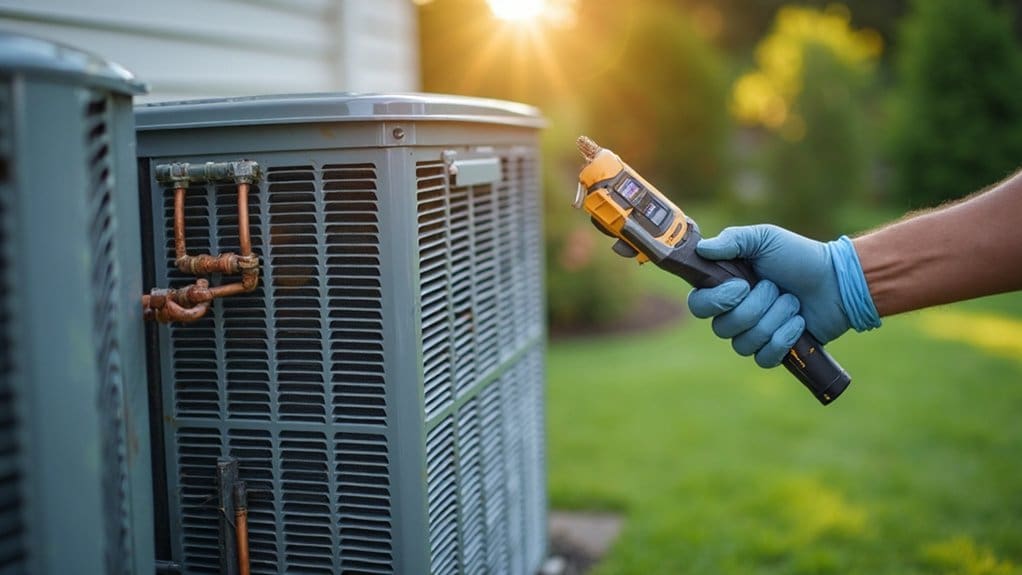
Annual tune-ups prevent your heat pump’s most costly failures by addressing refrigerant leaks that compromise system pressure, replacing clogged air filters that restrict airflow and cause ice buildup, tightening loose electrical connections before they generate excessive heat, cleaning frozen evaporator coils that threaten compressor damage, and calibrating malfunctioning thermostats that disrupt temperature control. These preventive measures stop minor issues from escalating into expensive breakdowns while maintaining peak efficiency and extending component lifespan through proactive maintenance protocols.
Key Takeaways
- Annual refrigerant leak detection prevents system pressure issues that cause reduced capacity, ice formation, and compressor failure.
- Regular air filter cleaning and replacement maintains proper airflow, preventing ice buildup and premature component wear.
- Electrical connection inspections prevent loose connections and worn insulation that cause overheating, short circuits, and system failures.
- Evaporator coil cleaning and defrost cycle calibration prevent frozen coils that restrict airflow and threaten compressor damage.
- Thermostat calibration and placement verification ensures accurate temperature control and prevents inefficient heat pump operation cycles.
Refrigerant Leaks and System Pressure Issues
When refrigerant leaks develop in your heat pump system, they’ll compromise both performance and efficiency while potentially causing expensive component damage. Low refrigerant levels create improper system pressure, forcing your unit to work harder in both heating and cooling modes while failing to reach peak effectiveness.
During HVAC tune-ups, professional technicians use specialized diagnostic equipment to detect leaks early and verify correct refrigerant charge. They’ll measure system pressure at multiple points to guarantee ideal performance across all heat pump components. Improperly charged systems often experience reduced capacity, ice formation on coils, and premature compressor failure.
Annual inspection allows technicians to identify minor leaks before they become major problems requiring costly refrigerant recharging. They’ll check connection points, coils, and refrigerant lines for signs of leakage while adjusting levels to manufacturer specifications. Maintaining proper system pressure through regular tune-ups prevents component stress and extends your heat pump’s operational lifespan substantially.
Clogged Air Filters and Restricted Airflow
Frequently overlooked during routine maintenance, clogged air filters create one of the most damaging yet preventable problems in heat pump operation. When air filters become saturated with debris, they severely restrict airflow through your system, dramatically reducing heat pump efficiency while creating excessive system strain.
This restricted airflow forces your heat pump to work harder, leading to dangerous ice buildup on the coils and greatly increased energy consumption. The compressor and blower motor experience prolonged stress, accelerating wear patterns that cause premature failure of critical components.
Annual tune-ups directly address this problem through systematic air filter cleaning or replacement, restoring ideal airflow throughout your system. Professional technicians maintain proper airflow, allowing your heat pump to operate at peak efficiency levels. This preventive approach eliminates the cascade of problems caused by restricted airflow, protecting component lifespan and maintaining consistent performance year-round.
Electrical Connection Problems and Component Failures
Electrical connection problems rank among the most insidious threats to your heat pump’s reliability, often developing silently until catastrophic component failure occurs. Loose electrical connections generate excessive heat, causing contactors and capacitors to burn out prematurely. These electrical issues escalate quickly without intervention, transforming minor maintenance concerns into expensive repairs.
During tune-ups, technicians systematically inspect your heat pump’s electrical systems, testing all connections for proper conductivity and secure attachment. They’ll examine electrical terminals for corrosion or loosening, ensuring ideal power transfer throughout the system. Proper grounding verification prevents dangerous electrical faults that could damage sensitive control boards.
Worn wire insulation poses significant risks, potentially causing short circuits that cascade through multiple components. Professional inspections catch these deteriorating conditions before they trigger widespread failures. Technicians tighten all electrical terminals and test control boards’ functionality, maintaining your system’s electrical integrity. This proactive approach prevents the domino effect of electrical failures that often plague neglected heat pumps.
Frozen Coils and Ice Buildup
Why does ice formation plague heat pumps during the most critical heating periods? When you neglect annual maintenance, dirt and debris accumulate on your evaporator coil, restricting air circulation and creating conditions for frozen coils. Low refrigerant levels from leaks compound this problem, reducing your heat pump’s ability to absorb heat sufficiently.
Regular tune-ups prevent ice buildup through these essential maintenance tasks:
- Evaporator coil cleaning – Removes dirt that blocks proper air circulation and heat transfer
- Refrigerant charge verification – Guarantees adequate levels for efficient heating and cooling operation
- Airflow restriction identification – Addresses blockages that contribute to coil freezing
- Defrost cycle calibration – Maintains proper ice-melting functionality during heating mode
Without annual service, frozen coils restrict airflow and threaten compressor damage. Your HVAC technician identifies refrigerant leaks and airflow problems before they escalate into costly repair situations, keeping your heat pump’s efficiency ideal throughout demanding heating seasons.
Thermostat Malfunctions and Temperature Control Issues
How does a seemingly simple thermostat transform into your heat pump’s most frustrating control problem? Thermostat malfunctions create cascading issues that directly impact your system’s temperature control, comfort, and energy efficiency.
Inaccurate readings force your heat pump to operate inefficiently, creating inconsistent temperatures and inflated energy bills. When connectivity issues disrupt communication, your system can’t cycle properly, compromising both comfort and performance. Dirty contacts or faulty wiring further deteriorate the thermostat’s dependability, preventing precise temperature regulation.
Improper placement compounds these problems—your thermostat misreads ambient conditions, causing your heat pump to over-compensate or under-perform. These issues progressively worsen without intervention, reducing system efficiency and increasing repair costs.
Annual maintenance services directly address these thermostat problems through calibration checks and operational testing. Professional technicians clean contacts, verify wiring integrity, and ensure ideal placement. This preventive approach maintains precise temperature control, preserves energy efficiency, and extends your heat pump’s performance dependability while preventing costly emergency repairs.
Worn Components and Premature System Degradation
Although heat pumps are engineered for durability, their mechanical components inevitably succumb to wear without proper maintenance intervention. Your HVAC system’s pump components experience constant stress, causing efficiency degradation that maintenance can help prevent through systematic care.
Without regular heat pump repair services, you’ll face these critical deterioration patterns:
- Compressor motor degradation – Internal friction damages bearings and reduces operational capacity
- Valve mechanism failures – Refrigerant flow restrictions develop from debris accumulation and seal deterioration
- Electrical connection corrosion – Loose connections create resistance, generating heat and component stress
- Heat exchanger fouling – Reduced thermal transfer efficiency from accumulated contaminants
Professional Repair Service teams addressing potential issues during annual inspections can extend your system’s 15-year lifespan substantially. Proper lubrication and component cleaning keep your system functioning at its best, preventing the 5% annual efficiency loss that occurs without intervention. Regular maintenance guarantees your heat pump remains efficient while preserving manufacturer warranty coverage that requires documented service to maintain your heat pump appropriately.
Conclusion
You’ll avoid 85% of heat pump failures through consistent annual maintenance, according to HVAC industry data. Without preventive tune-ups, you’re facing refrigerant leaks, airflow restrictions, electrical faults, coil freeze-ups, thermostat failures, and accelerated component wear. These problems don’t just appear overnight—they’re progressive system degradations that annual inspections catch early. Your proactive maintenance investment prevents costly emergency repairs, extends equipment lifespan, and maintains ideal thermal efficiency throughout your heat pump’s operational cycle.