
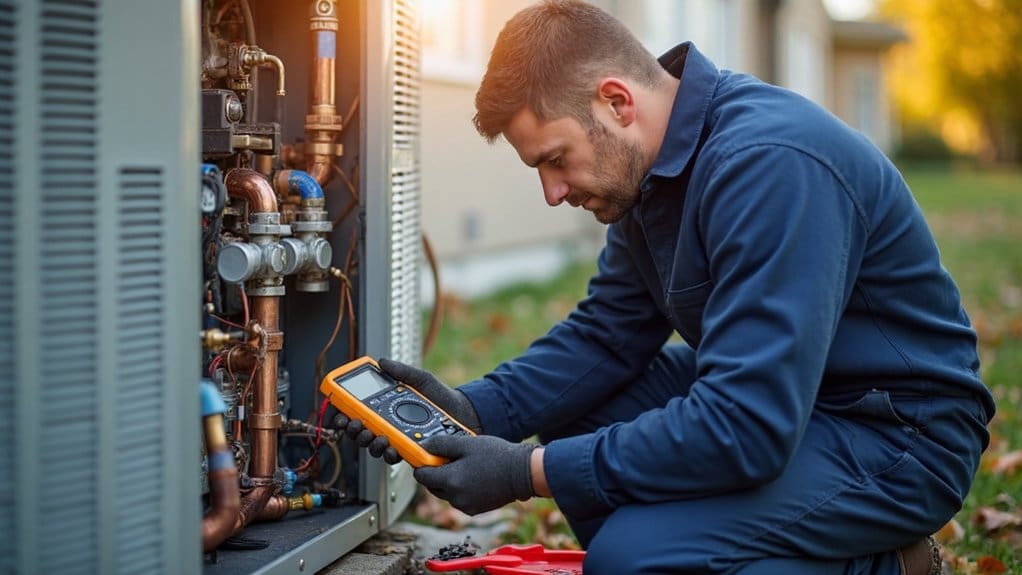
During your professional heat pump tune-up, you’ll experience an extensive five-stage process where certified technicians establish baseline system conditions, thoroughly clean evaporator and condenser coils, test refrigerant levels using electronic leak detection, inspect electrical terminals and connections, and perform precise performance calibration. They’ll measure suction pressures, assess amperage consumption, and fine-tune blower speeds to restore peak efficiency. This systematic maintenance protocol typically requires 2-3 hours and involves over 20 diagnostic procedures to optimize your system’s operational parameters.
Key Takeaways
- Technicians will inspect and clean both indoor and outdoor components, including coils, blower motors, and electrical connections.
- Refrigerant levels will be tested, adjusted if needed, and checked for leaks to ensure optimal system performance.
- All electrical components will be inspected, tested for proper functionality, and calibrated for safe operation.
- Air filters and ductwork will be assessed to evaluate airflow patterns and identify any blockages or issues.
- Performance testing will measure pressures, electrical consumption, and thermal output to optimize system efficiency.
Pre-Service Inspection and System Assessment
Before any maintenance work begins, technicians must conduct a thorough pre-service inspection to establish baseline system conditions and identify crucial issues. During professional heat pump maintenance, your HVAC technician will evaluate the outdoor unit’s physical condition, checking for obstructions that could impair heat pumps operation. They’ll assess indoor airflow patterns through ductwork systems, examining potential restrictions affecting both Heating and Cooling performance.
Your technician will inspect air filter condition, as clogged filters greatly impact system efficiency and Airflow distribution. They’ll review maintenance records and repair history to understand your unit’s service background and identify recurring problems. This diagnostic process includes examining Refrigerant lines for damage or leaks that could compromise operational effectiveness.
The thorough inspection enables technicians to develop an all-encompassing maintenance strategy tailored to your system’s specific needs. By identifying existing deficiencies before performing a professional heat pump tune-up, technicians can address critical issues systematically, ensuring ideal performance restoration and preventing potential system failures.
Thorough Cleaning of Indoor and Outdoor Components
Following the thorough system assessment, your technician will begin the methodical cleaning process that targets both indoor and outdoor heat pump components. This all-encompassing maintenance procedure involves removing accumulated dirt, debris, and contaminant buildup from critical system elements.
Your evaporator and condenser coils receive specialized cleaning to restore excellent heat transfer capabilities, directly improving energy efficiency and system performance. The blower motor and fan blades undergo thorough decontamination to maintain proper airflow dynamics and prevent performance degradation.
During this tune-up phase, electrical connections and terminals are meticulously inspected and cleaned to guarantee reliable operation while preventing potential system failures. Your technician will address corrosion, loose connections, and oxidation issues that compromise electrical integrity.
The outdoor unit’s exterior receives full-scale cleaning to eliminate vegetation, dirt accumulation, and airflow obstructions. This cleaning protocol guarantees unrestricted air circulation around condenser components, maximizing heat exchange efficiency and preventing premature component wear throughout your heat pump system.
Refrigerant Level Testing and Adjustment
Once your system’s components achieve ideal cleanliness, the technician initiates refrigerant level testing using precision manifold gauges and electronic leak detection equipment. This critical phase of professional maintenance determines whether your heat pump preserves optimal refrigerant levels for peak efficiency and performance.
The HVAC service technician connects gauges to measure suction and discharge pressures, comparing readings against manufacturer specifications. If refrigerant levels fall below requirements, the system’s heating and cooling capacity diminishes substantially. The technician methodically checks all connections, joints, and coils for potential leaks using electronic sensors.
When refrigerant deficiencies occur, the technician adds the precise amount and type specified for your heat pump model. Overcharging proves equally detrimental to system operation, reducing efficiency and potentially damaging components. This tune-up procedure guarantees refrigerant charge remains within tight tolerances, maintaining your heat pump’s ability to deliver consistent temperature control while operating at maximum efficiency throughout both heating and cooling seasons.
Electrical System Inspection and Calibration
After completing refrigerant verification, your technician systematically examines the heat pump’s electrical infrastructure to guarantee safe operation and precise system control. This thorough electrical system inspection involves testing all electrical components for proper functionality and safety compliance.
Your technician meticulously inspects electrical terminals and electrical connections, ensuring secure contacts that prevent arcing or voltage drops. Electrical wiring undergoes thorough examination for signs of wear, corrosion, or damage that could compromise system performance.
Critical diagnostic procedures include:
- Voltage and amperage measurements – Verifying electrical system operates within manufacturer specifications
- Control component calibration – Testing and adjusting thermostats and relays for ideal temperature regulation
- Electrical grounding verification – Confirming proper bonding to prevent safety hazards and electrical faults
- Connection torque inspection – Ensuring all electrical terminals maintain proper tightness for reliable operation
The technician calibrates control components, adjusting thermostats and relays to optimize system efficiency while maintaining precise temperature control throughout your home.
Performance Testing and System Optimization
Your technician conducts thorough calibration procedures using digital manometers, thermometers, and airflow meters to guarantee accurate readings. Any performance imbalances or efficiency deficiencies are systematically identified through these diagnostics. The testing protocol includes evaluating refrigerant pressures, electrical consumption patterns, and thermal output measurements.
System optimization follows the diagnostic phase, where precise adjustments are implemented to correct identified issues. Your technician fine-tunes damper positions, adjusts blower speeds, and calibrates control settings to maximize energy efficiency. This methodical approach certifies your heat pump operates at peak performance levels while maintaining ideal comfort throughout your home.
Conclusion
You might think heat pump maintenance isn’t cost-effective, but proper system diagnostics and component calibration prevent expensive failures while maximizing coefficient of performance. Your technician’s systematic approach—from refrigerant pressure testing to electrical continuity checks—ensures ideal heat transfer efficiency and extends compressor lifespan. Don’t skip annual tune-ups; they’re essential for maintaining manufacturer warranty compliance and preventing costly emergency repairs during peak heating and cooling seasons when you need reliable operation most.