
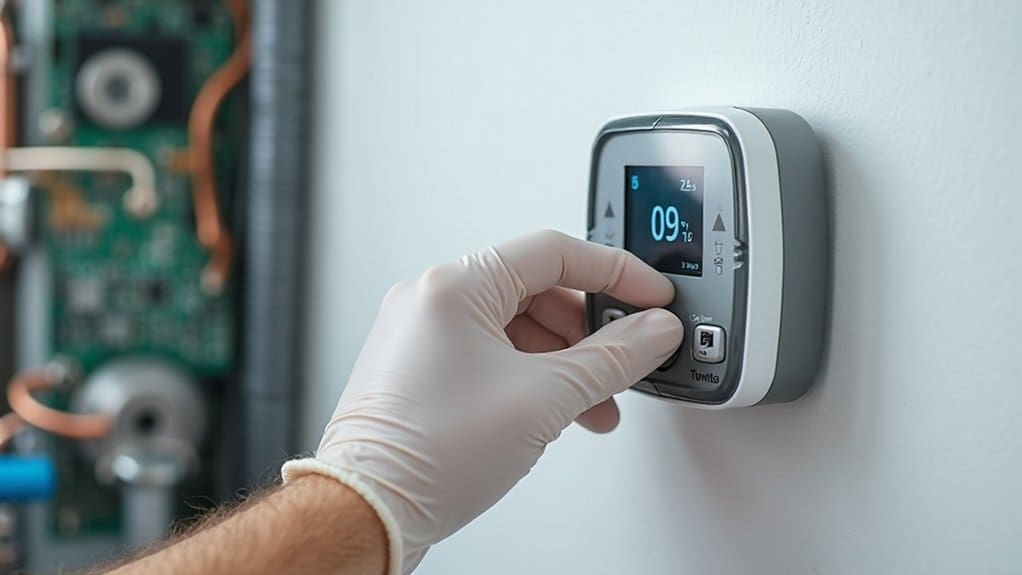
Your heat pump’s thermostat calibration is crucial for ideal system performance and energy efficiency. Professional HVAC technicians verify accurate temperature readings, adjust settings with specialized tools, and guarantee proper integration during thorough tune-ups. Proper calibration prevents temperature discrepancies exceeding 3-4 degrees, eliminates frequent cycling, and can reduce energy consumption by up to 8% annually. DIY adjustments risk misaligned settings and equipment damage, while professionals systematically diagnose and meticulously calibrate for maximum efficiency and comfort throughout your home.
Key Takeaways
- Professional heat pump tune-ups include thermostat calibration to ensure accurate temperature readings and optimal system performance.
- Calibration prevents energy waste from frequent cycling and maintains consistent indoor comfort throughout your home.
- HVAC technicians use specialized tools to verify proper thermostat integration and make precise temperature adjustments.
- Environmental factors like nearby appliances and sunlight exposure are assessed during tune-ups for optimal thermostat placement.
- Proper calibration can reduce annual energy costs by up to 8% while extending heat pump equipment lifespan.
Understanding Thermostat Calibration in Heat Pump Systems
When your heat pump system operates with an improperly calibrated thermostat, it can’t accurately measure indoor temperatures or trigger heating and cooling cycles at the correct intervals. This calibration issue directly impacts system performance and energy efficiency throughout your home.
During professional tune-up services, HVAC technicians assess thermostat accuracy using precision instruments that compare actual room temperature against displayed readings. They’ll identify discrepancies and adjust internal components to restore proper calibration. Temperature sensors within your thermostat must read within one to two degrees of actual conditions for ideal heat pump operation.
Calibration problems manifest as uneven heating, excessive energy consumption, and shortened equipment lifespan. Your HVAC system works harder to compensate for inaccurate temperature feedback, reducing overall efficiency and indoor comfort levels.
Technicians also evaluate thermostat placement during calibration procedures, ensuring it’s positioned away from heat sources, drafts, and direct sunlight that could compromise accurate temperature sensing and system cycling.
Signs Your Heat Pump Thermostat Needs Professional Calibration
Recognizing calibration issues early prevents costly system damage and maintains ideal heat pump performance. Your HVAC system displays several warning signs when thermostat calibration becomes necessary.
Monitor temperature readings against actual room temperatures using a separate thermometer. Discrepancies exceeding 3-4 degrees indicate calibration drift requiring professional HVAC service intervention. You’ll notice your heating and cooling system cycling frequently, creating uneven temperatures throughout your home.
When your thermostat can’t achieve desired setpoints despite multiple adjustments, the accuracy has compromised your system’s performance. This symptom often accompanies increased energy consumption and reduced comfort levels.
Smart and programmable thermostats displaying incorrect temperature readings need expert calibration to restore proper functionality. These devices rely on precise sensors that drift over time.
Professional heat pump tune-ups include thorough thermostat calibration as standard maintenance protocol. Don’t ignore these warning signs—prompt calibration prevents equipment strain, reduces energy waste, and ensures consistent comfort control throughout seasonal changes.
The Role of Thermostat Accuracy in Energy Efficiency
Precision calibration directly impacts your heat pump’s energy consumption and operational costs. When your thermostat accurately reads and responds to indoor temperatures, your HVAC system operates within ideal parameters, preventing unnecessary energy waste. Professional calibration during routine tune-up services guarantees your heat pump doesn’t overwork or underperform.
Proper thermostat calibration delivers measurable efficiency improvements:
- Energy savings up to 8% annually through precise temperature control that eliminates system overcycling
- Extended equipment lifespan by preventing excessive runtime and reducing mechanical stress on components
- Enhanced indoor comfort with consistent climate regulation that maintains desired temperature ranges
Miscalibrated thermostats force your heat pump to run longer cycles, consuming excess energy while failing to achieve target temperatures. This inefficiency compounds over time, drastically increasing operational costs. Regular professional calibration as part of thorough tune-up services optimizes your system’s performance, ensuring maximum energy efficiency while maintaining reliable temperature control throughout your home.
Professional Calibration Vs DIY Thermostat Adjustments
Although modern thermostats appear straightforward to adjust, professional calibration offers significant advantages over DIY approaches that can protect your investment and safeguard ideal performance. Heat pump thermostat calibration involves complex procedures that HVAC professionals execute with specialized tools and technical expertise.
During thorough tune-up services, technicians assess thermostat location, inspect wiring connections, and remove accumulated debris that affects sensor accuracy. They’ll verify your thermostat delivers accurate temperature readings and integrates properly with your heat pump system’s operational cycles.
DIY calibration attempts often result in misaligned settings, potentially causing unexpected breakdowns and reducing the lifespan of your heat pump equipment. Professional thermostat calibration becomes part of complete care that includes systematic diagnostics and precision adjustments.
Regular maintenance by qualified HVAC professionals guarantees optimal calibration accuracy, preventing costly repairs while maximizing energy efficiency. This proactive approach delivers consistent comfort levels and extends equipment longevity through proper thermostat integration with your complete heating system.
How External Factors Affect Thermostat Performance
Even with professional calibration guaranteeing your thermostat operates at peak accuracy, environmental conditions around the device can compromise its ability to read temperatures correctly. Your heating and cooling system’s performance depends on accurate temperature readings, making external factor management crucial for prime indoor climate control.
Heat-generating appliances positioned near your thermostat create false temperature readings, causing your heat pump or air conditioner to cycle incorrectly. Electronic devices like computers and space heaters emit thermal energy that skews sensor accuracy. Additionally, changes to window treatments can expose your thermostat to direct sunlight, dramatically affecting its performance.
Consider these critical factors affecting thermostat accuracy:
- Heat source proximity – Keep appliances away from thermostat location
- Direct sunlight exposure – Install window coverings or relocate device
- Electronic interference – Position computers and equipment elsewhere
During your professional tune-up, technicians assess these environmental conditions and may recommend thermostat relocation to certify your air system maintains consistent indoor temperatures effectively.
Thermostat Calibration as Part of Comprehensive Tune-Up Services
Professional HVAC technicians routinely incorporate thermostat calibration into thorough tune-up services, recognizing that temperature control accuracy directly impacts your system’s operational efficiency and safety. During comprehensive heat pump maintenance, technicians systematically assess your thermostat’s installation location, inspect electrical connections, and remove accumulated debris that compromises performance accuracy.
This calibration process guarantees your heat pump responds correctly to temperature commands, optimizing energy efficiency while extending equipment lifespan. Properly calibrated thermostats enhance indoor comfort by maintaining consistent temperatures throughout your space. HVAC professionals utilize specialized diagnostic tools to verify accurate temperature readings and adjust settings accordingly.
Smart and programmable thermostats require advanced calibration techniques that exceed typical DIY capabilities. Professional tune-up services address external factors affecting thermostat performance, including heat sources, drafts, and improper positioning. Regular routine maintenance incorporating thermostat calibration prevents costly system malfunctions and assures your heat pump operates at peak performance levels year-round.
When to Consider Thermostat Replacement During Tune-Ups
During routine heat pump tune-ups, HVAC technicians assess whether your thermostat requires replacement rather than simple calibration adjustments. Professional evaluation becomes critical when your thermostat approaches the 10-year mark, as accuracy deteriorates dramatically beyond this point. An experienced HVAC contractor will identify system failures that stem from thermostat malfunctions rather than heat pump issues.
Key indicators for thermostat replacement during tune-ups include:
- Age-related inaccuracy – Thermostats older than 10 years consistently provide unreliable temperature readings despite calibration attempts
- Efficiency concerns – Your heat pump cycles irregularly or fails to maintain consistent temperatures, indicating thermostat communication problems
- Technology upgrades – Smart thermostat installation can reduce annual energy costs by 8% while preventing future system failures
Replacement offers superior long-term benefits compared to temporary calibration fixes. Your HVAC contractor will recommend modern thermostat technology that optimizes heat pump efficiency and provides advanced temperature control features for enhanced system performance.
Protecting Your Thermostat From Power Surges and Electrical Issues
Since your thermostat’s electronic components operate on low-voltage circuits, power surges pose a significant threat to its calibration accuracy and overall functionality. These surges damage internal components through excessive voltage, causing wear and tear that degrades performance over time.
Your electrical systems require regular inspection to identify potential issues before they affect thermostat operation. Overloaded circuits, outdated wiring, and aging electrical connections create surge conditions that compromise calibration mode settings and temperature readings.
Installing proper surge protection devices safeguards your thermostat from voltage spikes. These protective measures prevent premature component failure and maintain accuracy across all operating modes.
Schedule electrical system evaluations to catch issues early, ensuring your thermostat remains properly functioning. Address wiring problems, upgrade inadequate circuits, and secure all electrical connections during routine maintenance.
Proactive electrical maintenance and surge protection strategies optimize thermostat lifespan while preserving calibration precision. This preventive approach maintains consistent temperature control and reduces costly emergency repairs.
Benefits of Regular Professional Heat Pump Maintenance
Three critical components determine your heat pump’s long-term performance: proper calibration, consistent maintenance schedules, and professional expertise. Regular professional heat pump maintenance delivers measurable benefits that directly impact your system’s effectiveness and longevity.
Professional tune-up services optimize your heat pump’s energy efficiency by up to 15%, reducing monthly utility costs while extending equipment lifespan by 2-3 years. Preventive maintenance identifies potential failures before they become expensive emergency repairs.
Key maintenance procedures include:
- Refrigerant level verification – Guarantees appropriate heat transfer and prevents compressor damage
- Coil cleaning and inspection – Maintains airflow efficiency and prevents system strain
- Component calibration checks – Validates thermostat accuracy and control functionality
Well-maintained systems provide consistent indoor comfort year-round through properly functioning components. Professional technicians confirm refrigerant levels, clean heat exchange coils, and calibrate control systems during thorough tune-up visits. This systematic approach prevents costly breakdowns while maximizing your heat pump’s operational effectiveness and reliability.
Conclusion
You’ll maintain ideal efficiency by scheduling regular calibration, you’ll prevent costly repairs through professional maintenance, and you’ll extend system lifespan with proper tune-ups. Don’t attempt DIY adjustments—they’ll compromise accuracy and safety. Follow manufacturer’s maintenance schedules, monitor performance indicators consistently, and address calibration issues immediately. Your heat pump’s thermostat requires precise technical expertise for proper function. Professional calibration isn’t optional—it’s essential for safe, efficient operation and long-term system reliability.