
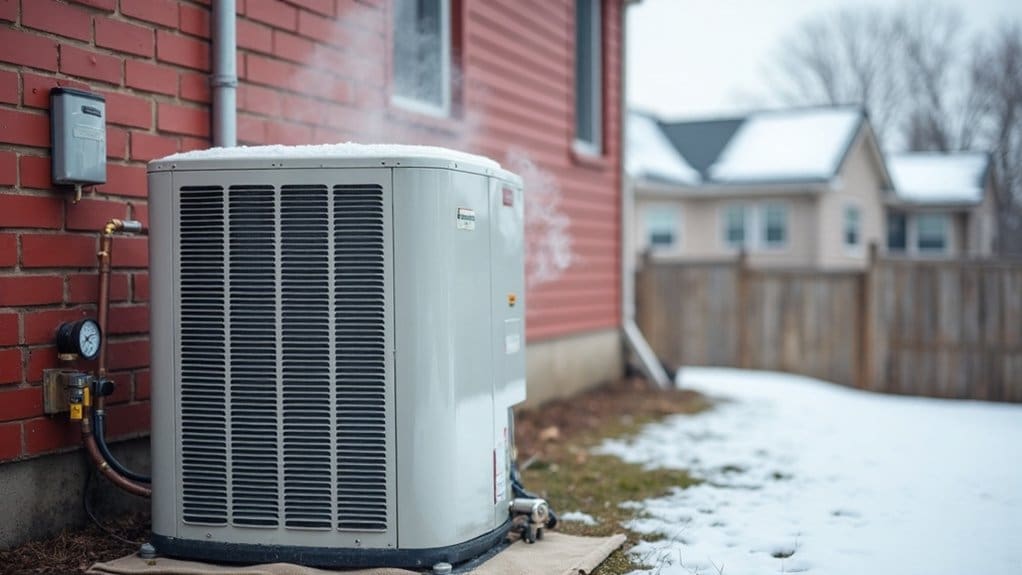
When your heat pump exhibits insufficient heating performance, frequent cycling, or unusual operational sounds, you’ll need St. Louis’s top-rated HVAC specialists like Air Comfort Service with 50+ years of experience, Hoffmann Brothers’ multi-trade capabilities, or Scott-Lee Heating’s residential system expertise. These certified technicians utilize specialized diagnostic equipment to identify refrigerant leaks, compressor malfunctions, and electrical component degradation that compromise your system’s thermal transfer efficiency. Understanding proper selection criteria and service expectations guarantees ideal system restoration.
Key Takeaways
- Air Comfort Service leads with 50+ years experience and A+ BBB rating specializing in duct sealing expertise.
- Scott-Lee Heating Co. focuses exclusively on residential heat pump systems including mini-split installations and maintenance services.
- Professional technicians use specialized diagnostic equipment to measure system pressures, temperature differentials, and electrical performance during repairs.
- Common heat pump issues include insufficient heating/cooling, strange noises, frequent cycling, poor airflow, and escalating energy bills.
- Licensed repair services provide systematic troubleshooting, refrigerant level checks, and post-repair testing to guarantee optimal system performance.
Common Signs Your Heat Pump Needs Professional Repair
While heat pumps operate reliably for years with proper maintenance, several warning signs indicate when your system requires immediate professional attention.
Insufficient heating or cooling performance signals your heat pump needs professional evaluation from qualified repair services. When your system can’t maintain desired temperatures, internal components may have failed or require calibration.
Escalating energy bills often indicate inefficient operation within heating and cooling systems. This inefficiency typically stems from worn components or refrigerant issues requiring specialized Heat Pump Repair expertise.
Strange noises—including rattling, squealing, or grinding sounds—suggest worn-out components or loose mechanical parts that need immediate attention. These auditory warnings shouldn’t be ignored.
Frequent cycling, where your heat pump turns on and off excessively, points to thermostat malfunctions or mechanical failures. This irregular operation stresses system components and increases energy consumption.
Poor airflow with weak or inconsistent air circulation indicates clogged filters, motor problems, or ductwork issues. Professional Maintenance in St. Louis addresses these airflow restrictions effectively.
Top-Rated Heat Pump Service Providers in St. Louis
When your heat pump exhibits these warning signs, selecting a qualified service provider becomes paramount to restoring ideal system performance. St. Louis homeowners have access to several expert heat pump contractors who deliver thorough solutions.
Air Comfort Service brings five decades of experience with an A+ BBB rating, offering specialized heat pump services alongside their duct sealing expertise. Their reliable heat pump diagnostics guarantee accurate system assessments.
Hoffmann Brothers, recognized by St. Louis Business Journal’s Best Places to Work 2020, provides multi-trade capabilities combining HVAC with electrical and plumbing services for complete heat pump installation projects.
Kirkwood Heating & Air Conditioning has evolved from a one-man operation to a 10-person team since 1984, specializing in heat pump needs and indoor air quality solutions.
Scott-Lee Heating Co. focuses exclusively on residential systems, including mini-split ductless installations. Their targeted approach ensures expert heat pump maintenance and new heat pump installations meet manufacturer specifications.
How Heat Pumps Work and Why They Fail
Understanding your heat pump’s operational mechanics enables you to identify potential failure points before they escalate into costly repairs. Heat pumps utilize refrigerant cycles to transfer thermal energy between indoor and outdoor environments, providing both heating or cooling through reversing valve operation. This dual-function system maximizes energy efficiency while reducing utility costs compared to traditional HVAC systems.
Common failure modes include refrigerant leaks, compressor malfunctions, defrost control issues, and electrical component degradation. Inadequate airflow from dirty filters restricts heat exchange efficiency, forcing components to work harder. Outdoor unit coil freezing occurs when defrost cycles malfunction, while indoor coil icing indicates refrigerant flow problems.
Regular heat pump service prevents these failures through systematic inspections and preventive maintenance. Professional pump repair and installation technicians diagnose issues using manifold gauges, multimeters, and thermal imaging equipment. Early detection of refrigerant pressure anomalies, electrical resistance variations, and airflow restrictions prevents catastrophic system failures requiring complete unit replacement.
Benefits of Professional Heat Pump Installation Vs DIY
The complexity of modern heat pump systems demands specialized knowledge that extends far beyond basic HVAC principles, making professional installation critical for ideal performance and longevity. You’ll encounter intricate refrigerant line configurations, electrical connections requiring precise voltage calculations, and ductwork modifications that DIY approaches can’t adequately address.
Professional heat pump installations guarantee proper system sizing, preventing short-cycling issues that compromise both heating and cooling efficiency. Licensed technicians possess specialized tools for refrigerant handling, leak testing, and system commissioning that aren’t accessible to homeowners. They’re dedicated to providing code-compliant installation that protects your warranty coverage and prevents costly callbacks.
DIY installation risks include improper refrigerant charges, inadequate electrical connections, and incorrect thermostat wiring. These mistakes create compressor damage, reduced system lifespan, and safety hazards. Professional installers optimize airflow patterns, verify proper drainage, and conduct thorough system testing. Their expertise prevents the air conditioning failures and heating inefficiencies that plague amateur installations.
What to Expect During Heat Pump Repair Service
Professional installation sets the foundation for reliable operation, but even expertly installed heat pump systems require periodic repair services to maintain peak performance. When you call us at Watson Industrial for diagnostic assessment, our certified technicians conduct systematic troubleshooting protocols. We’ll inspect refrigerant levels, examine electrical connections, and test thermostat calibration to identify malfunction origins.
During services in St. Louis, expect extensive component evaluation including condenser coils, evaporator assemblies, and compressor functionality. Our technicians utilize specialized diagnostic equipment to measure system pressures, temperature differentials, and electrical draws. Installation in St. Louis requires adherence to local codes, and repairs maintain these compliance standards.
Watson Industrial’s repair process involves providing both heating and cooling system restoration through methodical fault isolation. We’ll explain identified issues, recommend corrective actions, and provide transparent cost estimates before proceeding. Post-repair testing guarantees ideal refrigerant flow, proper cycling, and efficient operation across all operational modes.
Conclusion
Your heat pump system functions like the circulatory system of your home—when it’s compromised, you’ll experience immediate comfort disruption and efficiency losses. Don’t attempt DIY repairs on refrigerant lines, compressor units, or electrical components. You need certified HVAC technicians who’ll diagnose system faults, perform proper refrigerant recovery, and guarantee code compliance. Invest in professional service to maintain your heat pump’s coefficient of performance and extend compressor lifespan. Quality repairs prevent costly system failures.