
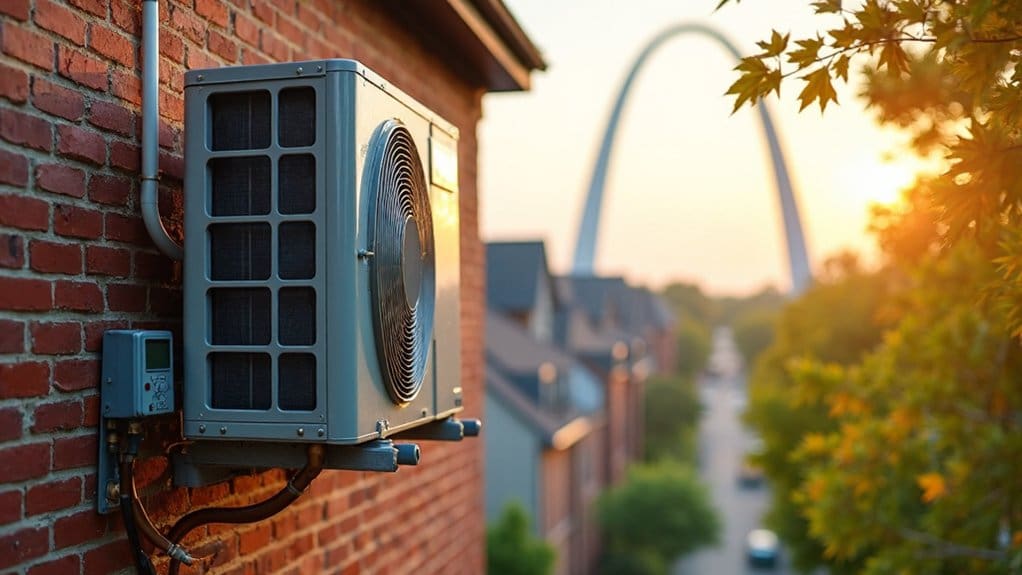
You’ll face unique air conditioning challenges in St. Louis due to the city’s demanding humid subtropical climate that pushes cooling systems to work harder against both intense heat and persistent moisture. Your AC must handle effective dehumidification while maintaining consistent cooling, requiring professional Manual J load calculations for proper sizing. Heat pumps offer energy efficiency for mild summers but struggle in cold winters, while central AC excels in extreme heat. The guide below reveals essential considerations for selecting your ideal system.
Key Takeaways
- St. Louis’s hot, humid summers require AC systems with high SEER ratings and enhanced dehumidification capabilities for optimal performance.
- Professional Manual J load calculations are essential to properly size units for Missouri’s humid subtropical climate conditions.
- Heat pumps offer superior cooling efficiency, but dual-fuel systems work best for St. Louis’s temperature extremes.
- Proper system sizing prevents short cycling and ensures effective moisture removal during humid summer months.
- Professional installation by technicians experienced with local climate conditions ensures compliance and optimal system performance.
Understanding How St. Louis Weather Impacts Air Conditioner Performance
St. Louis weather presents unique challenges that directly affect your air conditioning system performance. The Louis climate features hot summers with high humidity levels, creating demanding conditions for AC units. During Missouri’s sweltering season, temperatures often exceed 90°F while humidity hovers around 70%, forcing your system to work harder than in drier climates.
These weather conditions considerably impact AC installation decisions. Your unit must handle both temperature reduction and moisture removal, which doubles the workload compared to arid regions. The local climate’s humidity makes you feel hotter at lower temperatures, requiring your system to run longer cycles.
Understanding your Climate helps you select equipment with appropriate seasonal energy efficiency ratings. Systems designed for humid summers perform better in St. Louis than those built for dry heat. When planning AC installation, consider units with enhanced dehumidification capabilities and higher SEER ratings to combat Missouri’s challenging weather patterns effectively.
Determining the Right AC Size for Missouri’s Humid Subtropical Climate
How do you determine the perfect AC size for Missouri’s demanding humid subtropical climate? You’ll need a professional Manual J load calculation that considers your home’s unique characteristics and Missouri’s intense summer conditions. This precise assessment evaluates your home’s square footage, insulation levels, window efficiency, and local climate data to ascertain the ideal AC size.
Don’t guess at your air conditioning system requirements. An undersized unit won’t handle Missouri’s brutal heat and humidity, causing sky-high energy bills and system burnout. Conversely, an oversized system creates short cycling problems and fails to remove moisture effectively, leaving you uncomfortable despite cool temperatures.
HVAC professionals experienced with Missouri’s climate understand these challenges. They’ll factor in SEER rating requirements and guarantee proper energy efficiency for your specific situation. The right load calculation protects your investment and ensures comfort during those sweltering St. Louis summers when temperatures soar into the high 90s.
Heat Pumps Vs Central Air Conditioners: Which Works Best in St. Louis
When choosing between heat pumps and central air conditioners for your St. Louis home, you’ll need to weigh several factors specific to Missouri’s climate. Heat pumps offer superior energy efficiency for cooling in St. Louis’s mild summers and provide decent heating during moderate temperatures. However, they struggle during cold winters, potentially leaving you uncomfortable when temperatures plummet.
Central air conditioners excel at cooling during extreme heat and feature simpler designs, but they require separate heating systems like furnaces. While heat pumps cost more upfront, their energy efficiency makes them more cost-effective long-term in St. Louis climate conditions.
Consider dual-fuel systems combining heat pumps with high-efficiency gas furnaces for essential year-round comfort. These systems handle humidity effectively while providing reliable heating during harsh winters. Regardless of your choice, proper installation and HVAC system sizing remain pivotal for maximizing performance in Missouri’s humid subtropical climate.
Energy Efficiency Considerations for Missouri Homeowners
Energy efficiency should be your top priority when selecting an AC system for Missouri’s demanding climate. St. Louis’s humid subtropical weather creates unique challenges that make proper system sizing and efficiency ratings vital for your home’s comfort and energy costs.
Focus on units with high SEER ratings, as energy-efficient air conditioning systems deliver substantial savings on your utility bills during Missouri’s long, hot summers. The climate’s high humidity levels require systems that effectively remove moisture while maintaining consistent cooling throughout your home.
Proper sizing directly impacts efficiency – undersized units work overtime during extreme heat, while oversized systems cycle too frequently and fail to control humidity adequately. Both scenarios waste energy and reduce comfort.
Regular maintenance guarantees your system operates at peak efficiency. Clean filters, proper refrigerant levels, and well-maintained components help your air conditioning system handle Missouri’s challenging weather while minimizing energy consumption and maximizing your investment’s lifespan.
Professional Installation Requirements for St. Louis Climate Conditions
Although selecting an energy-efficient AC system is essential, professional installation becomes equally important for handling St. Louis weather extremes. The climate of St. Louis demands trained technicians who understand local humidity levels and temperature fluctuations that impact system performance.
You’ll need proper sizing calculations specific to the Louis area’s unique weather patterns. Professional installers assess your home’s insulation, ductwork, and existing AC system conditions before recommending the right system. They’ll guarantee your new unit can handle Missouri’s hot, humid summers while preserving efficiency during mild spring and fall months.
When considering system replacement, don’t attempt DIY installation. Local contractors understand building codes and manufacturer requirements that protect your warranty. They’ll configure refrigerant lines, electrical connections, and drainage systems correctly for Louis weather conditions.
Professional installation also includes setting up regular maintenance schedules tailored to local climate demands, ensuring your investment performs ideally throughout Missouri’s varied seasons.
Conclusion
You’ve learned how St. Louis’s demanding climate requires careful AC selection—but knowledge without action won’t cool your home during those sweltering July nights. Don’t let another scorching summer catch you unprepared. Your family deserves comfort when temperatures soar and humidity suffocates. Choose the right system size, prioritize energy efficiency, and invest in professional installation. Take control of your indoor climate today, because Missouri’s weather won’t wait for your decision.