
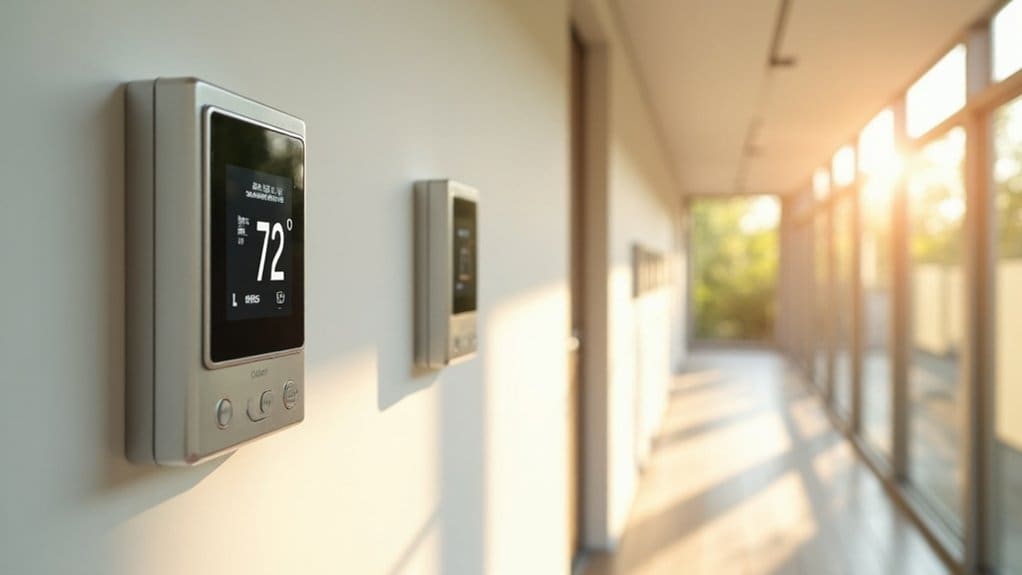
You’ll transform your large home into a perfectly balanced climate haven by installing multi-zone thermostats that give you independent temperature control over every room and living area. This system divides your space into separate zones, each with its own thermostat, connecting to either your central HVAC system or individual units per zone. You can reduce utility bills up to 30% while ensuring personalized comfort throughout your home. Smart features like occupancy sensors, custom scheduling, and voice control integration make management effortless, and you’ll discover the complete installation process ahead.
Key Takeaways
- Multi-zone systems divide large homes into independent temperature zones, each with its own thermostat for precise climate control.
- Installation requires multiple thermostats, zone dampers, additional ductwork, and integration with a central control panel throughout the home.
- System-based zoning uses individual HVAC units per zone for maximum efficiency, while sensor-based works with existing central systems.
- Smart thermostats enhance multi-zone control with scheduling, occupancy detection, geofencing, and voice assistant integration for energy optimization.
- Professional HVAC evaluation is essential to determine the ideal zoning configuration and ensure proper installation for large home layouts.
What Is Multi-Zone Climate Control?
Multi-zone climate control transforms your home into a collection of independently managed temperature zones, each equipped with its own thermostat for precise control. This smart system divides your living space into separate areas, allowing you to customize heating and cooling schedules for different rooms or floors.
Your zoned system can connect to a central electric HVAC system or individual units in each zone, providing maximum flexibility for your home’s unique layout. Each thermostat operates independently, so you’ll heat or cool only occupied spaces as needed. This targeted approach eliminates hot and cold spots throughout your house while accommodating different temperature preferences among family members.
The system’s energy-efficient design can reduce your utility bills by up to 30% compared to traditional single-zone control. You’re no longer forced to maintain the same temperature throughout your entire home, making multi-zone climate control an intelligent solution for ideal comfort and cost savings.
Sensor-Based Vs System-Based Zoning Approaches
When choosing your multi-zone climate control system, you’ll encounter two distinct approaches that determine how your home manages temperature across different areas.
Sensor-based zoning uses separate sensors throughout your home to optimize heating and cooling while working with a central thermostat. This approach works well with existing central HVAC systems, allowing you to create multiple zones without installing additional equipment. You’ll need this method for multi-room temperature control when using a single heating and cooling unit.
System-based zoning involves multiple heaters or AC units that you can control individually. Each zone has its own thermostat, creating the most efficient and precise energy savings possible. Electric HVAC systems typically use this approach, with one thermostat per room.
Smart thermostats enhance both approaches by enabling multi zone control simultaneously. Rather than adjusting each zoned system individually, you’ll manage multiple areas at once, reducing energy consumption and potentially cutting utility bills by 30%.
Central HVAC Multi-Zone Setup Requirements
How do you transform your existing central HVAC system into a sophisticated multi-zone climate control network? You’ll need multiple thermostats and zone dampers strategically positioned throughout your home to create independent climate-controlled zones. This process involves installing additional ductwork and integrating zone dampers with a central control panel for coordinated operation.
Smart thermostats equipped with remote sensors offer an alternative approach, providing sensor-based zoning without requiring dedicated zone equipment. These systems monitor temperature variations across different areas and adjust airflow accordingly.
For maximum precision, consider system-based zoning where each zone operates its own HVAC equipment. This configuration delivers independent temperature control but demands more complex installation procedures.
The key to success lies in proper planning. An experienced HVAC professional can evaluate your home’s layout, existing ductwork, and heating/cooling demands to determine the ideal zoning configuration. They’ll guarantee your central HVAC systems operate efficiently while delivering customized comfort to every room.
Electric HVAC System Zone Configuration
Electric HVAC systems offer distinct advantages for multi-zone temperature control compared to their gas counterparts. You’ll find that electric systems naturally accommodate multiple thermostats throughout your living space, with each room capable of having its own dedicated heating or cooling system. This system-based approach creates the most efficient zone control possible.
When configuring your electric system zones, you can replace existing thermostats with smart thermostats that provide access to advanced energy-saving capabilities. These upgrades enable scheduling and geofencing features that automatically adjust temperature settings based on occupancy patterns. Smart multi-zone thermostat control allows you to create custom zones for different scenarios—perhaps an entertaining zone for guests or a morning routine zone for your family’s daily schedule.
You can enhance functionality by pairing your smart thermostats with voice assistants like Google Home, Alexa, or Apple HomeKit. This integration provides convenient vocal control across multiple zones, making zoned heating and cooling management effortless throughout your home.
Smart Thermostat Zone Management Features
Modern smart thermostats transform your home’s climate control through sophisticated zone management features that go far beyond basic temperature adjustments. You’ll gain precise temperature control across multiple zones, allowing independent climate management for different areas of your home.
Smart thermostats enable you to heat or cool only occupied rooms, dramatically improving energy efficiency while reducing utility costs. Room sensors continuously monitor real-time conditions and occupancy data, automatically optimizing temperatures in each zone based on actual usage patterns.
Integration with smart home platforms provides seamless voice commands through Alexa, Google, and Apple HomeKit. You can simply say “cool the living room to 72 degrees” without touching any controls.
HVAC zoning becomes effortless as you create custom schedules for each area, ensuring comfort where you need it most. The system learns your preferences and adjusts automatically, delivering personalized climate management that adapts to your lifestyle while maximizing energy savings.
Professional Installation Process and Considerations
Installing a multi-zone thermostat system requires careful planning and professional expertise to guarantee ideal performance and energy efficiency. HVAC professionals begin by evaluating your home’s layout, existing ductwork, and heating system requirements to determine appropriate zone placement and multiple thermostats needed for effective temperature control.
The installation process involves installing additional ductwork and zone dampers that enable independent climate management across different areas of your homes. Your forced air system may require significant modifications, including new wiring and control panels to support the zoned HVAC system functionality.
Upgrading your central heating system’s controls becomes essential for seamless integration with the new multi-zone setup. HVAC professionals must carefully configure and balance each zone to achieve proper airflow distribution and prevent system strain.
Professional technicians handle the complex calibration process, testing each zone’s performance and adjusting damper positions. This meticulous approach maximizes comfort levels while creating an energy-efficient system that reduces utility costs and extends equipment lifespan.
Energy Savings and Cost Benefits
Beyond the technical complexities of installation, multi-zone thermostat systems deliver substantial financial returns through reduced energy consumption. You’ll save up to 30% on heating and cooling bills by conditioning only occupied rooms rather than wasting energy throughout your entire home.
Smart thermostats designed to control multiple zones integrate seamlessly into your smart home ecosystem while saving energy through precise temperature management. You can control the temperature independently in different areas, reducing your HVAC system’s workload and extending its operational lifespan.
These thermostats for multiple zones eliminate the inefficiency of heating or cooling unoccupied spaces. You’ll save money by tailoring each zone’s climate to your specific needs, whether that’s keeping bedrooms cooler while maintaining warmth in living areas.
While the initial investment may seem substantial, the long-term energy savings offset installation costs over time, making multi-zone systems a financially sound upgrade for large homes.
Maintenance and Troubleshooting Multi-Zone Systems
How do you keep your multi-zone HVAC system running at peak efficiency? Regular maintenance is essential for controlling the climate throughout your living spaces effectively. Change filters frequently and schedule professional tune-ups to prevent energy inefficiencies that waste money and reduce comfort.
Monitor temperatures in all zones of your home, including unused rooms that might affect overall system balance. Mini split heat pumps and ductless mini split heat systems require specific attention to indoor unit filters and outdoor condenser coils. Clean these components regularly to maintain ideal airflow.
Address temperature inconsistencies immediately through proper thermostat control adjustments and zone balancing. If certain areas aren’t heating or cooling properly, check dampers and airflow restrictions. Professional servicing becomes more critical with multi-zone systems due to additional components that can malfunction.
Promptly troubleshooting airflow imbalances and temperature variations prevents energy waste while extending your system’s lifespan, ensuring consistent comfort throughout your home.
Conclusion
You’ll dramatically transform your home’s comfort and efficiency with multi-zone thermostat installation. By controlling different areas independently, you’re eliminating energy waste from heating or cooling unused spaces. Homeowners typically save 20-30% on their energy bills after installing multi-zone systems. That’s like getting three to four months of free climate control annually. You’re not just upgrading your HVAC—you’re investing in personalized comfort while considerably reducing your environmental footprint and monthly expenses.