
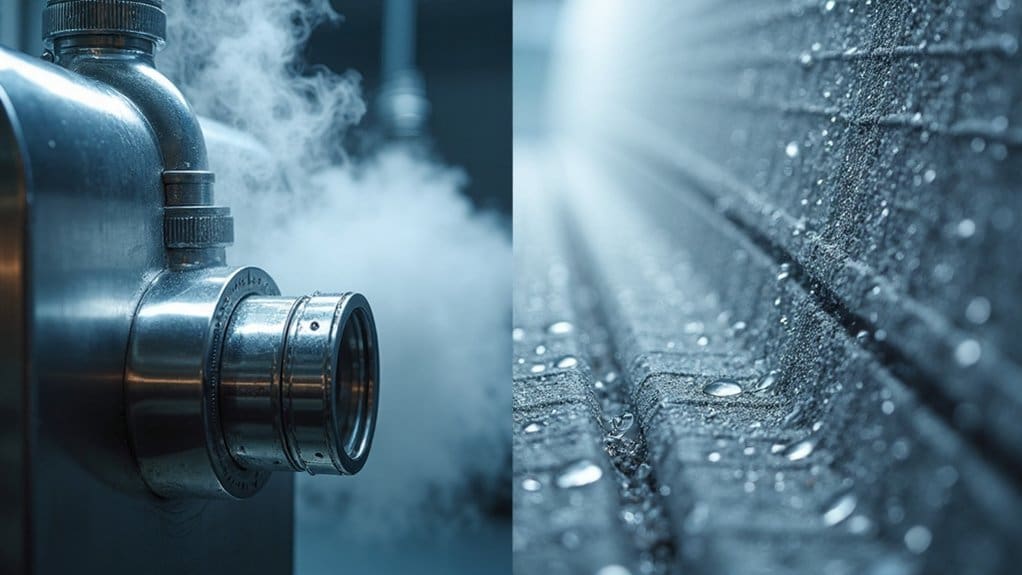
Steam humidifiers require direct water line connections, drainage systems, and professional HVAC integration, while evaporative units simply connect to your return duct with basic water access. You’ll get precise humidity control and bacteria elimination with steam systems, but they’re more complex to install. Evaporative humidifiers offer energy-efficient operation and safer installation without heating elements, though they require regular filter maintenance. Understanding these key differences will help you determine which system best matches your home’s specific requirements.
Key Takeaways
- Steam humidifiers require direct water lines, drainage systems, and professional HVAC integration, while evaporative units need simpler duct connections.
- Steam systems eliminate bacteria through boiling but consume more energy, whereas evaporative models operate efficiently without heating elements.
- Steam humidifiers provide precise humidity control and independent operation, while evaporative units depend on HVAC airflow for distribution.
- Evaporative humidifiers offer safer operation with no hot water risks, making them ideal for homes with children and pets.
- Steam models excel for severe allergies and whole-home coverage, while evaporative units suit energy-conscious users and smaller spaces.
Understanding Steam Humidifier Installation Requirements
When you’re considering a steam humidifier for your home, you’ll need to verify your space can accommodate several key installation requirements. Unlike evaporative humidifiers that simply plug into outlets, steam units demand direct water line connections and ideal drainage systems to manage hot boiling water safely.
You’ll typically need professional installation to integrate the system with your HVAC network for whole-house coverage. This process involves careful placement and insulation of steam lines to prevent condensation issues that could damage your home’s structure.
The installation requirements extend beyond initial setup. You must plan for regular maintenance access since steam humidifiers accumulate mineral deposits more rapidly than evaporative models. These deposits require frequent cleaning to maintain excellent performance.
While the installation complexity increases upfront costs compared to simpler evaporative humidifiers, steam systems offer superior humidity control and air purification capabilities that justify the investment for many homeowners.
Evaporative Humidifier Setup: What to Expect
Evaporative humidifiers offer a more straightforward installation process compared to their steam counterparts, though they still require professional setup for ideal performance. You’ll find these energy-efficient units connect directly to your HVAC system’s return duct, where the existing air handler draws moisture through the unit and circulates humid air throughout your indoor spaces.
Your installer will need access to a water line for continuous supply and may require a drain connection for excess water removal. Unlike steam models, evaporative humidifiers don’t need electrical connections for heating elements, making installation simpler and more cost-effective.
Proper placement is critical – your humidifier must be positioned upstream of your air filter to prevent contamination. Your technician will also evaluate ductwork sizing to guarantee sufficient airflow for effective humidity distribution. Regular maintenance involves cleaning or replacing the wicking filter to maintain appropriate moisture output and prevent bacterial growth in your evaporative models.
Key Benefits of Steam Humidification Systems
Steam humidifiers deliver unmatched performance through their unique boiling process, which eliminates bacteria, viruses, and other contaminants before distributing pure moisture throughout your home. This pathogen-free mist makes them ideal if you suffer from respiratory issues or severe allergy symptoms, as you won’t inhale harmful particles that other systems might circulate.
You’ll enjoy precise control over humidity levels, allowing you to maintain ideal comfort regardless of outdoor conditions. Steam systems operate independently of your HVAC system, making them particularly effective in drafty homes where traditional units struggle. This independence guarantees consistent whole-home humidity management even in challenging environments.
The boiling process prevents mold and bacterial growth within the unit itself, dramatically improving your indoor air quality while reducing maintenance headaches. Though steam humidifiers require higher upfront investment and energy usage, they provide superior long-term value through enhanced air quality and reliable performance in demanding climates.
Advantages of Evaporative Humidifiers for Your Home
Cost-conscious homeowners will find evaporative humidifiers deliver exceptional value through their energy-efficient operation and affordable pricing structure. Unlike Ultrasonic Humidifiers or steam models, evaporative humidifiers generally don’t need heating elements, reducing your electricity costs considerably. The differences between this type of humidifier vs steam systems become apparent when you consider safety—there’s no hot water to burn children or pets.
You’ll appreciate how these units use natural evaporation to Improve Air Quality without creating the mineral dust that some alternatives produce. For those with respiratory conditions or allergies, evaporative models provide gentler moisture that supports improved indoor air quality. When connected to your HVAC system, they excel at whole-home humidification, ensuring consistent indoor air quality (IAQ) throughout larger spaces. The combination of lower upfront costs, minimal maintenance requirements, and reliable performance makes evaporative humidifiers an intelligent choice for most households seeking better comfort and health benefits.
Choosing the Right Humidifier Type for Your Needs
Several factors should guide your decision when selecting between steam and evaporative humidifiers for your specific situation. If you’re dealing with severe allergies or respiratory issues, steam models excel at heating water to eliminate pathogens and improve indoor air quality. However, evaporative units push air through a wet wick without heating, resulting in lower energy bills and safer operation around children.
When you compare steam versus Ultrasonic Cool Mist or evaporative options, consider your coverage needs. Steam humidifiers maintain precise humidity levels throughout entire homes, making them ideal for New England’s harsh winters. Evaporative models work well for single rooms or apartments but struggle with extreme dryness.
Your budget also matters greatly. While evaporative units cost less upfront, steam systems provide superior Humidifier Benefits for whole-home applications. Evaluate your specific requirements: energy efficiency, safety concerns, coverage area, and humidity control accuracy before making your final choice.
Conclusion
You’ve explored both humidification paths, and now it’s time to choose your route. Steam humidifiers are like high-performance sports cars—they’ll deliver precise, powerful results but require more upfront investment and electrical demands. Evaporative units resemble reliable sedans, offering steady, natural moisture with simpler installation and lower costs. Consider your home’s needs, budget, and maintenance preferences. The right choice will transform your indoor air quality for years to come.