
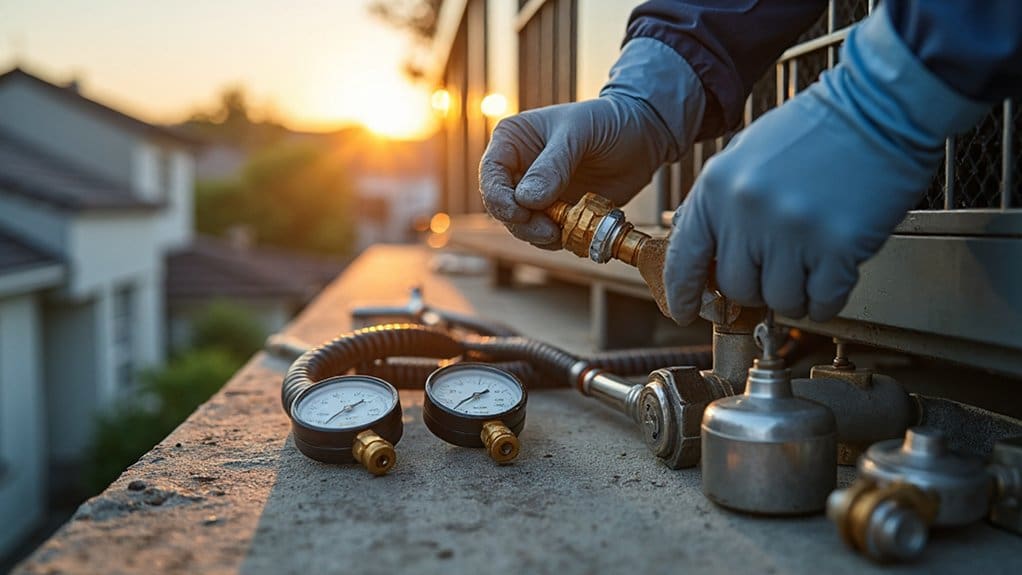
You should schedule air conditioning maintenance at least once annually for standard residential units, though high-use systems and older equipment need more frequent attention. If you live in dusty, humid, or extremely hot climates, consider biannual servicing to prevent costly breakdowns. Units over ten years old require quarterly inspections, while newer systems can typically manage with yearly tune-ups. Your specific usage patterns, environmental conditions, and system age will determine the ideal maintenance schedule for maximum efficiency and longevity.
Key Takeaways
- Manufacturers recommend annual maintenance as the baseline for standard residential AC units with moderate usage.
- High-use systems running continuously require biannual servicing, especially in dusty, humid, or polluted environments.
- System age determines frequency: newer units need annual service, while older systems require quarterly or monthly monitoring.
- Regional climate affects maintenance needs, with desert and coastal areas requiring more frequent professional attention.
- Schedule inspections before peak seasons and increase frequency if you notice rising energy bills or declining performance.
Understanding Air Conditioning Maintenance Essentials
Neglect can turn your reliable air conditioning system into an expensive headache. Understanding maintenance essentials helps you protect your investment and ensure optimal performance year-round.
Your HVAC system requires regular attention to function efficiently. Most manufacturers recommend annual service as the baseline for standard residential units. However, you’ll often need more frequent maintenance if your system runs continuously or operates in demanding environments like commercial spaces or extreme climates.
Professional technicians perform key tasks during maintenance visits, including cleaning coils, checking refrigerant levels, inspecting electrical connections, and replacing filters. These seasonal tune-ups prevent minor issues from escalating into costly repairs.
You should also consider your local climate when determining service frequency. Units in dusty, humid, or heavily polluted areas typically require biannual maintenance. Regular inspections help technicians identify worn components before they fail, extending your system’s lifespan and maintaining energy efficiency throughout peak usage periods.
Expert-Recommended Maintenance Frequency Guidelines
Most HVAC professionals agree on specific timing intervals that’ll keep your air conditioning system running smoothly. Expert recommendations emphasize that scheduled maintenance frequency depends on your system’s usage patterns and environmental factors.
HVAC maintenance experts typically suggest these guidelines for ideal system efficiency:
- Annual tune-ups for standard residential units with moderate usage
- Biannual servicing for high-use systems running continuously during peak seasons
- Twice-yearly inspections before summer and winter to catch potential issues early
- Increased frequency for units in dusty, coastal, or extreme climate environments
- Manufacturer-specific intervals as outlined in your air conditioning warranty documentation
Regular servicing through preventive maintenance programs helps identify minor problems before they escalate into costly repairs. Professional tune-ups certify your system maintains peak performance while extending its operational lifespan. Following expert recommendations for maintenance timing protects your investment and guarantees reliable cooling when you need it most.
Factors That Influence Service Schedule Requirements
While expert recommendations provide essential baseline guidelines, several key factors determine how often your specific AC system actually needs professional attention.
Your home’s unique conditions significantly impact maintenance schedules. If you live in areas with extreme weather conditions or extended cooling seasons, your HVAC units work harder and require more frequent servicing. Homes with heavy usage, poor indoor air quality, or older systems typically need additional maintenance visits beyond standard recommendations.
Seasonal demands also play a pivotal role. Systems running continuously during scorching summers accumulate more wear than those operating intermittently. Additionally, if you’ve noticed rising energy bills, unusual noises, or declining performance, you’ll need to adjust your regular maintenance frequency accordingly.
Pet ownership, smoking indoors, recent renovations, and dusty environments all accelerate filter clogging and system strain. These factors often necessitate more frequent professional attention to prevent costly system failures and maintain ideal efficiency throughout the cooling season.
Age and Condition Impact on Maintenance Needs
How does your AC system’s age affect its maintenance requirements? Your air conditioning system’s age directly impacts how often you’ll need professional servicing. Newer systems typically require HVAC maintenance at least once annually, while older units need more frequent attention to prevent costly issues and maintain effectiveness.
As your system ages, components wear down and require closer monitoring. Without proper maintenance performed regularly, you’ll face decreased energy efficiency and potential breakdowns that could shorten the lifespan of your HVAC equipment.
Consider these age-related maintenance factors:
- Newer systems (0-5 years): Schedule HVAC maintenance annually with basic tune-ups
- Mid-age systems (6-10 years): Require bi-annual servicing to catch developing problems
- Older systems (10+ years): Need quarterly inspections to prevent major failures
- Vintage units (15+ years): Demand monthly monitoring and frequent part replacements
- End-of-life systems (20+ years): Consider replacement rather than extensive repairs
Regular maintenance performed by professionals promotes effective air quality and system longevity.
Regional Climate Effects on Service Intervals
Because climate conditions vary dramatically across different regions, your air conditioning maintenance schedule should reflect the unique environmental challenges your system faces. If you live in the Southwest’s desert climate, you’ll need to Service Your HVAC System more frequently due to extreme heat and dust accumulation that can clog filters and strain components.
Coastal areas with high humidity require regular attention to prevent moisture-related issues like mold growth and corrosion. Your cooling system works harder in these environments, making routine maintenance critical for reliable performance.
Northern regions with shorter cooling seasons might seem less demanding, but HVAC systems still need consistent care. Even if you only run air conditioning seasonally, you should Schedule maintenance twice a year to guarantee dependability when temperatures rise.
Regardless of location, environmental factors like pollution, pollen, and seasonal weather patterns affect your system’s workload. Adapting your maintenance frequency to match regional climate demands keeps your equipment running efficiently year-round.
Optimal Timing for Seasonal Maintenance
Understanding your regional maintenance needs naturally leads to the question of when to perform these services. Experts recommend scheduling air conditioner service at least once a year, with the most effective approach being preventive maintenance performed in the spring before cooling season begins.
Strategic timing for your HVAC unit maintenance guarantees peak performance when you need it most. Regular inspections scheduled during off-peak periods allow technicians to identify potential issues before they become costly breakdowns.
- Spring tune-ups – Schedule between March and May before heavy cooling demands
- Fall maintenance – Prepare heating components before winter season starts
- Pre-season scheduling – Avoid peak-demand periods when service calls surge
- Twice-yearly approach – All-encompassing coverage for year-round HVAC systems
- Early booking advantage – Better appointment availability and potential cost savings
This proactive maintenance ensures your system operates efficiently throughout extreme weather periods while extending equipment lifespan and maintaining manufacturer warranty requirements.
Benefits of Regular Professional Servicing
While proper timing sets the foundation for effective maintenance, the actual benefits you’ll receive from regular professional servicing make this investment worthwhile.
Professional HVAC technicians perform thorough inspections that address potential issues before they escalate into costly repairs. Through systematic checks including checking refrigerant levels, cleaning components, and calibrating systems, they’re ensuring ideal performance year-round. This proactive approach can extend your equipment’s lifespan by 15-25 years.
Regular HVAC servicing directly impacts your wallet by improving energy efficiency and reducing increased energy costs. Well-maintained systems operate more reliably, delivering consistent cooling while consuming less power. You’ll experience fewer unexpected breakdowns and emergency repair calls.
Professional maintenance also protects your investment by maintaining manufacturer warranty compliance. When determining how often you should schedule these services, consider that regular tune-ups prevent major system failures that could leave you without cooling during peak seasons. The investment in professional care pays dividends through enhanced reliability and performance.
Warning Signs Your AC Needs Immediate Attention
How can you tell when your air conditioning system has shifted from routine maintenance needs to requiring immediate professional attention? Several warning signs indicate your AC requires urgent care to prevent costly breakdowns.
Critical warning signs demanding immediate action:
- Strange noises like grinding, squealing, or banging sounds during operation
- Unusual odors including burning smells or musty scents from vents
- Reduced cooling capacity that leaves your home uncomfortably warm
- Visible damage or leaks around system components and connections
- Higher-than-normal energy bills without increased usage patterns
Uneven cooling throughout your home signals underlying issues that won’t resolve themselves. You might notice certain rooms staying warmer while others feel adequately cooled, indicating problems with airflow or system components.
Don’t ignore these warning signs. What starts as a minor issue can quickly escalate into extensive damage requiring expensive repairs or complete system replacement. Schedule professional inspection immediately when you notice any of these symptoms.
What Professional Maintenance Services Include
When you notice these warning signs, professional HVAC technicians offer thorough maintenance services that go far beyond what homeowners can accomplish on their own. These all-encompassing inspections include cleaning all system components like coils, blowers, and refrigerant lines to guarantee your system operates efficiently.
Regular HVAC maintenance involves thermostat calibration and electrical connection testing to confirm proper functionality. HVAC technicians check refrigerant levels and recharge as needed, which enhances system performance dramatically. They’ll lubricate moving parts to prevent wear and tear, extending the lifespan of your equipment.
Professional maintenance services also identify potential issues before they become costly repairs. Technicians provide recommendations for future maintenance schedules – answering “How Often Should You Schedule” becomes clearer after their assessment. This proactive approach improves indoor air quality while preventing unexpected breakdowns. The comprehensive nature of professional maintenance assures ideal energy efficiency and reliable comfort year-round.
Cost Savings Through Preventive Care Programs
The financial benefits of preventive HVAC care programs extend far beyond the initial investment, delivering substantial cost savings that compound over time. These programs guarantee optimal performance while identifying problems early, preventing costly emergency repairs and replacements.
When your system runs efficiently through regular spring and fall maintenance, it’ll consume less energy and help prevent up to 95% of potential breakdowns. Most HVAC services offer maintenance plans that pay for themselves within 1-2 years through reduced utility costs.
Key Financial Benefits:
- Energy savings of $200-$500 annually through improved 25% efficiency gains
- Extended equipment lifespan by 2-5 years, delaying expensive replacements
- Up to 30% reduction in annual energy costs through maximized performance
- 95% prevention rate for major breakdowns and emergency repair calls
- 1-2 year payback period for maintenance plan investments through combined savings
Regular preventive care transforms your HVAC system into a cost-saving asset rather than an expensive liability.
Conclusion
You’ll save mountains of money and avoid catastrophic breakdowns by scheduling professional AC maintenance twice yearly. Don’t let your system become a mechanical disaster waiting to happen – those warning signs aren’t suggestions, they’re emergency alerts. Your climate’s relentless assault on your unit demands unwavering attention. Professional servicing isn’t just maintenance; it’s life support for your cooling system. Neglect it, and you’ll face astronomical repair bills that’ll make your wallet weep uncontrollably.