
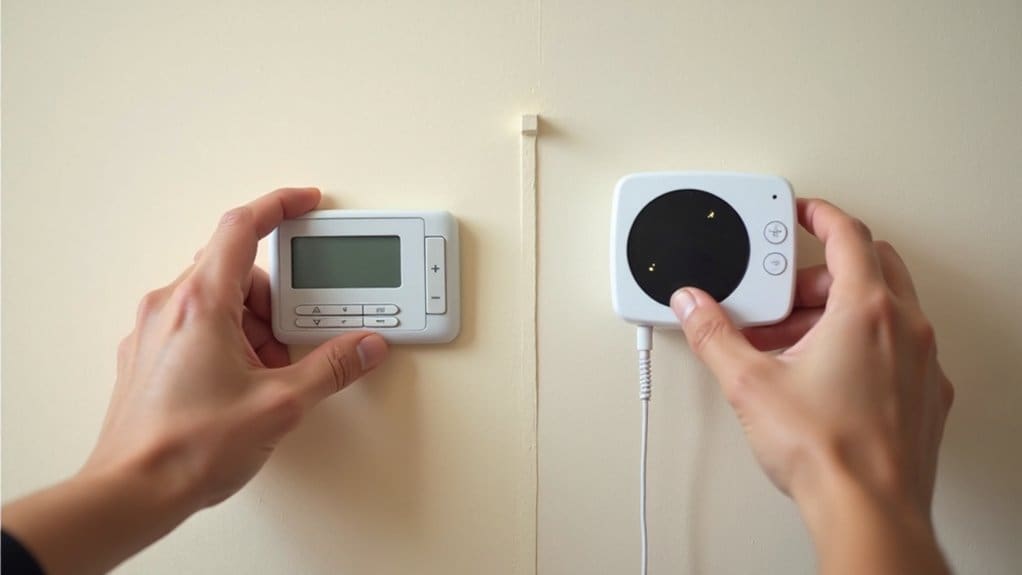
You’ll want a programmable thermostat if you prefer straightforward scheduling and don’t need remote access—it can cut your energy bills by up to 20% at a lower upfront cost. Choose a smart thermostat if you value remote control, learning capabilities, and smart home integration, though you’ll need proper wiring like a C-wire for installation. Smart models typically deliver 10-26% energy savings with automated adjustments that adapt to your habits. The following comparison will help you determine which option aligns with your lifestyle and budget.
Key Takeaways
- Programmable thermostats offer 20% energy savings through scheduled temperature adjustments without requiring Wi-Fi connectivity or smartphone integration.
- Smart thermostats provide remote control, learning capabilities, and integration with voice assistants but typically require C-wire installation.
- Energy savings vary between models, with programmable units achieving 20% reduction and smart thermostats ranging from 10-26% annually.
- Installation complexity differs significantly, as programmable thermostats offer straightforward compatibility while smart models need specific wiring requirements.
- Choose programmable for basic automation and lower costs, or smart thermostats for advanced features and seamless home integration.
Understanding Programmable Thermostats
While smart thermostats grab most of the headlines today, programmable thermostats remain a practical and cost-effective solution for controlling your home’s temperature. Unlike a basic manual thermostat that requires constant adjustment, programmable models let you pre-set temperature schedules for different times and days of the week.
You can customize settings for weekdays and weekends, automatically adjusting your heating and cooling system based on your routine. When you’re at work or sleeping, the temperature drops to save energy, then returns to comfortable levels before you need it.
The real advantage lies in energy savings – you’ll save up to 20% on your bills when you program consistent daily schedules. These thermostats don’t need Wi-Fi or smartphone connectivity to operate effectively. While they lack the advanced features of smart models, programmable thermostats offer excellent control over your home’s climate without breaking your budget.
Benefits and Limitations of Programmable Models
Programmable thermostats deliver meaningful advantages that make them an attractive choice for many homeowners. You’ll achieve impressive energy savings of up to 20% on your bills when you properly schedule temperature settings to reduce heating and cooling during unoccupied periods. Your HVAC system operates more efficiently with automated scheduling, eliminating the need for manual adjustments throughout the day.
These devices offer excellent customization options, allowing you to create separate weekday and weekend schedules that match your consistent routines. The thermostat cost remains considerably lower than smart alternatives, making programmable thermostats a budget-friendly solution for improved energy efficiency.
However, you’ll face certain limitations with programmable models. They lack advanced features and remote control capabilities that smart thermostats provide. If you have irregular schedules or frequently travel, you can’t adjust settings remotely, reducing their effectiveness. These constraints make programmable thermostats less suitable for homeowners requiring flexible, on-demand temperature control.
Smart Thermostat Features and Capabilities
Smart thermostats revolutionize home climate control by offering sophisticated features that extend far beyond basic programming capabilities. Through an internet connection, you’ll gain remote access via mobile apps, allowing temperature adjustments from anywhere. These thermostats can learn your daily routines and preferences, using advanced sensors and algorithms to automatically adjust settings based on occupancy patterns and activity levels.
Smart thermostats offer seamless integration with voice assistants and smart home ecosystems, enhancing convenience and control. You’ll receive real-time energy usage data and personalized recommendations that help you decide how to save on energy costs while maintaining comfort. The devices factor in weather conditions and humidity levels to improve the efficiency of temperature management.
These capabilities greatly boost the effectiveness of your HVAC system by optimizing performance based on actual conditions rather than rigid schedules, ultimately delivering superior comfort and energy savings.
Energy Savings Comparison Between Both Options
The most compelling reason to upgrade your thermostat often comes down to dollars saved on monthly energy bills. When comparing energy savings between programmable thermostats and smart thermostats, you’ll find distinct differences in their money-saving potential.
Programmable thermostats can reduce your energy bills by up to 20% when you use them correctly. However, smart thermostats typically deliver more consistent results through automated adjustments based on your energy usage patterns.
Here’s what leading smart thermostat brands promise:
- Nest Learning Thermostat – Studies show average users save 15% annually on energy costs
- Ecobee – Claims savings up to 26% for high-efficiency users
- General smart thermostats – Deliver approximately 10% annual savings on heating and cooling
Smart thermostats outperform programmable thermostats because they don’t rely on your manual programming. They automatically optimize energy savings without requiring constant user intervention, making them more effective for sustained energy reduction.
Installation Requirements and Compatibility Considerations
Before you can enjoy energy savings from either thermostat type, you’ll need to guarantee your home’s HVAC system can support your chosen device. Programmable thermostats offer straightforward compatibility with most heating and cooling systems, making self-installation relatively simple for most homeowners.
Smart thermostats present more complex compatibility requirements. These smart home devices typically need a C-wire to provide continuous power for Wi-Fi connectivity and advanced features. If your current system lacks this wire, you’ll face additional installation challenges.
Checking your existing wiring is vital before purchasing either option. While programmable models work with basic wiring configurations, smart thermostats require specific voltage requirements to function properly. Understanding how Thermostats Work with your HVAC system prevents costly mistakes.
When compatibility issues arise, professional assistance becomes indispensable. Experts can assess your system, recommend suitable models, and handle complex thermostat installation procedures. This certifies your new device integrates seamlessly with your home’s heating and cooling infrastructure.
Cost Analysis: Initial Investment Vs Long-Term Savings
Budget considerations play a crucial role when deciding between programmable and smart thermostats. While programmable thermostat options cost under $20 and offer straightforward self-installation, smart thermostats require a substantially higher initial investment of $100-$300 plus potential professional installation fees.
However, smart thermostats can save money through impressive energy efficiency gains:
- Energy bill reductions of up to 26% annually offset the higher upfront costs
- Average savings of around 15% make smart home systems financially appealing over time
- Long-term value becomes particularly evident for homes with irregular schedules or remote access needs
Your cost analysis should weigh immediate expenses against future energy costs. If you’re primarily concerned with upfront affordability, programmable thermostats deliver basic scheduling functionality. However, if you’re willing to invest more initially, smart thermostats typically pay for themselves through reduced energy bills while providing advanced features that enhance overall energy efficiency and convenience.
Remote Access and Smart Home Integration
Modern smart thermostats transform how you control your home’s climate by offering extensive remote access through dedicated mobile apps. You can remotely control and adjust settings from anywhere, whether you’re at work or vacation. These devices require Wi-Fi connectivity to enable smartphone control and real-time monitoring.
Smart thermostats integrate seamlessly with popular ecosystems like Amazon Alexa, Google Assistant, and Apple HomeKit. You can control the temperature using simple voice commands through devices like Google Nest speakers. This integration allows your thermostat to communicate with other smart devices, creating automated routines that enhance convenience and efficiency.
Geofencing technology detects when you’re away and automatically adjusts temperatures accordingly. Programmable vs. smart thermostats comparison shows that smart models offer superior convenience through these advanced features. However, professional installation guarantees proper integration with your existing HVAC system and smart home network, maximizing these connectivity benefits.
Professional Installation Vs DIY Approach
While smart thermostats offer impressive connectivity features, your installation approach markedly impacts both upfront costs and long-term performance. You’ll find that programmable thermostat DIY installation is generally straightforward—simply swap out your old unit and follow the instructions. However, smart thermostats often require professional installation, particularly when your existing wiring lacks a common (“C”) wire.
Consider these key installation factors:
- Cost implications: Professional installation ranges from $100-$300, while DIY saves money upfront
- Technical complexity: Smart thermostats may need wiring upgrades and HVAC system integration
- Setup optimization: Expert guidance certifies proper placement and configuration for maximum efficiency
If you’re comfortable with basic electrical work, a programmable thermostat represents an excellent DIY project. Smart thermostats, though more complex, benefit greatly from professional installation to guarantee seamless integration with your HVAC system and avoid costly mistakes that could compromise performance.
Choosing the Right Thermostat for Your Lifestyle
How do you determine which thermostat type aligns with your daily habits and energy goals? Choosing the right thermostat depends on your lifestyle patterns and priorities.
If you maintain consistent daily routines, programmable thermostats offer an affordable solution. These thermostats can be set with customizable schedules that automatically adjust temperatures throughout the day, helping you save money without constant manual intervention.
However, if your schedule varies frequently or you travel often, smart thermostats provide superior flexibility. Unlike manual thermostats, they learn your preferences and optimize energy usage automatically. You can remotely adjust settings through smartphone apps, ensuring comfort when you arrive home unexpectedly.
Smart thermostats cost more initially but can save you money through advanced optimization features, potentially reducing energy bills by up to 26% annually. Consider your specific heating and cooling needs, desired control level, and interest in energy usage insights when making your decision. Both programmable and smart thermostats outperform basic manual options for saving money.
Conclusion
You’ve reached the end of this thermostat saga, and you’re probably still staring at your old dial unit wondering if you need NASA-level technology to adjust your home’s temperature. Whether you choose programmable or smart, you’ll likely end up manually adjusting it anyway because your “optimized schedule” doesn’t account for your unpredictable life. But hey, at least you’ll feel technologically superior to your neighbors with their ancient thermostats.