
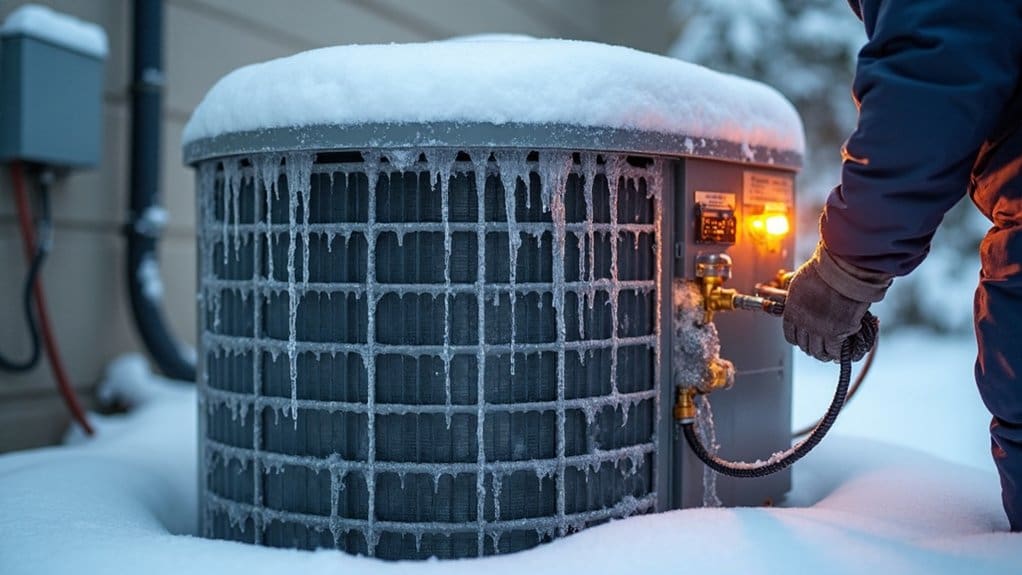
You’re facing a heat pump emergency if you notice complete system failure during extreme weather, burning odors, gas or refrigerant leaks, grinding or screeching sounds, or electrical issues causing repeated breaker trips. These situations pose immediate safety risks to your family and property, requiring urgent professional attention. Non-emergencies include minor efficiency drops or temporary malfunctions during mild weather. Turn off your system immediately and contact emergency HVAC services for any safety-related concerns. Understanding the full scope of emergency indicators will help you respond appropriately when issues arise.
Key Takeaways
- Complete system failure during extreme weather conditions requires immediate emergency repair to maintain safety and comfort.
- Gas leaks, electrical hazards, or burning smells pose serious safety risks and warrant immediate evacuation and emergency services.
- Refrigerant leaks create health and environmental dangers that need urgent professional attention to prevent further contamination.
- Grinding, screeching, or banging noises indicate critical mechanical failures that can cause expensive damage if ignored.
- Repeated circuit breaker trips signal dangerous electrical issues that require immediate system shutdown and emergency repair services.
Signs Your Heat Pump Requires Emergency Repair
While heat pumps are designed to operate reliably for years, certain warning signs indicate you’re facing an HVAC emergency that can’t wait until regular business hours.
Complete system failures represent the most obvious emergency scenario. When your heat pump stops producing any heating or cooling, you’ll need immediate attention to restore comfort and prevent costly repairs.
Strange noises like grinding or screeching sounds signal mechanical problems requiring urgent intervention. These unusual sounds often indicate worn components that could cause extensive damage if ignored.
Burning odors suggest serious electrical issues that pose safety risks. Don’t ignore these warning signs, as they can lead to dangerous situations.
Refrigerant leaks cause rapid efficiency loss and trigger sudden spikes in energy bills. During extreme weather conditions, any sudden loss of heating or cooling creates an emergency situation that demands professional intervention to maintain indoor comfort and system integrity.
Safety-Related Heat Pump Issues That Demand Immediate Attention
Safety concerns with your heat pump system create situations where waiting for regular service hours isn’t an option. Gas leaks and electrical issues pose immediate threats that require emergency intervention. You’ll recognize refrigerant leaks by hissing sounds or ice formation on coils, which can harm your health and environment.
Unusual noises like grinding, screeching, or banging indicate mechanical failures that could worsen rapidly. Burning smells signal overheating components or electrical problems that risk fire hazards. When circuit breakers repeatedly trip, you’re facing dangerous electrical faults.
Sudden loss of heating during winter storms or sudden loss of cooling in extreme heat threatens occupant safety. These failures can lead to hypothermia or heat-related illnesses.
Rapidly climbing energy bills often indicate major system malfunctions requiring immediate diagnosis. Most critically, any suspected carbon monoxide leak demands instant emergency response. Don’t ignore these warning signs – contact qualified HVAC technicians immediately to protect your family and property.
Common Heat Pump Emergencies vs. Non-Emergency Situations
Understanding the difference between true heat pump emergencies and routine issues helps you make informed decisions about when to call for immediate service versus scheduling regular maintenance. Emergency situations threaten your safety or leave you without essential heating and cooling when you need it most.
True emergencies requiring immediate emergency services include:
- Complete system failure during extreme heat or freezing temperatures, leaving your family vulnerable to dangerous conditions
- Refrigerant leaks creating potential health risks and environmental hazards in your living space
- Electrical issues causing repeated breaker trips, sparking, or unexpected shutdowns that pose safety risks
- Carbon monoxide leak or unusual burning smells indicating serious mechanical issues requiring immediate evacuation
- System failure combined with vulnerable household members like elderly residents or infants needing climate control
Non-emergency situations like filter changes, minor airflow problems, or scheduled maintenance can wait for regular business hours without compromising your family’s comfort or safety.
Steps to Take During a Heat Pump Emergency
When facing a heat pump emergency, your immediate response can prevent further damage and protect your family’s safety. If you detect gas leaks, burning smells, or electrical hazards, evacuate the premises immediately and contact emergency services before addressing the heat pump issue.
For situations where your heat pump stops working during extreme weather, turn off the system at the thermostat and circuit breaker to prevent further damage. Check for obvious issues like tripped breakers or clogged filters, but don’t attempt complex repairs yourself.
Contact us immediately when you’re experiencing an HVAC emergency repair situation. Look for companies that offer 24/7 emergency services, as these situations can’t wait until regular business hours. When calling, describe the symptoms clearly so the HVAC technician can arrive prepared with necessary tools and parts to resolve your emergency as quickly as possible.
Preventing Heat Pump Emergencies Through Proactive Maintenance
Why wait for a costly emergency when simple preventive steps can keep your heat pump running smoothly year-round? Regular maintenance is your best defense against unexpected breakdowns that leave you without heating or cooling when you need it most.
HVAC maintenance doesn’t require extensive technical knowledge. You can handle several tasks yourself:
- Replace air filters monthly – Clean filters allow your system to breathe freely, preventing strain on components
- Clear outdoor unit debris – Remove leaves, grass clippings, and snow that block airflow around your heat pump
- Schedule annual professional tune-ups – Technicians catch issues early before they become expensive problems
- Listen for unusual sounds – Strange noises often signal minor issues that need attention
- Monitor airflow from vents – Reduced airflow indicates potential blockages or system problems
Routine maintenance dramatically improves the efficiency of your HVAC system while extending its lifespan. Regular service helps you address minor issues before they escalate into emergency repairs requiring immediate attention.
Conclusion
You might think heat pump emergencies are rare, but they’re more common than you’d expect. Don’t wait until you’re facing a complete system failure on the coldest night of winter. You’ve learned the warning signs and emergency protocols—now act on them. Schedule that preventive maintenance you’ve been postponing, and keep your emergency repair contact handy. Your comfort and safety depend on staying proactive, not reactive, with your heat pump care.