
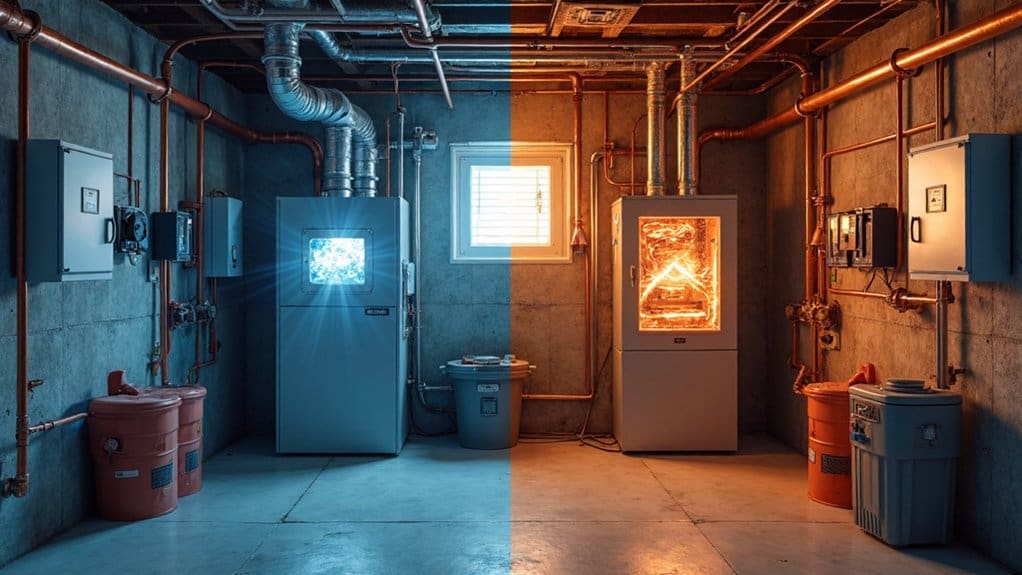
Gas furnaces require annual professional inspections costing $80-$150 due to safety concerns like carbon monoxide leaks and combustion system checks. Electric furnaces need less intensive maintenance every 2-3 years at $50-$100 since there’s no combustion involved. You’ll change filters monthly for both systems, but gas units demand more frequent professional attention for heat exchanger inspections and gas leak detection. Understanding these maintenance differences will help you plan your heating system care more effectively.
Key Takeaways
- Gas furnaces require annual professional maintenance ($80-$150) while electric furnaces need service every 2-3 years ($50-$100).
- Gas systems need intensive safety inspections for carbon monoxide leaks and combustion hazards that electric furnaces don’t have.
- Gas furnace maintenance focuses on burners and heat exchangers; electric systems emphasize heating elements and electrical connections.
- Both systems require monthly air filter changes, but gas furnaces need additional ventilation and gas leak checks.
- Skipping maintenance on gas furnaces creates immediate safety risks, while electric system neglect primarily affects efficiency and longevity.
Understanding Gas Furnace Maintenance Requirements
Regular maintenance keeps your gas furnace running safely and effectively throughout the heating season. Gas furnace maintenance involves several critical components that require your attention throughout the year.
You’ll need professional inspections to examine your combustion system and heat exchanger for potential issues. These annual tune-ups guarantee safe operation and catch problems before they become costly repairs. Your technician will also check for carbon monoxide leaks, which pose serious health risks.
Between professional visits, you’re responsible for routine furnace maintenance tasks. Change your air filter every 1-3 months to maintain proper airflow and system efficiency. Clean your blower components and burners periodically to keep your furnace operating at peak performance.
Don’t forget about lubrication – your blower motor and other moving parts need annual lubrication to extend their lifespan. Monitor your system for unusual sounds, odors, or performance issues that could indicate carbon monoxide problems or other safety concerns requiring immediate attention.
Electric Furnace Maintenance Essentials
While electric furnaces require less intensive maintenance than their gas counterparts, you’ll still need to perform essential upkeep tasks to verify satisfactory performance and durability. Electric furnaces eliminate many complications since they have fewer moving parts and no combustion process, which drastically reduces maintenance needs compared to gas systems.
Your primary focus should be the heating elements, which can wear out over time and require more frequent inspection than other components. You’ll want to check electrical connections, replace air filters monthly, and guarantee proper airflow through the system. Regular maintenance of electric systems includes cleaning the blower motor and inspecting the thermostat calibration.
Since electric furnaces have fewer moving parts and no combustion byproducts, maintenance costs are typically lower. However, a properly maintained electric furnace will serve you longer and operate more efficiently. Don’t skip annual professional inspections, as electrical components can develop issues that aren’t immediately visible.
Safety Inspections: Gas vs. Electric Systems
Gas and electric furnaces demand noticeably different safety inspection approaches due to their fundamental operational differences. Gas furnaces require thorough annual safety inspections to address combustion-related safety concerns that simply don’t exist with electric systems.
Your gas furnace needs an HVAC technician to examine critical components annually:
- Gas leaks – Check all connections and supply lines for dangerous leaks
- Carbon monoxide hazards – Test for deadly CO emissions from faulty combustion
- Heat exchangers – Inspect for cracks that could release harmful gases
- Ventilation systems – Guarantee proper exhaust of combustion byproducts
Electric furnaces pose fewer safety risks since they don’t involve combustion. You’ll still need periodic service for electrical component checks, but these systems don’t require the same intensive safety inspections. While electric units need occasional cleaning and electrical system verification, they lack the life-threatening hazards associated with gas combustion, making their maintenance schedule less critical for immediate safety concerns.
Component-Specific Maintenance Tasks
Because gas and electric furnaces operate through entirely different mechanisms, they require distinct maintenance approaches for their core components.
For gas furnaces, you’ll need to focus on combustion-related components. Regular cleaning of burners prevents uneven flames and carbon buildup. The heat exchanger requires inspection for cracks that could leak dangerous gases. Your venting system needs clearing of debris and checking for proper exhaust flow. Additionally, you must adjust gas pressure settings, clean or replace the pilot light, and test the thermocouple’s responsiveness to guarantee safe operation.
Electric furnaces demand different attention. You’ll clean heating elements to remove dust that reduces efficiency. The blower fan requires lubrication and debris removal. Air filters need regular replacement to maintain proper airflow throughout the system.
Both systems share some tasks: checking electrical connections for corrosion, testing safety switches for proper function, and verifying adequate airflow. Annual maintenance by professionals remains essential for both gas and electric furnaces.
Frequency and Cost of Professional Service
Understanding what maintenance tasks your furnace needs is only part of the equation—you’ll also want to budget for how often you’ll need professional service and what it’ll cost.
Gas furnaces usually require annual professional maintenance, while electric furnaces can go 2-3 years between service calls. This difference stems from the complexity and safety requirements of gas systems.
Here’s what affects your maintenance costs:
- Service frequency – Gas furnace annual professional maintenance vs. electric furnaces’ less frequent needs
- Required maintenance complexity – Gas systems need extensive safety checks and adjustments needed for proper combustion
- Professional service costs – Gas furnace maintenance typically costs more due to specialized inspections
- Long-term value – Despite higher upfront costs, proper maintenance prevents frequent repairs and extends lifespan
While gas systems cost more to maintain than electric furnace installation and upkeep, skipping required maintenance can lead to expensive breakdowns and safety hazards. The investment in regular service ultimately pays off through reliable operation.
Common Maintenance Issues and Solutions
While both furnace types need regular upkeep, they’ll present you with distinctly different maintenance challenges throughout their lifespans.
Your gas furnace’s combustion process creates multiple potential issues. You’ll need to monitor the pilot light for proper ignition, clean burners to prevent incomplete combustion, and inspect the heat exchanger for cracks that could cause carbon monoxide leaks. These safety features require vigilant maintenance and inspections to protect your family. Additionally, you’ll face problems with clogged air filters reducing energy efficiency and AFUE ratings, plus blower motor lubrication needs.
Electric furnaces offer simpler maintenance solutions. You won’t deal with combustion-related safety concerns or carbon monoxide risks. Your main focus shifts to heating element inspection and blower motor care. While both systems benefit from regular filter changes and annual professional tune-ups, electric models typically encounter fewer complex issues, making troubleshooting more straightforward and reducing your overall maintenance burden greatly.
DIY Maintenance vs. Professional Service
When deciding between DIY maintenance and professional service, you’ll find gas and electric furnaces require vastly different approaches.
Gas furnaces demand professional service due to safety concerns. Attempting DIY maintenance risks dangerous gas leaks and carbon monoxide exposure. Technicians must inspect combustion systems, exhaust ventilation, and airflow patterns – tasks requiring specialized knowledge and equipment.
Electric furnaces offer more DIY-friendly maintenance options. You can safely handle basic tasks like replacing air filters and cleaning components since they lack combustion systems.
Here’s what you should know about professional service costs:
- Gas furnace tune-ups: $80-$150 annually
- Electric furnace service: $50-$100 when needed
- Gas systems require annual professional inspections
- Electric systems need less frequent professional attention
Neglecting annual professional service for gas furnaces creates safety hazards and efficiency problems. Electric furnaces won’t pose the same risks, making DIY maintenance more viable for routine care.
Seasonal Maintenance Schedules for Both Systems
For gas furnace maintenance, schedule your annual inspection in September or early October. This timing guarantees your heating system operates safely when cold weather arrives. The extensive tune-up includes checking all gas connections, testing safety controls, and verifying proper combustion.
Electric furnace owners enjoy more flexibility. You’ll perform post-season cleaning in spring, focusing on heating elements and air filters. Your fall preparation involves testing electrical connections and ascertaining adequate airflow. This bi-annual approach works because electric systems have fewer components requiring professional attention.
Conclusion
Picture yourself confidently managing your home’s heating system, knowing exactly what maintenance tasks lie ahead. You’ve now got the roadmap to keep your gas or electric furnace purring like a well-tuned engine through winter’s harshest days. Whether you’re checking burners or inspecting heating elements, you’ll save money and extend your system’s lifespan. Don’t let maintenance become an afterthought—your family’s comfort depends on the attention you give today.