
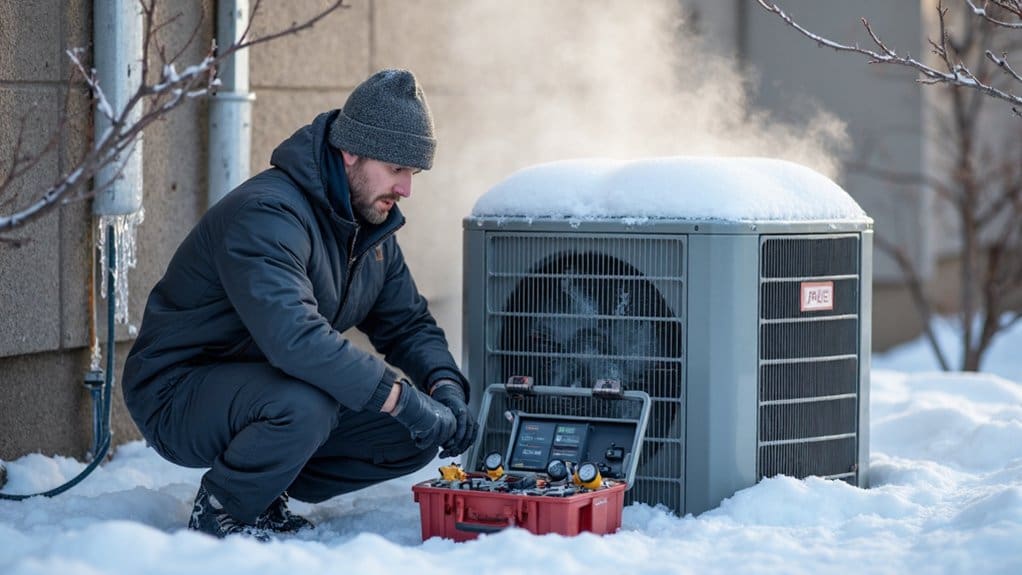
Your heat pump needs regular winter maintenance to combat decreased efficiency in cold weather. You’ll want to clear snow and ice from your outdoor unit using a soft brush, replace air filters every 1-3 months, and remove debris within a 2-foot radius around the system. Schedule annual professional inspections to check refrigerant levels and electrical connections. Watch for warning signs like excessive ice buildup, frequent cycling, or energy bill spikes that indicate you need immediate professional attention to maintain ideal performance.
Key Takeaways
- Clear snow and ice from outdoor unit regularly using a soft brush to maintain proper airflow and prevent system damage.
- Replace air filters every 1-3 months during winter to ensure optimal indoor air quality and system efficiency.
- Schedule annual professional inspections and tune-ups to identify potential issues before they become costly major repairs.
- Make gradual thermostat adjustments and avoid emergency heat mode to minimize excessive cycling and energy consumption.
- Remove debris within a 2-foot radius around the outdoor unit to ensure unrestricted airflow and proper operation.
Why Heat Pumps Can Struggle During Winter Months
The colder it gets outside, the harder your heat pump must work to keep your home comfortable. Your system’s efficiency naturally decreases in cold weather because extracting heat from frigid outdoor air becomes increasingly difficult. This forces your heat pump to consume more energy while delivering less warmth.
Winter conditions create additional challenges for your outdoor unit. Snow and ice accumulation can block critical airflow, preventing proper heat exchange and forcing your system to work overtime. When temperatures drop drastically, your heat pump will cycle more frequently between its primary operation and backup heating elements like electric resistance coils, which substantially reduces overall efficiency.
Poor system performance during winter often stems from inadequate maintenance or improper sizing. If your heat pump can’t meet your home’s heating demands, it’ll rely heavily on backup heating, resulting in skyrocketing energy consumption and higher utility bills throughout the coldest months.
Common Cold Weather Problems That Affect Heat Pump Performance
When winter arrives, several specific problems can severely impact your heat pump’s ability to keep your home warm. Understanding these cold weather challenges helps you identify issues before they compromise your system’s performance.
Ice buildup on your outdoor unit creates one of the most common problems. Snow and ice accumulation blocks airflow and prevents proper heat extraction, dramatically reducing efficiency. Your heat pump must work harder to maintain heating capacity, increasing energy costs.
Poor installation practices also plague winter performance. Incorrectly positioned units or inadequate sizing for your climate means your system can’t meet heating demands when temperatures drop.
Common cold weather issues include:
- Frequent thermostat adjustments causing excessive cycling
- Blocked outdoor unit airflow from debris or ice
- Aging components losing efficiency over time
- Undersized systems struggling in extreme temperatures
Regular maintenance prevents most of these problems, ensuring your heat pump operates efficiently throughout winter months.
Essential Pre-Winter Inspection and Professional Maintenance
Preventing these winter performance issues starts with scheduling professional maintenance before cold weather arrives. Routine HVAC inspections allow experienced technicians to identify potential problems and safeguard your heat pump operates efficiently throughout winter.
During professional maintenance, technicians will clean or replace your filters to maintain proper airflow and indoor air quality. Clogged filters reduce performance and can cause system breakdowns when you need heating most. They’ll also clear debris, leaves, and dirt from your outdoor unit, preventing obstructions that hinder airflow and impact efficiency.
Professional services go beyond basic cleaning. Technicians inspect electrical connections, check refrigerant levels, and test system components to ensure your heat pump performs at its best. This thorough approach catches issues before they become costly repairs.
Relying on local HVAC experts like Mountain View Heating guarantees your heat pump receives meticulous maintenance. Owner Buffy Busik’s expertise in heat pump maintenance helps redefine industry standards, providing comprehensive services that keep your system running smoothly during cold weather months.
Clearing Snow, Ice, and Debris From Your Outdoor Unit
Beyond professional maintenance, you’ll need to actively maintain your outdoor unit throughout winter by clearing away snow, ice, and debris that can severely impact your heat pump’s performance. Accumulated snow and ice insulate the outdoor coil, reducing your system’s ability to extract heat from cold weather air. This insulation effect forces your heat pump to work harder, decreasing efficiency and increasing energy costs.
Regular debris removal guarantees unrestricted airflow around your outdoor unit. Remove leaves, twigs, and other materials that block proper air circulation essential for efficient heat transfer.
Use a soft brush or broom to gently remove snow and ice without damaging the coil. Clear debris from a 2-foot radius around the unit. Install a breathable cover to prevent ice buildup. Inspect and clear after heavy snowfall.
This simple maintenance task keeps your heat pump running effectively throughout winter while preserving optimal airflow and performance.
Proper Filter Maintenance and Indoor Air Quality Management
Your heat pump‘s air filter serves as the first line of defense against dust, debris, and airborne particles that can compromise both system efficiency and indoor air quality. Dirty filters greatly impede airflow, forcing your system to work harder and consume more energy while delivering less comfort.
You should replace air filters every 1-3 months during winter, when your heat pump runs continuously. Clogged filters restrict ideal airflow, causing increased wear on system components and potentially damaging your equipment. This neglect leads to higher energy bills and reduced heating performance when you need it most.
Invest in high-quality air filters designed for cold weather operation to enhance your heat pump’s efficiency and extend its lifespan. Regular check-ups guarantee proper air circulation and maintain healthy air quality throughout your home.
Schedule professional HVAC maintenance services to inspect your filtration system. HVAC services provide thorough filter assessments, ensuring your heat pump operates at peak efficiency during harsh winter conditions.
Thermostat Settings and Temperature Control Best Practices
While proper filtration protects your heat pump’s internal components, mastering thermostat control directly impacts your system’s efficiency and energy consumption throughout winter. Your temperature settings determine how hard your heat pump works and how much energy it consumes.
Consistent thermostat management prevents frequent cycling that reduces efficiency. Make gradual adjustment changes of 1-2 degrees rather than dramatic temperature swings. This approach helps your system maintain stable performance and avoid unnecessary strain.
Consider upgrading to a programmable or smart thermostat that automatically adjusts temperatures based on occupancy and heating demands. These systems optimize energy-efficient operation without manual intervention.
Key thermostat best practices include:
- Maintain steady temperature settings to minimize cycling
- Avoid emergency heat mode unless absolutely necessary
- Program lower temperatures when away from home
- Use gradual adjustment techniques for comfort changes
Never rely on emergency heat settings, which bypass your heat pump’s efficient operation and activate costly backup electric resistance heating instead.
When to Call a Professional for Heat Pump Repairs
How can you tell when your heat pump’s issues require professional expertise rather than basic troubleshooting? Several warning signs indicate it’s time for professional heat pump repair. If you notice unusual noises like grinding, squealing, or banging, don’t ignore them—these sounds often signal mechanical problems beyond DIY fixes.
When your heat pump is struggling to maintain consistent temperatures despite proper thermostat settings, an HVAC technician should evaluate the system. Common heat pump problems include refrigerant leaks, electrical issues, and compressor failures that require specialized tools and expertise.
You should also identify potential issues early by scheduling professional inspections and tune-ups annually. If your energy bills spike unexpectedly, ice forms excessively on outdoor coils, or the system cycles on and off frequently, these are clear indicators of heat pump problems requiring professional attention.
Regular maintenance and prompt professional intervention prevent minor issues from becoming costly major repairs, ensuring reliable winter comfort.
Conclusion
You’ve probably heard that heat pumps don’t work in cold weather—but that’s not entirely true. With proper maintenance, your system can handle temperatures well below freezing. The real issue isn’t the cold itself, but neglecting routine care. When you stay on top of filter changes, keep your outdoor unit clear, and schedule professional tune-ups, you’ll prove that theory wrong while enjoying reliable warmth all winter long.