
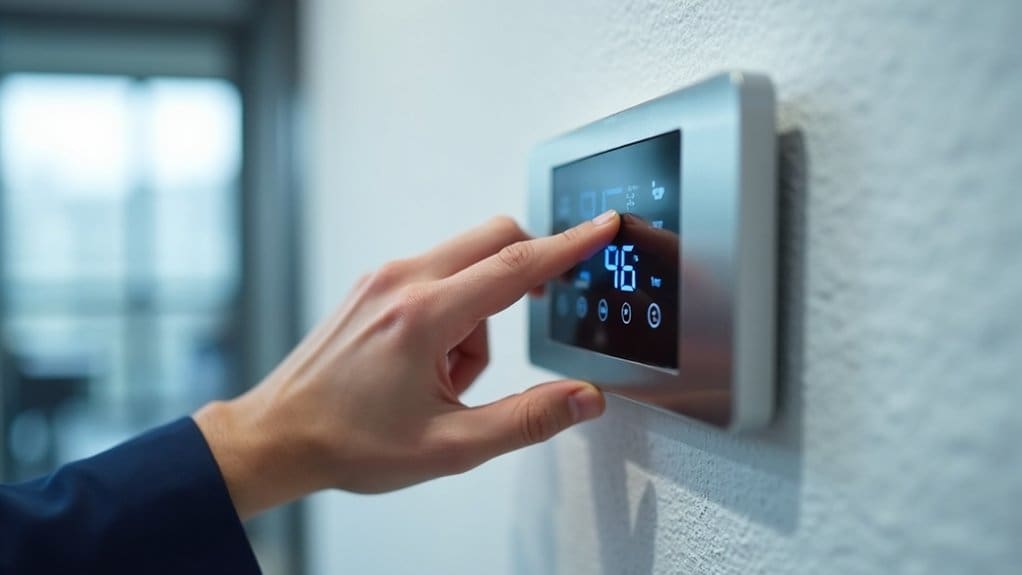
You’ll need sophisticated commercial thermostat systems that go far beyond basic temperature control to effectively manage your office building’s complex climate demands across multiple zones, schedules, and operational requirements. These advanced systems offer automated scheduling, real-time monitoring, multi-user access with tiered permissions, and support for industry protocols like BACnet/IP and Modbus. They can reduce energy consumption by up to 40% while providing centralized control, critical alerts, and seamless integration with existing HVAC infrastructure to optimize your building’s performance and operational efficiency.
Key Takeaways
- Advanced commercial thermostats provide automated scheduling, multi-zone control, and enterprise-grade connectivity for comprehensive office building climate management.
- Phased installation strategies minimize operational disruptions while enabling seamless integration with existing HVAC systems and building management platforms.
- BACnet/IP and Modbus protocol compatibility ensures reliable communication between thermostats and other building automation system components.
- Intelligent automation based on occupancy patterns and outdoor conditions can reduce office building energy consumption by up to 40%.
- Real-time monitoring with critical alerts via text and email enables rapid response to equipment issues and prevents costly breakdowns.
Understanding Commercial HVAC Control Requirements for Modern Office Buildings
Modern office buildings demand sophisticated HVAC control systems that go far beyond basic temperature adjustment. You’ll need extensive/exhaustive/thorough solutions that automate scheduling across multiple zones while centralizing control for your facility management team. These systems monitor equipment health continuously, helping you prevent costly breakdowns and extend your HVAC investment’s lifespan.
Your commercial buildings require multi-user access with tiered permissions, allowing different staff members appropriate control levels. HVAC control systems must support industry-standard protocols like BACnet/IP and Modbus, ensuring seamless integration with existing infrastructure.
Edge intelligence capabilities process data locally, enabling real-time adjustments that maintain ideal conditions without delay. You’ll receive immediate alerts for critical issues, preventing minor problems from becoming major failures.
Scalable connectivity solutions adapt to your building’s unique layout, whether you’re connecting over Wi-Fi or Ethernet. This flexibility reduces energy costs through optimized performance while supporting future expansion needs.
Key Features and Capabilities of Advanced Commercial Thermostats
Advanced commercial thermostats deliver automated scheduling that adapts to your building’s operational patterns, from standard business hours to holiday closures and special events. These systems automatically adjust for seasonal shifts and tenant-specific requirements, maximizing energy efficiency across your facility.
You’ll benefit from enterprise-grade connectivity featuring secure Ethernet and Wi-Fi options, plus BACnet/IP and Modbus compatibility for seamless integration with existing Commercial HVAC infrastructure. Mobile and desktop access enables centralized control across multiple locations.
Edge intelligence capabilities process real-time data directly within the thermostat, enabling immediate HVAC systems adjustments without cloud dependency. You’ll receive critical alerts via text and email when issues arise, preventing costly equipment failures.
These thermostats scale effortlessly from single buildings to nationwide operations while adapting to diverse HVAC configurations. Streamlined deployment and remote management reduce installation time and maintenance requirements, cutting operational costs while improving system reliability and performance monitoring capabilities.
Installation Process and Deployment Strategies for Office Building Systems
When deploying commercial thermostats in office buildings, you’ll find that proper planning and phased implementation strategies considerably reduce installation complexity and operational disruptions. The rapid and seamless installation process minimizes downtime, keeping your daily operations running smoothly.
You’ll benefit from commercial-grade thermostats featuring secure Ethernet and Wi-Fi connectivity, which enable easy retrofit applications and seamless integration with your existing HVAC system. These units guarantee compatibility with current building management systems without requiring extensive infrastructure changes.
Your facility management team gains centralized control and remote monitoring capabilities, allowing you to optimize energy usage and respond quickly to critical alerts. By implementing occupancy-based control and demand-driven automation features, you’ll achieve significant energy savings while reducing waste.
The multi-user access with tiered permissions enables your IT, maintenance, and operations teams to collaborate effectively on climate management strategies, ensuring ideal performance across your entire commercial facility.
Energy Efficiency and Cost Reduction Through Smart Climate Management
Smart commercial thermostats transform your building’s energy profile by automatically adjusting temperature settings based on occupancy patterns, outdoor conditions, and real-time demand. You’ll achieve up to 40% reduction in energy consumption through intelligent climate management systems that continuously optimize HVAC performance.
Your Smart Thermostat investment pays dividends through advanced building automation platforms like Trane’s Tracer® SC system, which uses BACnet® protocol to coordinate multiple building systems efficiently. Building operators benefit from Pelican’s autonomous networking capabilities that provide cloud-based intelligence for any commercial facility size.
Johnson Controls’ commercial thermostats deliver precision control while maximizing energy savings across diverse HVAC applications. You’ll find retrofit-friendly controllers from both Pelican and Johnson Controls enable seamless upgrades without extensive infrastructure changes.
These systems reduce operational costs by eliminating energy waste, extending equipment lifespan, and providing building operators with real-time performance data to make informed decisions about climate control optimization.
Integration With Building Automation Systems and Network Protocols
How do commercial thermostats communicate with your building’s existing infrastructure? Leading providers like Johnson Controls offer seamless integration with BACnet/IP and Modbus protocols, ensuring compatibility with your building automation systems. These network protocols create a unified communication framework that connects your HVAC equipment to centralized control systems.
You’ll benefit from secure Ethernet or Wi-Fi connectivity that enables remote monitoring and management through a central dashboard. This integration allows you to oversee hundreds of thermostats across multiple locations using a secure cloud-based platform.
Real-time alerts via text and email keep you informed of critical HVAC system issues, enabling rapid response to prevent costly downtime. The flexible configuration options adapt to your diverse equipment types, building layouts, and specific facility requirements. This extensive integration transforms individual thermostats into intelligent components of your broader building automation ecosystem, maximizing operational efficiency and control.
Maintenance and Ongoing System Optimization for Peak Performance
While network integration establishes the foundation for intelligent building control, your commercial thermostat system’s long-term success depends on consistent maintenance and strategic optimization. You’ll need regularly scheduled inspections to identify issues before they disrupt operations, particularly with fan coil units and other HVAC equipment that require precise calibration.
Your maintenance strategy should include continuous monitoring of system performance data through the user interface, enabling you to spot optimization opportunities that improve efficiency. Don’t overlook proactive software updates—they’ll keep your systems secure while accessing new features.
Experienced technicians can fine-tune heating, cooling, and ventilation settings for ideal occupant comfort. You’ll benefit from predictive analytics and AI-powered insights that anticipate HVAC equipment failures, allowing you to plan replacements before costly breakdowns occur. This proactive approach guarantees your commercial thermostat system delivers consistent performance while minimizing unexpected downtime and repair expenses.
Conclusion
You’ve planted the seeds of transformation throughout your office building. Watch as your new commercial thermostat system blooms into seamless climate control, its digital roots spreading through every floor and zone. You’ll witness energy costs shrinking like shadows at noon while comfort expands across your workspace. Your investment grows stronger each season, branching into automated efficiency that breathes life into productivity and nurtures long-term operational success.