
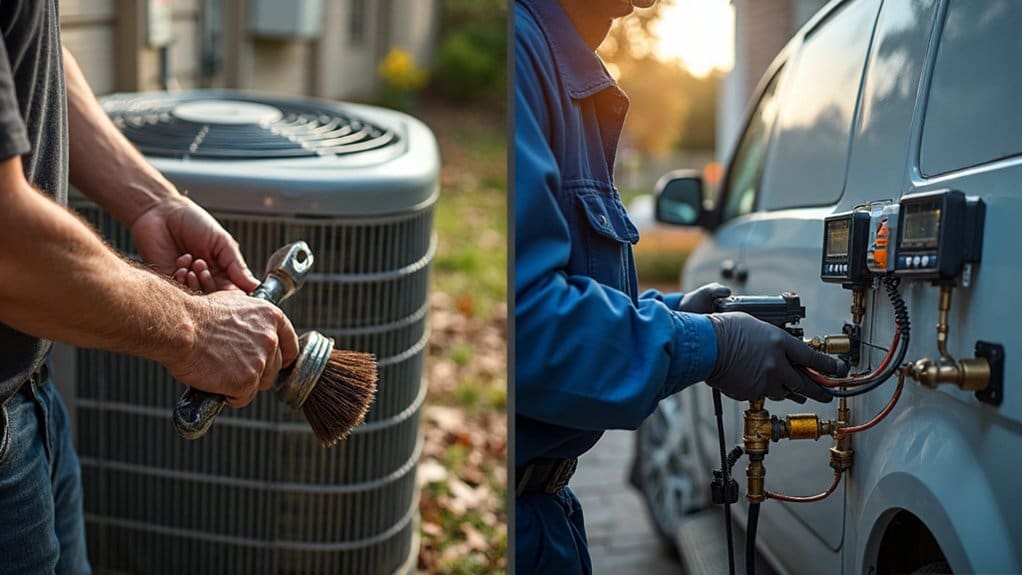
You can handle basic heat pump maintenance like replacing filters monthly, clearing debris around outdoor units, and checking thermostat settings, which saves $75-$150 per service. However, professional tune-ups costing $150-$300 annually include deep coil cleaning, refrigerant adjustments, and safety inspections that prevent costly breakdowns. DIY work risks electrical hazards and warranty voiding, while professionals extend your system’s lifespan and maintain peak efficiency. The key lies in knowing which tasks require expert intervention.
Key Takeaways
- DIY tasks include replacing filters monthly, clearing outdoor debris, and checking thermostat settings for basic maintenance.
- Professional services provide deep coil cleaning, refrigerant level adjustments, and comprehensive system inspections twice annually.
- DIY maintenance saves $75-$150 per service but risks electrical hazards and potential warranty voiding.
- Professional tune-ups cost $150-$300 annually but maximize equipment lifespan and identify hidden safety issues.
- Combining basic DIY tasks with professional services ensures optimal performance while balancing cost and system protection.
Understanding Heat Pump Maintenance Requirements
Your heat pump works year-round to keep your home comfortable, which means it needs consistent care to maintain peak performance. Unlike traditional HVAC systems that separate your air conditioner and heating units, your heat pump handles both cooling and heating functions through one integrated system.
Professional maintenance recommendations call for servicing your heat pump twice annually—once before heating season and once before cooling season. This regular schedule guarantees your system maintains ideal efficiency throughout demanding temperature changes.
Essential maintenance tasks include cleaning or replacing air filters, removing debris from outdoor units, and checking refrigerant levels and electrical connections. While some homeowners consider DIY approaches, professional technicians bring specialized tools and training that prevent safety hazards and system damage.
Regular professional tune-ups extend your heat pump’s lifespan, reduce energy costs, and prevent unexpected breakdowns. Understanding these maintenance requirements helps you make informed decisions about protecting your investment and guaranteeing year-round comfort.
Essential DIY Heat Pump Maintenance Tasks Homeowners Can Handle
While professional maintenance remains important for complex components and safety-critical systems, several heat pump maintenance tasks fall well within the capabilities of most homeowners. You can tackle these DIY maintenance activities to keep your system running smoothly.
Start by replacing air filters every 1-3 months to maintain ideal airflow and efficiency. Clear debris and vegetation around your outdoor unit to prevent airflow obstruction. Check your thermostat settings regularly and adjust them as needed for proper operation.
You’ll also want to inspect the condensate drain line periodically and clear any clogs to prevent water damage. Visual inspection of your indoor and outdoor coils helps identify dirt buildup or damage – you can gently clean them using a soft brush or coil cleaner.
These maintenance tasks don’t require specialized training but considerably impact your heat pump’s performance. However, more complex issues still require a qualified technician’s expertise.
Limitations and Risks of DIY Heat Pump Maintenance
Despite the appeal of handling heat pump maintenance yourself, DIY approaches carry significant limitations that can compromise both your safety and your system’s performance.
While you can perform basic cleaning tasks, attempting complex repairs without proper expertise creates serious risks:
- Electrical hazards – Working with electrical components and safety controls without training can cause electrical failures or personal injury
- System damage – Improper handling of dirty coils or refrigerant lines can restrict airflow and create costly problems
- Hidden wear and tear – You’ll likely miss critical issues that professionals identify, allowing minor problems to become major repairs
- Reduced efficiency – Skipping technical calibrations will reduce energy efficiency and increase utility costs
DIY tasks should remain limited to simple maintenance like filter changes. Without specialized tools and knowledge, you risk turning minor issues into expensive breakdowns while potentially voiding your warranty coverage.
What Professional Heat Pump Tune-Up Services Include
Professional heat pump tune-up services go far beyond what you can accomplish with basic DIY maintenance. When you hire an HVAC professional, they’ll conduct an extensive inspection of your entire heating and cooling system, examining every component for potential issues that could affect performance.
Your HVAC technician will perform deep cleaning of both indoor and outdoor coils, removing accumulated dirt and debris that restricts airflow. They’ll handle proper filter replacement with high-quality filters, ensuring a secure fit for ideal operation. The maintenance service includes thermostat calibration, lubrication of motors and moving parts, and testing of all electrical connections.
Professional tune-up services also involve checking refrigerant levels in your air conditioner and heat pump, identifying leaks or charging issues. Unlike DIY efforts, technicians can spot safety hazards and potential problems before they become costly repairs, ensuring your HVAC system operates efficiently and safely year-round.
Cost Analysis: DIY Maintenance Vs Professional Services
When you’re deciding between DIY maintenance and professional services, the immediate cost difference is significant. DIY heat pump maintenance saves you $75-$150 per service, while professional HVAC tune-ups cost $150-$300 annually. However, this upfront savings doesn’t tell the complete story about long-term value and efficiency.
Here’s what affects your total maintenance cost:
- Professional services include parts discounts – reducing your repair expenses when components need replacement
- DIY attempts on complex systems – can void warranties and create expensive safety issues
- Professional maintenance maximizes lifespan – preventing costly premature heat pump replacement
- Priority scheduling benefits – getting faster service during peak seasons when your system fails
While you can handle basic tasks like filter changes and outdoor unit cleaning yourself, extensive professional maintenance typically delivers better energy efficiency and equipment longevity. The higher upfront professional cost often pays for itself through improved performance and fewer emergency repairs.
When to Call a Professional Heat Pump Technician
Understanding maintenance costs helps you make informed decisions, but knowing exactly when your heat pump requires professional expertise safeguards your investment and safety. You’ll need a professional heat pump technician when your refrigerant charge requires checking and adjustment, as improper levels drastically reduce efficiency and equipment lifespan.
Your outdoor unit needs a thorough clean when built-up dirt and debris impair airflow and heat transfer. Don’t attempt this yourself—professionals have specialized equipment and knowledge to clean coils properly without damage.
Call technicians when electrical connections need inspection and tightening to prevent tripped breakers or control board failures. These systems carry high voltage that’s dangerous for untrained individuals.
Schedule professional service for comprehensive system inspection, system tune-up, and calibration to optimize performance. Major repairs like compressor replacement require specialized tools and training you likely don’t possess. Professional maintenance guarantees your heat pump operates safely and efficiently year-round.
Creating Your Heat Pump Maintenance Strategy
Developing an effective heat pump maintenance strategy requires balancing DIY tasks with professional services to maximize efficiency while controlling costs. Your approach should combine regular DIY maintenance with scheduled professional tune-ups to optimize system performance and energy efficiency.
- Monthly DIY Tasks – Replace your air filter regularly and clear debris from the outdoor unit to maintain basic system performance between professional visits.
- Seasonal Professional Services – Schedule tune-ups in spring and fall ($75-$150 each) for coil cleaning, component calibration, and extensive system inspections.
- Cost-Benefit Analysis – Professional preventative maintenance can boost energy efficiency by 15-30%, potentially saving hundreds annually on energy bills.
- Know Your Limits – Handle simple DIY maintenance tasks yourself, but leave complex repairs and major system issues to trained HVAC technicians to avoid safety hazards and costly damage.
This balanced approach maximizes your heat pump’s lifespan while controlling maintenance expenses.
Conclusion
You’ve learned the difference between DIY maintenance and professional services, but let’s be honest—you’ll probably still ignore that filter for six months, attempt to “fix” refrigerant leaks with duct tape, and call a technician only when your heat pump sounds like a dying walrus. Sure, you could create a maintenance strategy, but we both know you’ll bookmark this article and never look at it again until your system fails mid-winter.