
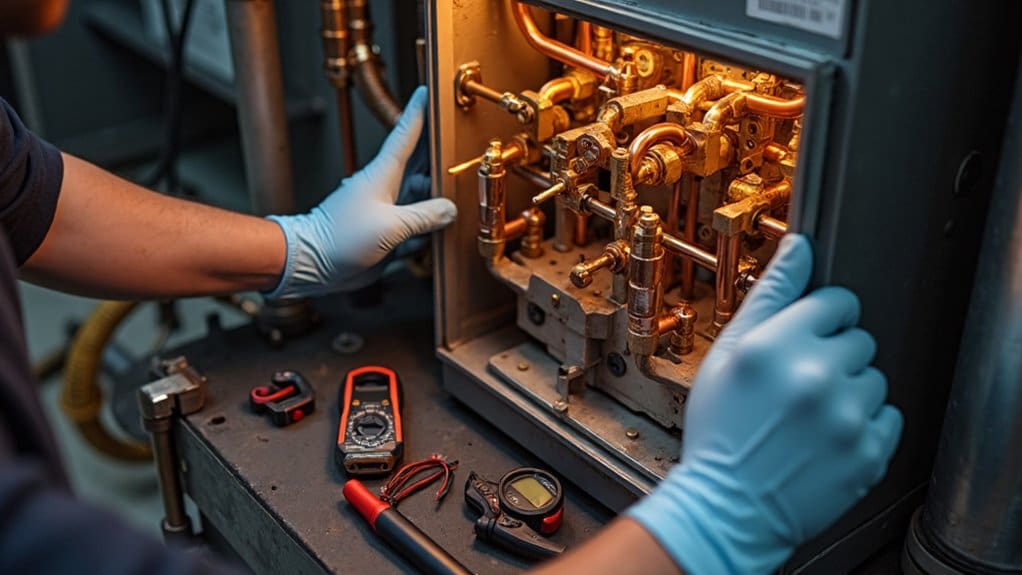
You’ll need to turn off the power supply and verify complete shutdown before replacing air filters and cleaning the blower assembly. Next, examine the burner and combustion chamber, test the ignition system, and inspect electrical connections for safety. Don’t forget to check ductwork static pressure, measure electrical amp draw, and test carbon monoxide levels throughout your home. Clear any ventilation obstructions and calibrate your thermostat for accuracy. The complete checklist below covers every critical step you shouldn’t miss.
Key Takeaways
- Turn off power and gas supply, then inspect burner assembly, heat exchanger, and combustion chamber for corrosion or damage.
- Test ignition system functionality, verify pilot light flame quality, and check all electrical connections for proper grounding and tightness.
- Clean or replace air filters, inspect blower assembly, and test wheel balance to ensure optimal airflow throughout the system.
- Examine ventilation system for obstructions, test carbon monoxide detectors, and verify proper exhaust gas movement for safety compliance.
- Measure static pressure across components, check amperage draw against specifications, and seal ductwork leaks to maximize efficiency.
Turn Off the Power Supply and Ensure Complete System Shutdown
Before you begin any furnace maintenance work, you must turn off the power supply to guarantee your safety and prevent accidental startup. Locate the power switch on the furnace unit itself and flip it to the off position. Next, head to your electrical panel and shut off the circuit breaker that supplies power to the furnace system.
After disconnecting the furnace from its power source, verify that you’ve achieved complete shutdown by checking the furnace controls. Look for any illuminated displays, indicator lights, or active electrical components that might signal the unit still has power. If you notice any signs of electrical activity, double-check your power isolation steps.
This power turned off verification process is absolutely critical before proceeding with any maintenance tasks. Proper power isolation protects you from electrical hazards and prevents the system from cycling on unexpectedly during your tune-up work.
Replace or Clean Air Filters for Optimal Airflow
The air filter serves as your furnace’s first line of defense against dust, debris, and airborne particles that can compromise system performance. You’ll need to inspect the air filter during every HVAC service call, as dirty filters restrict airflow and force your heating system to work harder than necessary.
Check whether you’re dealing with disposable or reusable filters. Replace disposable air filters every 1-3 months, while reusable ones require regular cleaning according to manufacturer specifications. This simple maintenance step prevents dust and debris buildup that can damage expensive furnace components over time.
Essential filter maintenance tasks include:
- Locating the filter compartment near the furnace’s air intake or return duct
- Measuring filter dimensions to guarantee proper replacement sizing
- Inspecting for tears or damage that compromise filtration effectiveness
- Noting airflow direction arrows when installing new filters
- Recording replacement dates to establish consistent maintenance schedules
Clean furnace filters maintain optimal airflow and peak system efficiency.
Clean and Inspect the Blower Assembly Components
After guaranteeing proper airflow through clean filters, you’ll need to examine the blower assembly that actually moves heated air throughout your home. The blower motor requires careful attention during routine inspections.
Clean the Blower housing and fan blades using a soft brush or compressed air to remove accumulated dust and debris. This prevents reduced efficiency and potential overheating. Your technician will check the blower assembly for loose connections, worn belts, and correct alignment.
Inspect the blower motor bearings for lubrication needs, though many modern units feature sealed bearings. Look for signs of damage including unusual noises, excessive vibration, or visible wear on components. Check motor mounts and housing bolts for tightness.
The blower wheel should spin freely without wobbling or scraping sounds. Regular maintenance of these components ensures ideal air circulation, reduces energy consumption, and extends your furnace’s lifespan while preventing costly emergency repairs.
Examine and Clean the Burner and Combustion Chamber
Once you’ve completed the blower assembly inspection, it’s crucial to examine the heart of your furnace’s heating system. The burner and combustion chamber require careful attention during furnace maintenance to confirm safe, efficient operation throughout the heating season.
Start by shutting off power and gas supply to your gas furnace. Remove the burner assembly and inspect for corrosion, warping, or debris buildup. Clean burner ports using a soft brush or compressed air to remove dust and lint that can obstruct proper gas flow.
Essential combustion chamber inspection tasks include:
- Checking refractory walls for cracks or deterioration
- Removing soot deposits from chamber surfaces
- Inspecting heat exchanger for holes or corrosion
- Testing flame sensor operation and cleaning contacts
- Verifying proper flame color and pattern
If you discover significant damage or aren’t confident in your assessment, contact a qualified technician immediately. Never attempt repairs beyond your expertise level.
Test and Verify the Ignition System Operation
Following your thorough examination of the burner and combustion chamber, you’ll need to focus on the ignition system that starts your furnace reliably each heating cycle. This critical component guarantees your gas furnaces operate safely and efficiently throughout the heating season.
Begin by inspecting the pilot light if your HVAC system uses this older ignition method. Verify it’s burning with a steady blue flame, not yellow or orange, which indicates proper combustion. For electronic ignition systems, check all wiring connections for damage or looseness that could prevent reliable operation.
Test the ignition sequence by cycling your furnace through several start-up procedures. Watch for consistent ignition timing and listen for unusual sounds. Verify that safety controls respond appropriately, shutting down the system if ignition fails. Clean ignition components to remove debris that might interfere with operation. This furnace tune-up step prevents costly service calls and assures dependable heating performance.
Lubricate All Moving Parts According to Manufacturer Specifications
With your ignition system verified and operating properly, turn your attention to the mechanical components that keep your furnace running smoothly. Proper lubrication prevents premature wear and reduces energy consumption. Professional technicians understand that this critical step in your furnace tune up checklist extends equipment lifespan considerably.
Follow manufacturer specifications precisely when selecting lubricants. Different components require specific oil types and viscosities. Check your maintenance routine documentation for proper intervals and procedures.
Key lubrication points include:
- Blower motor bearings – Apply lightweight machine oil to designated ports
- Fan shaft assemblies – Grease fittings require high-temperature bearing grease
- Damper mechanisms – Use penetrating oil on pivot points and linkages
- Belt tensioning hardware – Light oil prevents seized adjustment bolts
- Electrical connections – Apply dielectric grease to prevent corrosion
Regular tune-ups incorporating systematic lubrication reduce service calls and improve system reliability. Document completed tasks and schedule next service interval according to manufacturer recommendations.
Inspect the Heat Exchanger for Cracks and Damage
After completing the lubrication process, you’ll need to examine your furnace’s heat exchanger—the component that separates combustion gases from the air circulating through your home. This inspection represents a critical safety checkpoint during any extensive maintenance routine.
Look carefully for rust, cracks, or physical damage that could compromise the heat exchanger’s integrity. A damaged heat exchanger can leak deadly carbon monoxide into your home’s air supply, creating an immediate safety hazard for occupants.
Use a flashlight to thoroughly examine all visible surfaces, paying attention to stress points and connection areas where damage typically occurs. If you discover any cracks or compromised sections, don’t attempt repairs yourself—contact a qualified HVAC technician immediately for replacement.
Performing this annual inspection as part of your regular furnace maintenance helps extend equipment lifespan while preventing dangerous carbon monoxide exposure. Never skip this essential safety check.
Calibrate and Test Thermostat Accuracy
Next, you’ll need to verify your thermostat’s accuracy and responsiveness to guarantee ideal furnace performance. Your HVAC system depends on precise temperature control to maintain comfort and efficiency. Start by setting the thermostat to your desired temperature and confirm the furnace cycles on and off accordingly. This safeguards your air conditioning system and heating components are working in harmony.
Check programmable settings to make sure they’re properly configured for optimum energy efficiency. Test the thermostat’s ability to cycle the furnace through its complete operational range, from lowest to highest setpoints. If readings seem off, calibrate the device to ensure accurate temperature sensing.
- Digital display showing precise temperature readings within one degree
- Furnace igniting smoothly when temperature drops below setpoint
- System shutting off completely when target temperature is reached
- Mounted thermostat away from drafty windows and direct sunlight
- Programming schedule matching your daily routine perfectly
Check All Electrical Connections and Wiring
Proper electrical connections form the backbone of your furnace’s safe operation, making this inspection just as important as thermostat calibration. Start by examining all terminals, wires, and connections for corrosion, damage, or loose fittings throughout your home’s heating system. Tighten any loose connections immediately and replace damaged wires to maintain system integrity.
Verify that all components are properly grounded—this critical safety feature prevents electrical hazards that could safeguard your family’s wellbeing. Don’t overlook the carbon monoxide detector’s electrical connection, as proper ventilation systems depend on reliable power sources.
Measure the furnace’s amperage draw using a multimeter to guarantee it operates within manufacturer specifications. Excessive amperage can spike energy bills and indicate underlying problems. Address any electrical issues promptly during your DIY HVAC maintenance routine. These electrical checks prevent costly breakdowns, reduce fire risks, and certify your furnace operates safely and efficiently throughout the heating season.
Inspect Ventilation System and Clear Obstructions
While electrical connections guarantee safe power delivery, your furnace’s ventilation system determines whether dangerous gases exit your home properly. You must ascertain that exhaust gases are venting outdoors correctly, as improper ventilation creates a serious safety hazard for your family.
Start by examining all vents and flues for blockages that could restrict air flow. Clear any debris, leaves, or obstructions you discover. Next, confirm exhaust gases aren’t entering living spaces, which compromises indoor air quality and poses health risks.
Essential ventilation inspection steps:
- Check exterior vent caps for bird nests, ice buildup, or debris accumulation
- Examine flue pipes for cracks, corrosion, or loose connections throughout their length
- Verify proper draft by observing exhaust gas movement at startup
- Inspect intake vents for blockages that could starve the furnace of combustion air
- Test carbon monoxide detectors near the furnace to confirm they’re functioning properly
Maintain unobstructed ventilation to ascertain safe, efficient furnace operation year-round.
Examine Blower Wheel for Debris and Proper Balance
After confirming your ventilation system operates safely, you’ll need to inspect the blower wheel that circulates heated air throughout your home. Start by shutting off power to your furnace and removing the access panel to reach the blower assembly.
Examine the blower wheel thoroughly for accumulated debris like dust, pet hair, or lint that restricts air flow. Use a soft brush or vacuum to clean all surfaces, guaranteeing you don’t damage the delicate fins. Check each blade for cracks, warping, or other damage that compromises air circulation effectiveness.
Test the wheel’s balance by spinning it gently – it should rotate smoothly without wobbling. Listen for unusual noises like scraping or grinding that indicate bearing problems or imbalanced components. Proper maintenance of this critical component ensures ideal furnace performance and prevents costly repairs. A clean, balanced blower wheel maximizes air circulation while reducing energy consumption and extending your system’s lifespan.
Perform Static Pressure Testing on Ductwork
Static pressure testing reveals whether your ductwork system operates within manufacturer specifications and identifies restrictions that force your furnace to work harder than required. This diagnostic procedure measures resistance as air travels through your system, helping you pinpoint problem areas that compromise energy efficiency.
Use a digital manometer to measure pressures at multiple points while the system’s running. Compare readings against manufacturer recommendations to determine if your heating and cooling system needs adjustments.
- Manometer probes inserted into supply and return plenums, creating precise measurement points
- Airflow gauges displaying pressure differentials across filters and coil assemblies
- Technician hands adjusting dampers while monitoring real-time pressure changes
- Ductwork joints being sealed with metallic tape to eliminate air leaks
- Digital readings confirming appropriate airflow moving air throughout the entire system
Proper static pressure ensures your furnace operates efficiently, extending equipment life while maintaining consistent comfort levels and reducing utility costs.
Test Electrical Amp Draw From All Components
Testing electrical amp draw from all furnace components confirms your system’s electrical health beyond the mechanical airflow measurements you’ve just completed. Use your multimeter to verify each component’s current consumption against manufacturer specifications. This critical heating system diagnostic reveals potential electrical problems before they cause equipment failure.
Start with the blower motor, then test the gas valve, ignition system, and control board. Compare measured amp draw to nameplate ratings – excessive current indicates failing components or electrical issues requiring immediate attention. Your furnace’s energy efficiency depends on proper electrical operation, as overloaded circuits waste power and create safety hazards.
Monitor readings carefully during startup and steady-state operation. Components drawing excessive current will eventually trip circuit breakers, leaving customers without heat. This proactive electrical testing prevents emergency service calls and guarantees safe, efficient air circulation throughout the heating season. Regular amp draw verification protects both the furnace investment and occupant safety.
Conduct Carbon Monoxide Safety Testing
While electrical components determine your furnace’s operational efficiency, carbon monoxide safety testing protects lives by detecting this silent killer before it reaches dangerous concentrations.
Use your handheld detector to check for this odorless gas throughout the home, paying special attention to areas near the furnace. During your furnace inspection, examine all gas-fired components, ensuring proper gas pressure and heat exchanger integrity to prevent carbon monoxide production.
- Picture toxic fumes seeping silently through cracked heat exchangers into living spaces
- Visualize blocked venting systems trapping deadly exhaust gases inside homes
- Imagine families sleeping peacefully while invisible poison fills their bedrooms
- See carbon monoxide alarms sitting useless with dead batteries during emergencies
- Envision clear exhaust pathways safely expelling dangerous gases outdoors
Verify the venting system remains unobstructed and properly expels exhaust gases outside. Test carbon monoxide alarm functionality and replace batteries. When you consult your furnaces’ documentation, emphasize to homeowners how annual inspections maintain air quality and prevent fatal exposure.
Schedule Follow-Up Professional Maintenance Services
Even after completing thorough DIY maintenance, you’ll need professional expertise to catch issues beyond typical homeowner capabilities. You should schedule a furnace inspection annually to guarantee your system operates safely and efficiently. A licensed HVAC technician will identify problems you might miss and perform essential steps that avoid costly repairs down the road.
Consider enrolling in Maintenance Plans that provide regular check-ups and tune-ups, extending your furnace’s lifespan drastically. These programs typically include priority scheduling and discounted repairs when needed. Contact us or your local HVAC provider to explore available service agreements.
Document every maintenance visit, including dates, repairs performed, and technician recommendations. Keep detailed service records to identify recurring issues early and support warranty claims. This documentation helps keep your home comfortable while maximizing your furnace investment. Professional follow-up ensures your heating system remains reliable throughout its operational life.
Conclusion
You’ve now got your furnace tune-up roadmap – think of it as your heating system’s annual physical exam. Like a well-oiled machine, following these fifteen tasks will keep your furnace purring like a contented cat through winter’s harsh bite. Don’t skip steps or cut corners; your customers’ comfort and safety depend on your thoroughness. Remember, you’re not just maintaining equipment – you’re ensuring families stay warm when Jack Frost comes knocking at their door.