
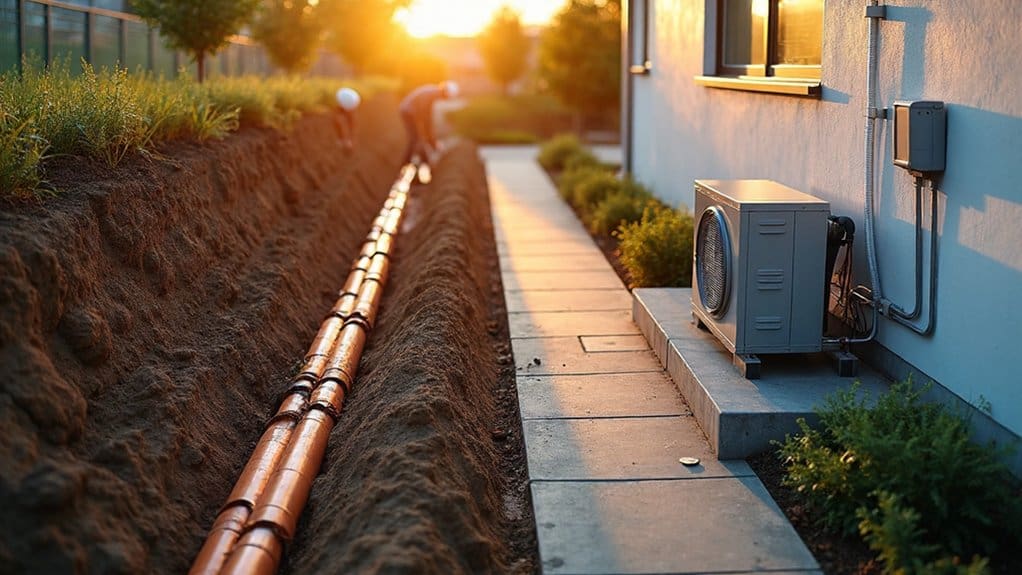
You’ll find ground source heat pumps offer superior efficiency (up to 500%) and longer lifespan (50+ years) but require extensive excavation and cost $10,000-$30,000 to install. Air source heat pumps are more affordable ($4,000-$8,000) with simpler installation, but they struggle in freezing temperatures and last only 15-20 years. Your choice depends on budget, property size, climate, and long-term goals—factors that deserve careful consideration before making this significant investment.
Key Takeaways
- Ground source heat pumps offer superior efficiency (COP 3-5) and longer lifespan but require extensive excavation and higher upfront costs.
- Air source heat pumps are more affordable ($4,000-$8,000) with simpler installation but struggle in extremely cold weather below freezing.
- Ground source systems provide consistent year-round performance regardless of climate, while air source performance drops significantly in cold conditions.
- Installation timeframes differ greatly: air source takes 1-3 days versus ground source requiring 3-7 days plus excavation work.
- Ground source offers 30-70% energy savings with 50+ year ground loops, while air source provides moderate savings with 15-20 year lifespan.
How Ground Source and Air Source Heat Pumps Work
When you’re comparing heat pump options, understanding their fundamental operating principles helps you make an informed decision. Ground-source heat pumps tap into the earth’s consistent underground temperature through buried loops or groundwater systems to provide heating and cooling for your home. This stable ground temperature gives them superior efficiency and performance year-round.
Air source heat pumps extract heat directly from outdoor air temperature, making installation much simpler since you won’t need extensive excavation or drilling. However, their performance drops drastically when outdoor air temperature becomes extremely cold, affecting their heating capability.
Both systems can reverse their operation for cooling during summer months. While ground-source heat pumps offer better long-term efficiency with COPs of 3-5 versus air source’s 2-4, they require higher upfront cost due to complex ground loop installation. Air source units compensate with straightforward installation processes that minimize initial expenses and disruption.
Ground Source Heat Pump Benefits and Drawbacks
Ground source heat pumps deliver exceptional efficiency that can reach up to 500%, making them considerably more efficient than their air source heat pump counterparts. This superior energy efficiency translates to substantial savings on your heating and cooling costs, typically reducing expenses by 30-70%. You’ll also benefit from consistent performance year-round since the temperature underground remains stable, unlike air source systems that struggle in extreme weather.
Your heating and cooling system will last longer too—indoor components operate for 20-25 years while ground loops function for 50+ years. Ground source heat pumps also reduce dependence on fossil fuels.
However, geothermal heat pump installation presents significant challenges. You’ll face higher upfront installation costs ranging from $10,000-$30,000 due to extensive excavation requirements. Your property must have adequate outdoor space for the ground loop system, which isn’t feasible for all homes.
Air Source Heat Pump Advantages and Disadvantages
Air source heat pumps offer a more accessible entry point into efficient heating and cooling technology. You’ll find these systems considerably more affordable, with installation costs ranging from $4,000-$8,000. The heat pump unit draws heat from outdoor air, making installation straightforward since you won’t need extensive ground excavation or large property requirements.
Your air source heat pumps provide dual functionality, delivering both heating and air conditioning from a single system. They operate at impressive efficiency levels up to 300%, converting outdoor air into comfortable indoor temperatures while reducing energy costs.
However, you should consider their limitations in cold climates. When temperatures drop below freezing, these pumps struggle to extract sufficient heat from frigid outdoor air, potentially requiring backup heating systems. Additionally, you’ll face replacement sooner than ground source alternatives, as air source units typically last 15-20 years compared to their ground-based counterparts.
Installation Requirements and Cost Comparison
The installation requirements between these two heat pump systems create dramatically different project scopes and budgets. When comparing air source vs ground source options, you’ll find significant differences in complexity and investment.
Air source heat pump systems offer a straightforward installation process. You’ll need minimal outdoor space, and the work typically completes within 1-3 days. Your investment ranges from $4,000 to $8,000, making it an accessible heating and cooling systems upgrade.
Ground source installations require extensive excavation for the ground loop system. Here’s what impacts your project:
- Installation timeframe: 3-7 days versus 1-3 days for air source
- Cost range: $10,000 to $30,000 compared to air source’s lower price point
- Site requirements: Property size, geology, and heating needs affect complexity
Both heat pump systems qualify for various incentives and rebates that’ll help offset your initial costs, regardless of which source you choose.
Choosing the Right Heat Pump for Your Property
Selecting between ground source and air source heat pumps depends on your property’s unique characteristics and long-term goals. If you’ve got extensive outdoor space and can handle higher installation costs ($10,000-$30,000), a ground source heat pump offers superior efficiency with COPs of 3-5 and exceptional lifespan—50+ years for ground loops. However, if you’re working with limited space and budget constraints, an air source heat pump provides reasonable efficiency (COP 2-4) at lower installation costs ($4,000-$8,000).
Consider the pros and cons carefully: ground source systems excel in long-term performance but require significant upfront investment, while air source units offer affordability with shorter lifespans (15-20 years). Don’t overlook available tax credits, rebates, and utility incentives that can substantially reduce your initial costs. Your climate, property size, budget, and timeline will ultimately determine which system best serves your heating and cooling needs.
Conclusion
You’ve weighed the options, and now it’s decision time. Remember, you get what you pay for—ground source systems cost more upfront but deliver superior efficiency and longevity. If you’re budget-conscious and don’t mind slightly higher operating costs, air source pumps offer excellent value. Consider your property’s layout, local climate, and long-term goals. Don’t rush this choice; you’ll live with it for decades. The right heat pump transforms your home’s comfort and energy bills.