
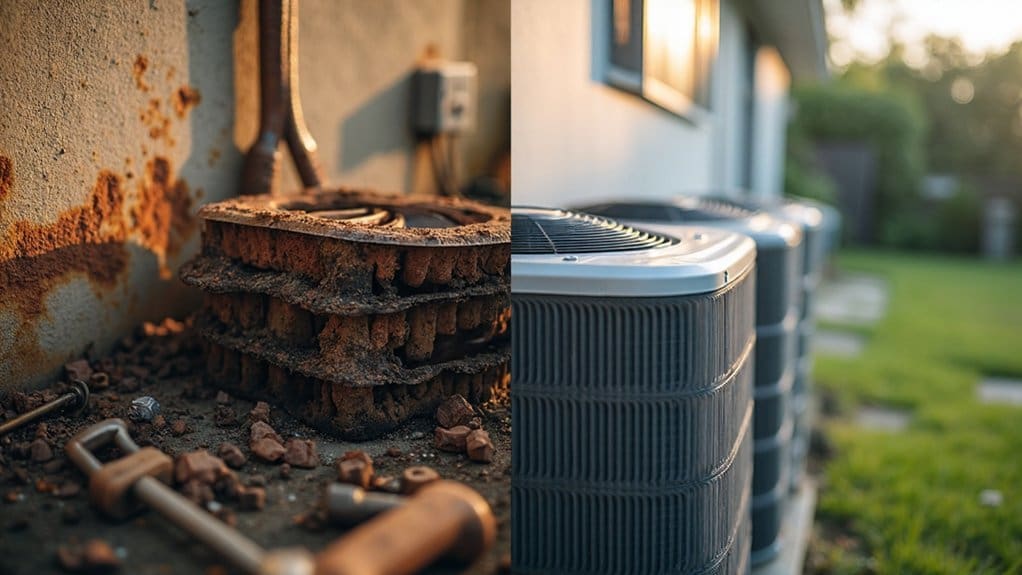
You should repair your air conditioning system if it’s under 10 years old, repair costs are less than 30% of replacement costs, and you’re facing single issues rather than multiple failures. However, replacement becomes the smarter choice when your unit exceeds 10-15 years, requires frequent repairs, or causes rising energy bills. Safety concerns like carbon monoxide leaks or electrical damage demand immediate action. The following insights will help you navigate this critical decision with confidence.
Key Takeaways
- Choose repair if costs are under 30% of replacement price and your system is less than 10 years old.
- Replace units over 15 years old, as they become inefficient and prone to frequent, costly breakdowns.
- Safety issues like carbon monoxide leaks, faulty wiring, or refrigerant exposure require immediate professional replacement.
- New systems reduce energy bills by 20-30% and offer smart features like variable-speed compressors and zoning.
- Multiple yearly repairs, rising energy costs, and uneven temperatures indicate your system needs replacement consideration.
Signs Your Air Conditioning System Needs Attention
When should you start questioning whether your air conditioning system needs professional attention? Several warning signs indicate your HVAC system requires immediate evaluation.
If you’re scheduling multiple repair appointments throughout the year, your older air conditioning unit is likely becoming unreliable and costly to maintain. Rising energy bills without increased usage signal declining efficiency, meaning your HVAC system works harder to achieve the same cooling results.
Notice uneven temperatures between rooms? This suggests your system is either undersized for your home or experiencing significant malfunctioning components. Strange noises like grinding, squealing, or clanging indicate internal parts are failing and need immediate attention.
Age is another critical factor. If your air conditioning unit exceeds 10-15 years, it’s approaching the end of its expected lifespan. At this point, you’ll need to weigh ongoing repair costs against replacement expenses to determine the most economical solution for your home.
When Repairs Are the Smart Financial Choice
Although replacement might seem like the obvious solution when your air conditioning system shows signs of trouble, repairs often represent the smarter financial decision in many situations. Understanding when repair costs make sense can save you thousands of dollars.
Repair might be your best option when:
- The 30% rule applies – If your repair cost is less than 30% of the costs of a new system, repairs are typically more economical.
- Your system is relatively young – Units under 10 years old without frequent breakdowns should be repaired rather than replaced.
- Single-issue problems – When you’re facing one specific malfunction rather than multiple system failures, the cost of repairs usually justifies the investment.
- Limited budget constraints – Repair costs are lower upfront compared to replacement, helping you manage immediate expenses while extending your system’s lifespan.
Carefully weighing repair or replace decisions guarantees you’re making the most cost-effective choice for your situation.
Age and Lifespan Considerations for HVAC Systems
While repair costs matter considerably in your decision-making process, your HVAC system’s age serves as an equally important determining factor. Air conditioning units typically last 10-15 years, while furnaces should be replaced after 15 years. If your system’s approaching these milestones, replacement becomes the right choice for long-term savings.
Older units become increasingly inefficient and prone to breakdowns. You’ll face higher energy bills and frequent repair calls, making the cost of a replacement more economical over time. Units over 10 years old often use R-22 refrigerant, which is being phased out due to regulations. This makes repairs more expensive and parts harder to find.
When evaluating your replacement decision, consider that newer systems offer superior energy efficiency and reliability. Rather than investing in aging equipment, consult professional HVAC services to assess whether replacement will provide better value than continued repairs on your older units.
The Case for Air Conditioning Replacement
Three compelling reasons make air conditioning replacement the smart financial choice for homeowners with aging systems. When you replace your HVAC with a modern unit, you’ll reduce monthly ENERGY costs by 20-30% or more. This substantial savings helps offset the initial investment while delivering superior comfort throughout your home.
A new system provides advanced features that older units simply can’t match. You’ll gain variable-speed compressors, zoning capabilities, and smart thermostat integration for precise climate control. An experienced HVAC technician can help you make the best decision based on your home’s specific needs.
Consider these key replacement benefits:
- Future-proofing – Avoid R-22 refrigerant phase-out costs and availability issues
- Enhanced comfort – Improved humidity control and indoor air quality
- Reduced maintenance – Lower repair frequency compared to aging systems
- Smart integration – Modern connectivity and automated energy costs management
Replacement becomes the clear winner when energy costs savings and improved reliability outweigh repair expenses.
Energy Efficiency and Rising Utility Bills
How much are rising utility bills costing you each month? If you’re running an older air conditioning system, you’re likely paying more than necessary due to higher energy consumption. Aging units consume markedly more power than modern alternatives, driving up your monthly expenses.
When it’s time to replace your outdated system, you’ll discover substantial savings potential. Newer models feature improved efficiency ratings that can dramatically reduce your energy bills. An ENERGY STAR certified unit with a SEER rating of 16 or higher can cut your cooling costs by 20-40% compared to systems rated under 14.
These energy-efficient models don’t just save you money monthly—they provide long-term financial benefits that often offset replacement costs. The improved efficiency of contemporary air conditioning technology means you’ll use less electricity while maintaining comfortable temperatures.
Consulting an HVAC professional can help you calculate specific savings potential, making it easier to determine whether replacement makes financial sense for your situation.
Safety Concerns That Require Immediate Action
When your air conditioning system begins showing signs of serious malfunction, you’re not just facing comfort issues—you’re potentially confronting dangerous safety hazards that demand immediate replacement.
Your heating and cooling system poses critical safety risks when these warning signs appear:
- Carbon monoxide leaks or fire hazards – Older units with deteriorating components can expose your family to deadly gases or spark electrical fires
- Faulty electrical wiring – Damaged circuits create immediate fire risks that make repairing and replacing the safer choice
- Toxic refrigerant exposure – Leaking coolant releases harmful fumes into your home’s air supply
- Mold contamination – Persistent musty odors indicate dangerous spore growth throughout the unit
When your system is no longer operating safely, don’t gamble with your family’s wellbeing. Grinding compressor noises or visible electrical damage signal that your unit has reached a critical safety issue threshold. The best decision involves immediate replacement rather than attempting repairs on compromised equipment.
Weighing Repair Costs Against Replacement Investment
Beyond safety considerations, the financial aspect of your AC decision requires careful calculation to determine whether repair or replacement offers better value for your investment. When repair cost exceeds 50% of a new system’s price, replacement is the best financial choice. If your unit’s over 75% through its expected lifespan, that’s a clear sign that your system needs replacement rather than costly repairs.
Multiple service calls annually indicate whether to repair isn’t the smart approach. Investing in a new system with smart thermostats and improved efficiency can dramatically reduce monthly utility bills, offsetting upfront costs. A professional HVAC technician can analyze your return on investment and provide lifetime cost comparisons.
Consider frequency of breakdowns, age-related deterioration, and energy savings potential. While repairs might seem cheaper initially, replacement often proves the best option when you factor in reliability, efficiency gains, and reduced maintenance needs over time.
Getting Professional Guidance for Your Decision
Making the repair versus replacement decision shouldn’t fall on your shoulders alone—consulting a licensed HVAC technician brings expert insight that can save you thousands of dollars and years of frustration. Professional assessments evaluate your system needs extensively, considering age, repair history, and efficiency levels.
If you find yourself calling for repairs frequently or dealing with electrical issues, technicians can determine whether investing in a far more energy-efficient system makes financial sense. They’ll help improve efficiency by recommending modern features like programmable thermostats.
- Thorough cost analysis comparing ongoing repair expenses versus replacement investment
- Identification of available financing options and tax credits to reduce upfront costs
- Unbiased recommendations based on your home’s specific requirements, not sales quotas
- Long-term planning that considers your future comfort and energy savings goals
Getting multiple professional opinions guarantees you’re making an informed decision that serves your best interests.
Conclusion
You wouldn’t keep pouring money into a 20-year-old car that breaks down monthly, so don’t treat your aging AC differently. Just like 78% of homeowners who replaced their systems after three major repairs saved money within two years, you’ll benefit from making the tough call. Trust your HVAC professional’s assessment, weigh the numbers honestly, and remember that sometimes the smartest financial decision feels uncomfortable upfront but pays dividends down the road.