
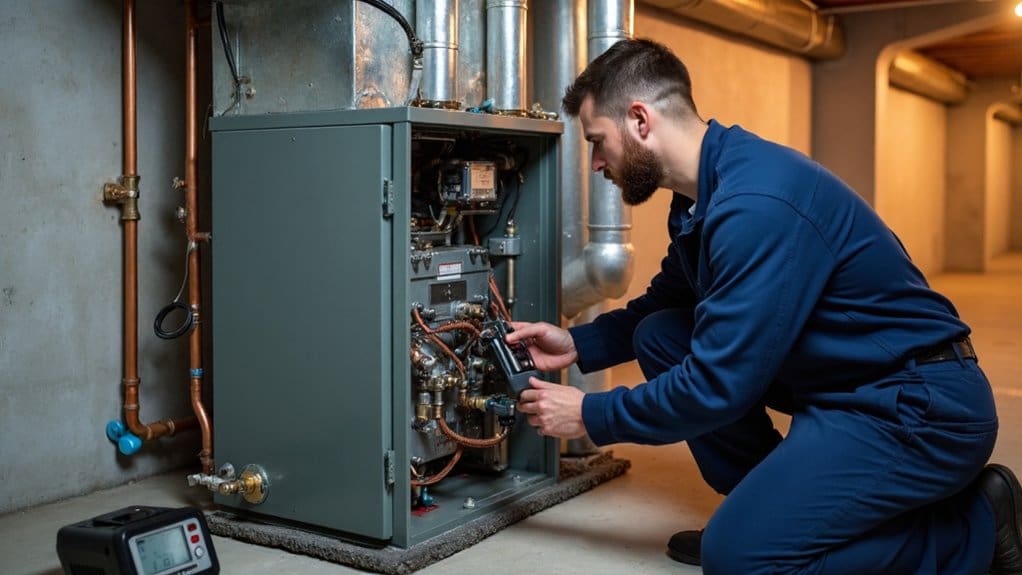
You’ll need to schedule a professional furnace inspection to examine your heat exchanger, test for gas leaks, and verify carbon monoxide detectors before winter arrives. Replace your furnace filter every 2-3 months during heating season, as dirty filters force your system to work harder and increase energy costs. Seal air leaks around doors, windows, and outlets to prevent your heating system from running overtime. Clear blocked vents and consider professional duct cleaning to optimize efficiency and discover additional maintenance strategies.
Key Takeaways
- Schedule professional inspection to examine heat exchanger, test for gas leaks, and verify carbon monoxide detector functionality.
- Replace furnace filters every 2-3 months during heating season to maintain airflow and prevent system strain.
- Seal air leaks around doors, windows, and outlets to reduce energy waste and prevent overworking the system.
- Clear blocked vents and clean ductwork to ensure even heating distribution and optimal system efficiency.
- Clean burners, calibrate thermostats, and inspect flue pipes to prevent costly breakdowns during cold weather.
Why Pre-Winter Furnace Maintenance Matters
As temperatures begin to drop and winter approaches, your furnace becomes the unsung hero of your home’s comfort system. Pre-winter furnace tune-up guarantees your heating system operates at peak efficiency, directly reducing your energy costs while preventing costly breakdowns during freezing weather.
Regular maintenance catches minor issues before they become expensive repairs, extending your HVAC system’s lifespan considerably. More importantly, professional inspections identify dangerous safety hazards like gas leaks and carbon monoxide poisoning risks, protecting your family’s health and safety.
Your furnace maintenance also dramatically improves indoor air quality by keeping the system clean and properly functioning. This becomes vital for households with respiratory conditions, where clean air isn’t just comfort—it’s necessity.
HVAC technicians provide expert guidance during tune-ups, helping you make informed decisions about potential upgrades or replacements. This professional insight ensures you invest in the most cost-effective heating solution for your specific home needs.
Professional Furnace Inspection Checklist
When you schedule a professional furnace inspection, your HVAC technician will follow an exhaustive checklist that covers every critical component of your heating system. This thorough professional maintenance process guarantees your furnace operates safely and efficiently throughout winter.
Your technician will examine the heat exchanger for cracks or corrosion that could compromise safety. They’ll test for gas leaks using specialized detection equipment and verify all connections are secure. Carbon monoxide detectors receive extensive testing to ascertain proper functionality.
The inspection includes checking air filters, cleaning burners, calibrating thermostats, and testing ignition systems. Your HVAC technician will also examine ductwork, measure airflow, and assess electrical connections. Make sure they inspect the flue pipe and ventilation system for proper exhaust.
This preventative maintenance approach identifies potential issues before they become costly repairs. The detailed furnace inspection provides peace of mind and ideal system performance when you need reliable heating most.
Replace and Maintain Your Furnace Filter
One of the simplest yet most impactful maintenance tasks you can perform is replacing your furnace filter regularly. A dirty filter collects dust, dander, and allergens that can hinder airflow and force your heating system to work harder. This reduced efficiency leads to higher energy costs and potential furnace repairs down the line.
Check your filter once a month during heating season. Most filters need replacement every two to three months, depending on usage and household conditions. When you maintain clean filters, you’ll see double-digit savings on monthly heating bills while creating a healthier indoor environment.
Set a phone reminder to stay consistent with this routine maintenance task. Regular maintenance like filter replacement keeps your furnace operating at peak performance and prevents costly breakdowns. Don’t underestimate this simple step—it’s one of the most cost-effective ways to guarantee your heating system functions efficiently throughout winter.
Seal Air Leaks Throughout Your Home
While maintaining clean filters keeps your furnace running efficiently, you’ll undermine those efforts if heated air escapes through gaps and cracks throughout your home. Air leaks force your heating system to work overtime, preventing your home from staying warm while driving up energy costs by up to 20%.
Start by checking common trouble spots: doors, windows, baseboards, and electrical outlets. You’ll often find hidden gaps where air vents and air ducts connect to walls or floors. Use caulking for stationary cracks and weatherstripping for movable components like doors and windows.
When your furnace runs constantly due to air leaks, it shortens the system’s lifespan and wastes energy. Most heating systems benefit considerably from whole-home air sealing combined with proper insulation, delivering annual energy savings of 10-20% or more. These DIY improvements enhance your furnace’s performance while keeping your home comfortably warm all winter.
Check and Clear All Heating Vents
Blocked heating vents create immediate obstacles to your furnace’s efficiency, forcing warm air back into the system and creating uneven temperatures throughout your home. You’ll want to inspect every supply register in each room, removing furniture, curtains, or debris that restricts airflow.
Start by removing vent covers and vacuuming accumulated dust, pet hair, and lint from both the cover and ductwork entrance. This simple maintenance step helps guarantee your system operates at peak performance. Don’t forget basement vents, which often collect the most debris.
Check that all dampers are fully open – partially closed dampers strain your heating system unnecessarily. While examining each portion of your HVAC network, look for damaged or bent vent covers that might impede airflow.
Clear pathways allow your HVAC system to heat your home evenly while keeping the system running smoothly. This preventive measure reduces energy costs and prevents your furnace from overworking during winter’s coldest days.
Clean Air Ducts for Optimal Performance
Beyond clearing your vents, you’ll need to tackle the ductwork itself to maximize your furnace’s performance. Dirty air ducts severely compromise heating system efficiency by restricting airflow and forcing your system to work harder. This translates directly into higher energy costs that can strain your winter budget.
Professional duct cleaning removes years of accumulated dust, debris, and contaminants using specialized high-powered vacuums and brushes. Clean air ducts improve air quality throughout your home while reducing circulated allergens that affect your family’s health. You’ll create a healthier living environment by eliminating these pollutants from your ventilation system.
The investment in duct cleaning during your furnace tune-up pays dividends through double-digit percentage savings on monthly heating bills. Don’t overlook this essential maintenance step – clean ductwork guarantees your heating system operates at peak efficiency when winter temperatures drop. Your furnace will distribute warm air more effectively while consuming less energy.
Schedule Your Professional Heating System Tune-Up
Professional furnace maintenance serves as your heating system’s insurance policy against winter breakdowns and costly emergency repairs. Scheduling your pre-winter tune-up now guarantees you’ll avoid the seasonal rush when HVAC companies become overwhelmed with emergency calls during cold weather.
A comprehensive professional services inspection delivers measurable benefits for your furnace’s performance:
- Complete system inspection – Technicians examine all components, identifying worn parts before they fail
- Thorough cleaning and adjustment – Removes debris and calibrates settings for ideal operation
- Energy efficiency optimization – Fine-tuning reduces monthly heating costs dramatically
- Extended equipment lifespan – Regular maintenance prevents premature furnace replacement
Don’t wait until temperatures drop to discover your heating system needs attention. Professional technicians can address minor issues during your tune-up that would otherwise become major problems when you need heat most. Book your appointment early to secure preferred scheduling and guarantee your home stays comfortable throughout winter.
Signs Your Furnace Needs Immediate Attention
While regular maintenance prevents most heating problems, certain warning signs indicate your furnace requires immediate professional attention before it fails completely. If you notice strange noises like grinding, banging, or squealing, don’t ignore them—these sounds signal internal wear and tear that leads to expensive repairs if left unchecked.
Watch for uneven heating throughout your home, frequent cycling on and off, or yellow flames instead of blue. These symptoms show your heating system isn’t operating efficiently. Rising energy bills without increased usage also indicate your system performs poorly and requires immediate inspection.
Strange odors, especially gas or burning smells, require you to shut off your furnace and call a professional immediately. Don’t risk a freezing house during the winter months by postponing necessary maintenance. Addressing minor issues now prevents major repairs later and guarantees reliable operation when you need it most.
Conclusion
You wouldn’t set sail without checking your ship’s condition first, and you shouldn’t enter winter without preparing your furnace. By following this pre-winter maintenance checklist, you’re investing in your family’s comfort and safety while avoiding costly emergency repairs. Don’t wait until the first cold snap hits—schedule your professional tune-up now, replace those filters, and address any warning signs. Your future self will thank you when you’re staying warm all season long.