
Your heat pump’s refrigerant levels directly impact system efficiency, comfort, and longevity. Low refrigerant reduces cooling capacity and increases energy bills, while overcharging can damage your compressor and cause complete system failure. You’ll notice signs like reduced airflow, frequent cycling, ice formation, or unusual noises when levels aren’t ideal. Professional technicians use specialized equipment to accurately measure and adjust refrigerant charge, ensuring maximum performance while preventing costly repairs and extending your system’s lifespan through proper maintenance.
Key Takeaways
- Professional technicians use specialized diagnostic equipment to accurately measure and adjust refrigerant levels for optimal heat pump performance.
- Improper refrigerant levels cause compressor damage, system failures, and significantly higher energy bills requiring costly repairs or replacements.
- Regular tune-ups detect refrigerant leaks early, preventing environmental harm and major system damage before problems escalate.
- Trained professionals ensure proper refrigerant handling protocols while maintaining environmental compliance and safety standards during service.
- Professional maintenance extends heat pump lifespan, improves efficiency, and prevents expensive compressor failures through continuous monitoring.
Understanding the Role of Refrigerant in Heat Pump Performance
Efficiency in heat pump operation hinges entirely on maintaining proper refrigerant levels throughout your system. Your refrigerant serves as the essential fluid that absorbs and releases heat, enabling your heat pump’s performance in both heating and cooling modes. When refrigerant levels drop below essential ranges, your system works harder to achieve desired temperatures, dramatically increasing energy consumption while reducing comfort levels.
Conversely, overcharging your system with excess refrigerant can severely damage critical components, particularly your compressor. This delicate balance makes professional maintenance vital for ensuring long-term efficiency and preventing costly repairs.
Qualified technicians possess specialized equipment to accurately measure refrigerant levels and detect potential leaks that commonly plague heat pump systems. These leaks substantially impact performance and require immediate professional attention. Regular refrigerant level checks during comprehensive tune-ups help maintain your system’s optimal operation, extending its lifespan while keeping energy costs manageable throughout the year.
Signs Your Heat Pump May Have Refrigerant Issues
When your heat pump begins showing performance issues, refrigerant problems are often the underlying culprit. Recognizing these warning signs early can save you from costly repairs and maintain your heat pump’s performance.
Reduced airflow and cooling capacity indicate your system lacks proper refrigerant levels to transfer heat effectively. You’ll notice rooms taking longer to reach desired temperatures or uneven heating and cooling throughout your home.
Frequent cycling of the compressor signals potential refrigerant leaks or charge imbalances, forcing your system to work harder. Icing on the outdoor coil during heating mode suggests insufficient refrigerant can’t absorb heat properly from outside air.
Higher than normal energy bills reflect your heat pump’s decreased efficiency when refrigerant levels drop. Unusual compressor noises—grinding, squealing, or rattling—often point to refrigerant-related issues requiring immediate attention.
These symptoms warrant professional heat pump maintenance through a detailed heat pump tune-up to diagnose and resolve refrigerant-related issues before they cause permanent system damage.
The Dangers of Improper Refrigerant Levels
Beyond these warning signs lies a more serious concern—improper refrigerant levels pose significant risks to both your heat pump system and your wallet. When you’re dealing with insufficient refrigerant, your system works overtime, resulting in increased energy consumption and skyrocketing utility bills. You’ll notice decreased efficiency that directly impacts your comfort and budget.
Conversely, overcharged refrigerant creates even more devastating problems. Excess refrigerant puts tremendous strain on your compressor, often leading to compressor damage and complete system failure. These issues translate into costly repairs that can easily reach thousands of dollars.
Refrigerant leaks present another serious threat, releasing harmful chemicals that contribute to environmental degradation. Attempting DIY refrigerant recharging without specialized tools and proper training often worsens these problems. That’s why professional tune-ups are essential—trained technicians accurately measure and adjust refrigerant levels, preventing these dangerous scenarios while optimizing your system’s performance and longevity.
What Professional Refrigerant Level Assessment Involves
Professional refrigerant level assessment begins with technicians deploying specialized diagnostic equipment that precisely measures your heat pump’s refrigerant charge and detects even microscopic leaks throughout the system. These specialized tools enable accurate readings that determine whether your refrigerant levels align with manufacturer’s specifications.
During assessment, technicians systematically identify leaks using electronic detectors and pressure gauges to measure refrigerant throughout all system components. They’ll evaluate how current levels impact heat pump efficiency and overall system performance.
When adjustments are necessary, proper refrigerant handling protocols guarantee environmental compliance and safety. Technicians carefully add or remove refrigerant to maximize performance within recommended parameters. This meticulous process prevents the costly consequences of over- or undercharging.
A thorough professional tune-up includes continuous monitoring of refrigerant charge levels, ensuring your heat pump operates at peak efficiency. This systematic approach protects your investment while maintaining ideal comfort and energy savings throughout your system’s lifespan.
How Technicians Adjust and Optimize Refrigerant Charge
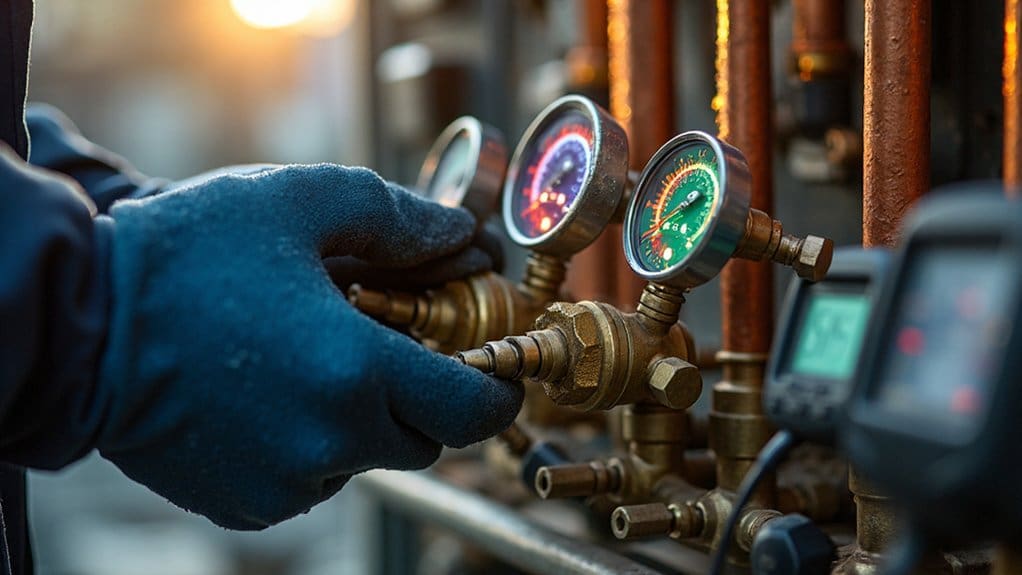
Technicians begin the refrigerant charge optimization process by connecting manifold gauges to your heat pump’s service ports, which allows them to monitor both high and low-side pressures in real-time. They’ll use these readings alongside temperature measurements to determine if adjusting refrigerant levels is necessary for ideal performance.
When adding refrigerant charge, technicians employ specialized recovery and charging equipment that precisely controls the amount being introduced. They follow strict manufacturer specifications and environmental regulations during refrigerant handling, guaranteeing your system receives exactly what it needs without waste or contamination.
For overcharged systems, they’ll carefully remove excess refrigerant using recovery machines, protecting both your compressor and the environment. Throughout this tune-up process, technicians continuously monitor system performance indicators like superheat and subcooling values.
This meticulous approach to refrigerant charge optimization guarantees your heat pump achieves peak efficiency while providing essential compressor protection, ultimately maximizing both system performance and equipment longevity.
Energy Efficiency Benefits of Proper Refrigerant Maintenance
The precision of properly maintained refrigerant levels directly translates into substantial energy savings for your heat pump system. When your heat pump’s performance operates at ideal refrigerant charge, you’ll see energy efficiency improvements up to 20%, creating noticeable reductions in utility costs. Undercharged systems force your equipment to work harder, consuming 30% more energy for heating and cooling operations.
A well-maintained heat pump operates with accurate refrigerant charge that guarantees optimal heat transfer, maximizing both performance and comfort throughout your home. Professional maintenance prevents the costly consequences of improper levels that damage compressors and shorten system lifespan.
- Energy savings: Proper charge reduces consumption by up to 20%
- Enhanced comfort: Ideal refrigerant ensures consistent air temperatures
- System longevity: Correct levels prevent compressor damage and premature failure
- Peak performance: Well-maintained systems deliver reliable heating and cooling year-round
Regular professional tune-ups certify your system operates within manufacturer specifications for maximum efficiency.
Long-Term System Protection Through Professional Service
While immediate energy savings grab attention, investing in professional heat pump service delivers far more valuable long-term protection for your entire system. Regular tune-up importance becomes clear when you consider how professional maintenance prevents catastrophic failures that could cost thousands in repairs or replacement.
Trained technicians perform thorough inspections that go beyond basic checks, accurately measuring refrigerant levels and identifying minor issues before they escalate. This proactive approach maintains ideal performance while providing essential compressor protection—your system’s most expensive component.
When professionals adjust your refrigerant charge during service visits, they’re not just improving system efficiency for today’s energy savings. They’re extending your heat pump’s lifespan by ensuring all components work harmoniously together. Minor refrigerant leaks caught early prevent major system damage later.
You’ll maximize your investment through consistent professional maintenance that keeps refrigerant levels balanced, protecting your system’s integrity for years to come.
Conclusion
You might think checking refrigerant levels is something you can handle yourself, but you’ll risk costly damage and voided warranties without proper certification and equipment. Don’t gamble with your heat pump’s performance—you’ll save money in the long run by scheduling professional tune-ups. Your system’s efficiency, longevity, and your family’s comfort depend on expert refrigerant maintenance. You can’t afford to ignore this critical aspect of heat pump care.