
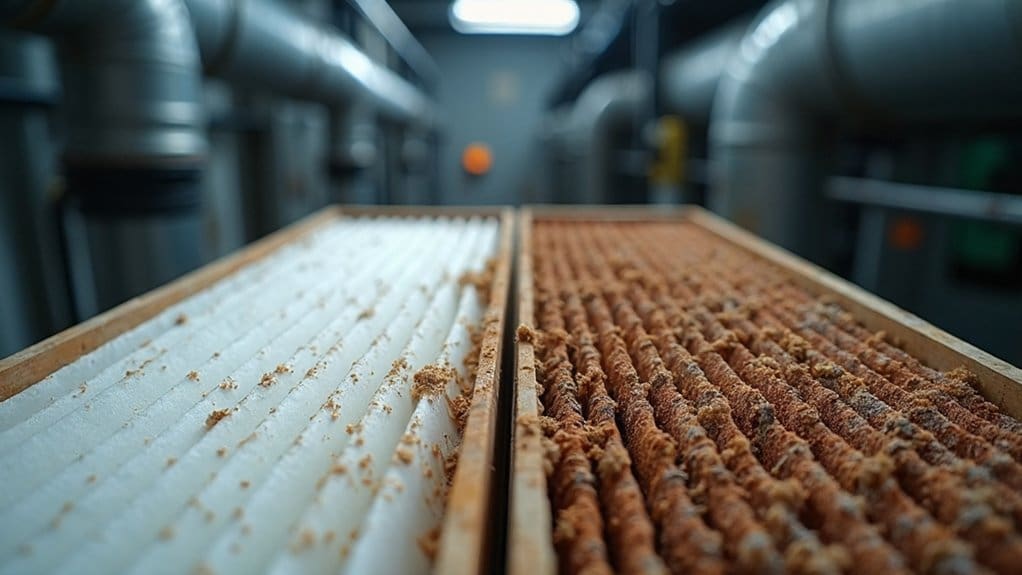
St. Louis’s humid subtropical climate severely impacts your air filtration system’s performance through high summer humidity levels above 60% that overwork filters and create mold breeding grounds. The city’s extreme temperature swings cause filters to expand and contract, creating gaps that allow pollutants through. With PM2.5 levels 12.7 times higher than WHO guidelines, your system struggles against microscopic particles, wildfire smoke, and seasonal allergens. Understanding these specific challenges will help you optimize your filtration strategy.
Key Takeaways
- High humidity levels above 60% during summers overwork filtration systems and create breeding grounds for mold and bacteria.
- Rapid temperature fluctuations cause filters to expand and contract, creating gaps that allow contaminants to bypass filtration.
- Extreme heat gradually degrades filter materials while increased condensation promotes mold growth that clogs filters prematurely.
- PM2.5 pollution levels 12.7 times higher than WHO guidelines require high-efficiency filters and continuous operation for protection.
- Elevated pollen counts and wildfire smoke during seasonal changes demand more frequent filter replacements, especially monthly in summer.
Understanding St. Louis Climate Conditions and Their Impact on Indoor Air Quality
St. Louis’s humid subtropical climate creates unique challenges for your indoor air quality that you can’t ignore. The city’s long, scorching summers and moderately cold winters put constant pressure on your AC system, forcing it to work overtime during peak seasons. When humidity levels spike during summer months, your air conditioning system must remove excess moisture while maintaining comfortable temperatures, creating additional strain on filtration components.
Temperature swings throughout the year cause airborne pollutants, allergens, and particulate matter to accumulate more rapidly in your home. These fluctuations make your indoor environment a breeding ground for contaminants that standard filtration might miss. Additionally, wildfire smoke from distant regions frequently drifts into the St. Louis area, compromising outdoor air quality and infiltrating your indoor spaces. Your air conditioning system becomes the primary defense against these external pollutants, making proper filtration essential for maintaining healthy indoor air quality year-round.
How High Humidity Levels Challenge Your Air Filtration System
When humidity levels soar above 60% during St. Louis’s steamy summers, your air filtration system faces serious challenges that directly impact your home’s air quality. The excessive moisture forces your equipment to work overtime, removing both airborne particles and excess humidity simultaneously.
This double duty creates several problems that’ll affect your comfort and health:
- Saturated filters lose effectiveness – Your filters become waterlogged and can’t trap contaminants properly
- Mold and bacteria thrive – Damp filter media becomes a breeding ground for harmful microorganisms
- System components wear out faster – The added strain shortens your equipment’s lifespan
- Indoor air quality suffers – Compromised filtration means more pollutants circulating in your home
Without proper sizing and maintenance, your air filtration system can’t handle St. Louis’s demanding humidity levels. You’ll need to replace filters more frequently and guarantee your equipment’s designed for high-moisture environments.
The Role of Temperature Fluctuations in Filter Performance
Beyond humidity challenges, St. Louis’s dramatic temperature swings create serious problems for your air filtration system. When temperatures fluctuate rapidly, your air filters expand and contract, creating gaps that allow unfiltered air to bypass the system entirely. This compromises your indoor air quality greatly.
St Louis summers bring extreme heat that gradually degrades filter materials, reducing their effectiveness at capturing harmful particulates. Your filters simply can’t perform their job when the material breaks down from prolonged exposure to high temperatures.
These constant temperature changes also increase condensation within your HVAC system, promoting mold growth that clogs your air filters prematurely. You’ll find yourself replacing filters more frequently and dealing with reduced airflow.
To maintain excellent performance, you need to adjust your filter size and material type based on local temperature patterns. Choose filters specifically designed to handle St. Louis’s challenging climate conditions for better air quality protection.
PM2.5 Pollution and What It Means for Your Home’s Air Quality
The microscopic particles floating through St. Louis air pose a serious threat to your home’s air quality. Current PM2.5 levels reach 63.4 μg/m³—that’s 12.7 times higher than WHO guidelines recommend. These tiny particles slip past your body’s natural defenses, penetrating deep into your lungs and bloodstream.
Your air filtration system becomes critical when facing this level of air pollution. PM2.5 particles are so small they can bypass standard filters, making high-efficiency systems essential for protection.
Consider these immediate actions to safeguard your family:
- Close all windows and doors to prevent outdoor pollutants from entering
- Run your air filtration system continuously on high settings
- Install additional air purifiers in bedrooms and living spaces
- Monitor indoor air quality with real-time detection devices
Princeton Heights shows the cleanest air quality in the St. Louis area, but even there, your filtration system works overtime against PM2.5 pollution infiltrating your home.
Seasonal Weather Patterns That Affect Filter Replacement Schedules
St. Louis’s distinct seasonal weather patterns directly impact when you’ll need to replace your air filters throughout the year. During spring months, elevated pollen counts from blooming trees and plants clog filters faster, requiring replacements every 30-45 days instead of the standard 60-90 days. Summer’s hot, humid conditions accelerate filter saturation as your HVAC system works overtime, demanding monthly filter changes to maintain ideal air quality.
Fall brings another pollen surge from ragweed and other allergens, again shortening filter lifespan. Winter’s moderate cold means less frequent changes, but don’t extend beyond 90 days. Industrial pollutants and occasional wildfire smoke during specific seasons add extra burden on your filtration system.
You’ll maximize HVAC efficiency by adjusting your replacement schedule seasonally rather than following generic manufacturer recommendations. Monitor your filters monthly and replace when they appear gray or clogged, as St. Louis’s variable climate conditions can unpredictably accelerate filter degradation.
Wind Speed and Direction: Hidden Factors in Air Quality Management
Wind patterns around your St. Louis home create invisible challenges that directly impact your air filtration system’s effectiveness. When wind speed increases, it disperses outdoor pollutants, reducing the load on your filters. However, low wind conditions concentrate contaminants, forcing your system to work harder and consume more energy.
Wind direction changes throughout the day, bringing different pollution sources toward your home. Industrial areas, traffic corridors, and seasonal allergens shift with these patterns, requiring your air filtration system to adapt continuously.
Consider these hidden impacts on your indoor air quality:
- Stagnant air days trap pollutants near your home, overwhelming your filters faster
- Shifting wind patterns introduce unexpected contaminants your system wasn’t prepared for
- High-speed gusts can bypass outdoor air intakes, reducing filtration efficiency
- Directional changes bring seasonal allergens from different geographic areas
Monitor local wind data to optimize your system’s settings and anticipate when filter replacements might be needed sooner than scheduled.
Adjusting Your HVAC Settings for Optimal Filtration During Poor Air Quality Days
When St. Louis experiences poor air quality days, you’ll need to make strategic adjustments to your HVAC system settings to maximize indoor air filtration. Crank your fan speed to the highest setting – this forces more air through your filters, capturing additional pollutants before they circulate throughout your home.
Lower your thermostat by several degrees to encourage frequent system cycling. More runtime equals more filtration opportunities. Guarantee your air filters are clean and replace them according to manufacturer recommendations, as clogged filters can’t perform effectively during challenging conditions.
Activate any built-in air purification features your HVAC system offers, including UV lights or ionization technology. These additions capture microscopic contaminants that standard filters might miss.
Consider switching to “fan only” mode for continuous air circulation and filtration, even when you don’t need active heating or cooling. This keeps your air quality consistently managed throughout poor outdoor conditions.
Advanced Air Filtration Technologies for St. Louis Weather Challenges
The Gateway City’s unique climate demands cutting-edge filtration solutions that go beyond standard HVAC filters. St. Louis’s humid subtropical weather creates challenging conditions that require sophisticated air filtration technologies to maintain healthy indoor environments.
Modern electrostatic precipitators and HEPA filters excel at capturing microscopic particles that standard filters miss. These advanced systems effectively remove pollen, particulate matter, and wildfire smoke that frequently impact your air quality. Activated carbon filters complement these technologies by eliminating volatile organic compounds and urban odors common in St. Louis’s metropolitan environment.
Smart air quality monitoring systems revolutionize how you manage your HVAC filtration:
- Real-time pollutant detection keeps your family protected from invisible threats
- Automatic filter adjustments respond instantly to changing outdoor conditions
- Performance alerts prevent costly system failures during peak demand
- Energy optimization reduces utility costs while maximizing clean air delivery
Regular maintenance guarantees these advanced technologies perform as intended throughout St. Louis’s demanding climate conditions.
Maintenance Strategies to Keep Your System Running Efficiently Year-Round
Since St. Louis’s challenging weather conditions can drastically impact your air filtration system, implementing strategic maintenance practices guarantees optimal performance throughout the year. You’ll need to replace filters more frequently during humid seasons to maintain superior air quality and prevent airflow restrictions that force your air conditioning system to work harder.
Schedule seasonal tune-ups that include refrigerant level assessments and condenser coil cleanings. These maintenance steps keep your system operating efficiently during peak summer demand. Don’t overlook outdoor unit inspections—remove debris buildup that obstructs airflow and causes premature component deterioration.
Calibrate your thermostat and adjust programming to match St. Louis’s unique temperature and humidity patterns. This optimization reduces energy consumption while maintaining comfort levels. Additionally, inspect ductwork annually and seal any air leaks you discover. These proactive maintenance measures prevent uneven cooling, reduce utility costs, and extend your system’s lifespan in St. Louis’s demanding climate conditions.
Conclusion
You’re battling Mother Nature’s relentless assault on your home’s air quality every single day in St. Louis! Don’t let scorching summers, bone-chilling winters, and unpredictable humidity wreak absolute havoc on your filtration system. You’ll breathe cleaner air and save thousands on repairs when you’re proactive about maintenance and upgrades. Your family’s health depends on staying ahead of St. Louis’s brutal weather patterns – there’s simply no room for compromise when air quality’s at stake.