
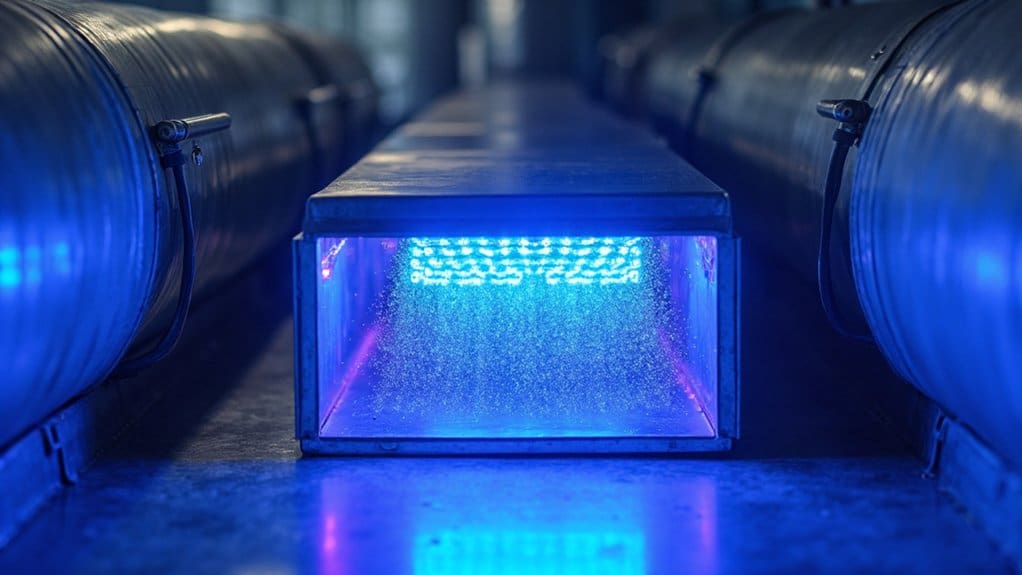
UV light sanitizers in your HVAC system use UV-C radiation to disrupt the DNA of bacteria, viruses, and mold, eliminating up to 99.9% of airborne pathogens. You can choose between coil sanitizers that mount near your evaporator coil to prevent mold growth, or air sanitizers that install in ductwork to target airborne contaminants. Both types keep your system cleaner, improve indoor air quality, and can boost energy efficiency by up to 15% through enhanced heat transfer. Professional installation guarantees you’ll maximize these thorough advantages.
Key Takeaways
- UV-C light disrupts DNA/RNA of bacteria, viruses, and mold, achieving up to 99.9% elimination of airborne pathogens.
- Coil sanitizers mount near evaporator coils to prevent mold growth while air sanitizers install in ductwork targeting airborne contaminants.
- UV lights maintain clean evaporator coils, improving heat transfer efficiency and providing up to 15% energy savings.
- Professional installation ensures proper placement, safety compliance, and preserved maintenance access for lamp replacement and cleaning.
- UV sanitizers provide ongoing protection against biological contaminants while extending HVAC equipment lifespan and improving indoor air quality.
Understanding UV Light Technology in HVAC Applications
Innovation in indoor air quality has led many homeowners to ponder UV light sanitizers for their HVAC systems. UV-C wavelengths deliver germicidal properties that disrupt bacterial, viral, and mold DNA, preventing reproduction and eliminating harmful microorganisms from your central HVAC system.
Your HVAC UV light systems operate through two primary configurations. Coil sanitizing lights target the evaporator coil directly, preventing microbial growth that reduces energy efficiency and creates musty odors. These UV lights mount near the coil surface, continuously bathing it in germicidal radiation.
Air sanitizing lights install within return ducts or air handlers, exposing circulating air to UV-C radiation as it passes through your system. This configuration treats the air stream directly, neutralizing airborne pathogens before they circulate throughout your home.
Both types of sanitizing lights work continuously when your HVAC system operates, providing ongoing protection against biological contaminants that compromise indoor air quality and system performance.
Types of UV Sanitizers Used in Heating and Cooling Systems
Building on these fundamental operating principles, HVAC UV sanitizers fall into distinct categories based on their specific installation locations and targeted applications. You’ll encounter two primary types that serve different purposes in your heating and cooling system.
Coil sanitizers mount near your evaporator coil, preventing mold growth on these moisture-prone surfaces. They maintain system efficiency by keeping coils clean and free from microbial buildup.
Air sanitizers install directly in your ductwork, targeting airborne contaminants as they circulate through your system. These units effectively eliminate bacteria, viruses, and mold spores before they reach your living spaces.
Both types utilize UV-C light for excellent disinfection capabilities. Here’s what each type accomplishes:
- Coil sanitizers extend equipment lifespan
- Air sanitizers kill up to 99% of airborne pathogens
- Both improve indoor air quality greatly
- Combined installation provides thorough protection
Your choice depends on whether you’re prioritizing equipment maintenance or air purification—or both.
The Science Behind UV-C Light Pathogen Elimination
The germicidal power of UV-C light operates at the molecular level, where photons at 254 nanometers penetrate microbial cell walls and strike directly at the genetic heart of pathogens. These UV rays work by disrupting the DNA and RNA of viruses and bacteria, effectively scrambling their genetic code and preventing replication. When pathogens can’t reproduce, they die.
Your HVAC system becomes a powerful weapon against microbial growth when equipped with UV-C technology. As air circulates through the system, the intense radiation damages the nucleic acids of microorganisms, achieving up to 99.9% elimination rates of airborne pathogens. This process doesn’t just kill germs—it sanitizes the air continuously as your system operates.
Unlike high-efficiency particulate filters that trap contaminants, UV-C light destroys them at the source. This air sterilization method targets the fundamental building blocks of life in harmful microorganisms, making it impossible for them to survive or cause infections.
Coil Sanitizing Vs Air Sanitizing Installation Methods
Two distinct installation approaches allow you to harness UV-C technology‘s sanitizing power in your HVAC system, each targeting different areas and serving unique purposes.
Coil sanitizing lights are positioned adjacent to your evaporator coil, directly targeting the surface where moisture accumulates. This strategic placement helps prevent mold growth while maintaining ideal HVAC efficiency by keeping coils clean and extending system lifespan.
Air sanitizing UV lights are installed within your ductwork or return vents, exposing circulating air to germicidal rays that eliminate up to 99% of airborne pathogens.
When installing these systems, consider these critical factors:
- Professional installation by qualified HVAC technicians guarantees proper placement and safety compliance
- Electrical requirements vary between coil and air sanitizing configurations
- Maintenance access must be preserved for lamp replacement and cleaning
- Combination systems offer thorough protection by targeting both surfaces and airborne contaminants
Proper installation maximizes effectiveness while maintaining system safety and performance.
Indoor Air Quality Improvements With UV Light Systems
How dramatically can UV light systems transform your home’s air quality? The answer lies in their remarkable 99% elimination rate of airborne bacteria, viruses, and mold spores. When you install UV lights in HVAC systems, you’re targeting harmful microorganisms that traditional air purifiers can’t reach.
Different types of UV lights work within the UV light spectrum to improve indoor air quality. HVAC UV lights don’t just sanitize passing air – they prevent mold growth on air handler surfaces and reduce microbial contamination throughout your HVAC systems. This extensive approach means you’ll breathe cleaner, healthier air while experiencing relief from allergy and asthma symptoms.
Ozone-equipped HVAC UV lights eliminate volatile organic compounds and odors, creating a fresher living environment. To maintain these benefits, you’ll need to replace UV lamp bulbs every 12-24 months. Consult an HVAC professional to determine which types of UV lights will best eliminate harmful microorganisms in your specific system.
Energy Efficiency and System Performance Benefits
Beyond improving air quality, UV light systems deliver substantial energy efficiency gains by maintaining pristine evaporator coils. When microbial growth accumulates on your evaporator coil, it creates an insulating barrier that severely impairs heat transfer and restricts airflow through your HVAC units.
Installing UV lights prevents this buildup, delivering these performance benefits:
- Reduced Energy Consumption – Clean coils operate up to 15% more efficiently than dirty ones
- Enhanced Heat Transfer – UV light for HVAC maintains ideal thermal exchange rates
- Extended Equipment Lifespan – Less strain on components helps extend the life of your system
- Lower Filter Replacement – Cleaner coils reduce airborne particles, decreasing air filter replacement frequency
You’ll notice immediate improvements in system performance as UV sanitization reduces the workload on your equipment. This translates to lower utility bills and fewer maintenance calls, making UV installation a smart investment that pays dividends through improved energy efficiency and reduced operating costs.
Safety Considerations and Maintenance Requirements
While UV light systems offer impressive energy savings and performance improvements, you’ll need to understand the safety protocols and maintenance demands before installation. Direct exposure to UV lights can damage your eyes and skin, making protective equipment essential during installation and maintenance procedures. You must guarantee these systems are installed properly by qualified professionals to prevent issues like leaky ducts and deterioration of HVAC components.
Regular maintenance keeps your UV light system operating effectively. The bulbs need to be replaced every 12-24 months to maintain their germicidal power, with annual costs ranging from $20 to $100 depending on the type and brand. You’ll also need to keep the bulbs clean for maximum efficiency. Following proper safety precautions during cleaning or replacing these lights protects you from harmful UV exposure while verifying your system continues sanitizing air effectively throughout your home.
Cost Analysis and Return on Investment
Although UV light sanitizers require a considerable upfront investment of $500 to $2,000 for typical residential installations, the financial benefits quickly accumulate through multiple cost-saving channels.
You’ll experience immediate operational savings through improved energy efficiency, with systems reducing your energy bills by up to 15% by maintaining ideal coil performance. The long-term benefits extend far beyond initial cost concerns:
- Maintenance costs decrease by 30% over the 5-10 year lifespan through reduced cleaning requirements
- Equipment longevity increases dramatically, extending your HVAC system’s operational life
- Health-related productivity losses drop 10-20% due to improved indoor air quality
- Complete cost recovery occurs within 3-5 years through combined savings
Your return on investment reaches an impressive 200-300% over the system’s lifespan. When you factor in enhanced quality of life, reduced maintenance expenses, and sustained energy efficiency gains, UV light sanitizers transform from an initial investment into a profitable long-term asset.
Conclusion
You’ll transform your home’s air quality dramatically with UV light sanitizers, which eliminate up to 99.9% of airborne pathogens in a single pass through your HVAC system. That’s like having a microscopic army of light warriors destroying harmful microorganisms before they reach your lungs. You’re not just installing equipment – you’re creating a fortress of clean air that protects your family’s health while boosting your system’s efficiency and reducing long-term maintenance costs.