
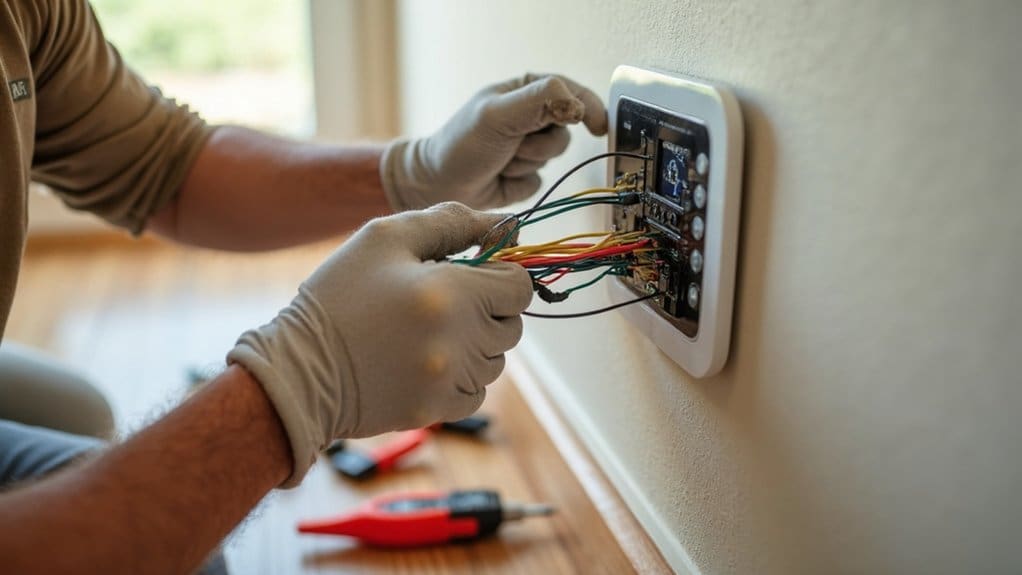
You’ll need emergency thermostat installation when your unit completely stops responding, displays incorrect temperatures, or causes your HVAC system to short-cycle repeatedly. Don’t attempt DIY installation—you risk electrical shock, fire hazards, carbon monoxide poisoning, and voiding your system warranty. A malfunctioning thermostat forces your HVAC equipment to work inefficiently, leading to premature failure and skyrocketing energy bills. Professional technicians guarantee safe installation and proper system compatibility, protecting both your home and investment while maximizing performance.
Key Takeaways
- Call immediately when your thermostat completely stops functioning, leaving your HVAC system unable to turn on or off.
- Contact professionals when thermostat malfunctions cause short-cycling, leading to excessive equipment wear and skyrocketing energy costs.
- Seek emergency service if electrical issues like sparks, burning smells, or shock risks are present during thermostat operation.
- Professional installation prevents dangerous wiring mistakes that could cause fires, carbon monoxide poisoning, or expensive HVAC damage.
- Using certified technicians maintains your HVAC warranty coverage and ensures proper compatibility with modern heating and cooling systems.
Signs Your Thermostat Needs Immediate Replacement
Your thermostat serves as the command center for your home’s heating and cooling system, so when it starts malfunctioning, you’ll notice the effects immediately. Several warning signs indicate you need emergency thermostat replacement. If your unit doesn’t respond to temperature changes or commands, it’s clearly malfunctioning and requires immediate attention from an HVAC technician.
Watch for displays showing incorrect or inconsistent temperatures, which leads to inefficient operation and higher energy bills. When your thermostat causes your HVAC system to short-cycle repeatedly, you’re facing a serious emergency that can permanently damage expensive equipment.
Visible damage like cracked displays or unresponsive buttons signals the need for immediate replacement. Additionally, if you can’t properly program or control your thermostat, you’re compromising both comfort and energy efficiency. Don’t delay—contact a professional HVAC technician immediately when you notice these critical warning signs.
Safety Risks of DIY Thermostat Installation
Why risk your safety and property when professional thermostat installation eliminates dangerous hazards? DIY thermostat installation exposes you to serious safety risks that can threaten your home and family’s well-being.
Working with live electrical wiring poses immediate dangers of electrical shocks, especially for untrained homeowners lacking proper safety equipment. Improper installation can trigger house fires or deadly carbon monoxide poisoning from malfunctioning HVAC systems.
Incorrect wiring doesn’t just create safety hazards—it damages expensive HVAC components, requiring costly replacements. You’ll also void your system’s warranty, leaving you financially responsible for future repairs that would’ve been covered.
Poor programming leads to inefficient operation, driving up energy bills while reducing home comfort. Professional technicians provide expert advice on proper installation techniques, ensuring your thermostat operates safely and efficiently. Don’t gamble with electrical work—trust qualified HVAC professionals to protect your investment and family’s safety.
How a Malfunctioning Thermostat Affects Your HVAC System
Professional installation prevents safety hazards, but even properly installed thermostats can malfunction over time and wreak havoc on your HVAC system’s performance. When your thermostat isn’t properly calibrated, it can’t accurately detect actual temperatures, causing your system to run unnecessarily and driving up energy bills while creating uneven heating and cooling throughout your home.
A stuck or broken thermostat prevents proper cycling, forcing your HVAC system to run continuously. This constant operation leads to premature component failure and expensive repairs. Wiring issues disrupt communication between your thermostat and HVAC equipment, preventing proper temperature control entirely.
Outdated thermostats often can’t interface correctly with modern HVAC systems, resulting in suboptimal performance and potential equipment damage. These malfunctions don’t just affect comfort—they drastically impact your system’s efficiency, lifespan, and your wallet. Recognizing these warning signs helps you determine when emergency thermostat replacement becomes necessary.
When Thermostat Problems Require Emergency Service
While some thermostat issues can wait for regular business hours, certain malfunctions demand immediate professional attention to prevent costly damage and restore essential comfort.
You’ll need to call an HVAC technician for emergency service when your thermostat completely stops functioning and can’t turn your system on or off. This situation leaves you without climate control entirely, making it a true emergency requiring immediate intervention.
Contact an HVAC technician right away if your thermostat displays wildly inaccurate temperature readings or fails to control your system properly. These issues can cause your equipment to overwork and potentially fail.
Short-cycling problems warrant emergency attention too. When your thermostat causes the system to turn on and off repeatedly, it creates excessive wear and drives up energy costs dramatically.
Don’t delay calling for emergency service if your thermostat doesn’t respond to temperature adjustments or shows signs of electrical failure. These malfunctions indicate serious problems that require immediate professional replacement.
Choosing the Right Replacement Thermostat for Your Home
Once you’ve determined that emergency thermostat replacement is necessary, selecting the right unit becomes essential for restoring your home’s comfort and efficiency. Start by guaranteeing compatibility with your HVAC system – not all thermostats work with every heating and cooling setup.
Consider your home’s size and heating zones when making your selection. A single-zone home requires different features than a multi-zone system. Choose a thermostat with clear displays and intuitive controls that you’ll actually use during stressful situations.
Energy-saving features should be a priority, especially automatic setbacks and load shedding capabilities that’ll reduce your utility bills. Programmable settings and Wi-Fi connectivity can provide additional convenience and control.
Don’t forget about proper installation and configuration. Even the best thermostat won’t perform ideally if it’s incorrectly installed. During emergency situations, professional installation ensures your new unit works immediately and efficiently.
What to Expect During Professional Thermostat Installation
After selecting your replacement thermostat, hiring a professional technician guarantees proper installation and immediate system functionality. A professional HVAC technician will first assess your existing thermostat and verify compatibility with your home’s heating and cooling system to prevent future system issues.
The technician will handle all wiring according to manufacturer specifications and local electrical codes, ensuring safe operation. They’ll program your new thermostat’s temperature preferences and scheduling settings to maximize energy efficiency based on your household needs.
Testing the system is vital for verification. Your technician will thoroughly test all functions to confirm accurate temperature readings and proper communication between the thermostat and your HVAC equipment. This extensive testing identifies any potential problems before completion.
Professional installation typically requires 1-2 hours and often includes warranties on both the device and labor. You’ll receive peace of mind knowing your emergency thermostat replacement was installed correctly and your heating and cooling system operates reliably.
Warranty Considerations for Thermostat Replacement
Before replacing your thermostat, you’ll need to review your HVAC system’s warranty documentation to understand specific requirements that could affect your coverage. Warranty terms often contain specific provisions regarding thermostat replacements that you must follow to maintain validity.
Here are four critical warranty considerations:
- Approved Models Only – Your warranty may specify manufacturer-approved thermostat models that you must use during replacement to avoid voiding coverage.
- Professional Installation Required – Many warranties mandate professional installation, as improper DIY work can void your entire HVAC system warranty.
- Documentation Requirements – You’ll need to maintain proper installation records and receipts to prove compliance with warranty terms.
- Installation Procedures – Specific installation procedures outlined in your warranty must be followed exactly to preserve coverage.
Using non-approved thermostats or improper installation methods can result in manufacturers denying future claims. Always consult your warranty documentation before proceeding with any thermostat replacement.
Preventing Future Thermostat Emergencies Through Proper Maintenance
Why wait for a thermostat emergency when you can prevent it entirely? Regular maintenance is your best defense against unexpected thermostat failures that leave you scrambling for emergency repairs.
Start with simple routine maintenance tasks like replacing batteries and cleaning your thermostat’s components. These basic steps prevent many common malfunctions that catch homeowners off guard.
Schedule annual HVAC maintenance that includes thorough thermostat inspection and calibration. Professional technicians can spot potential issues before they become costly emergencies, ensuring your system runs reliably year-round.
Consider upgrading to a smart thermostat that provides real-time alerts about system performance. These advanced units help you monitor your HVAC system proactively, catching problems early.
Don’t ignore warning signs like inconsistent temperature readings or erratic cycling patterns. Address unusual thermostat behavior promptly with professional help to prevent severe system failures that require emergency intervention.
Proper maintenance today saves you from emergency headaches tomorrow.
Conclusion
You’ve learned the signs, understood the risks, and discovered when to panic-call that HVAC tech at midnight. Sure, you could’ve wrestled with those mysterious wires yourself, turned your home into an arctic wasteland, and voided every warranty known to mankind. But you’re smarter than that, aren’t you? You’ll let the professionals handle your thermostat emergency while you sit back, stay comfortable, and keep your house from becoming a cautionary tale.