
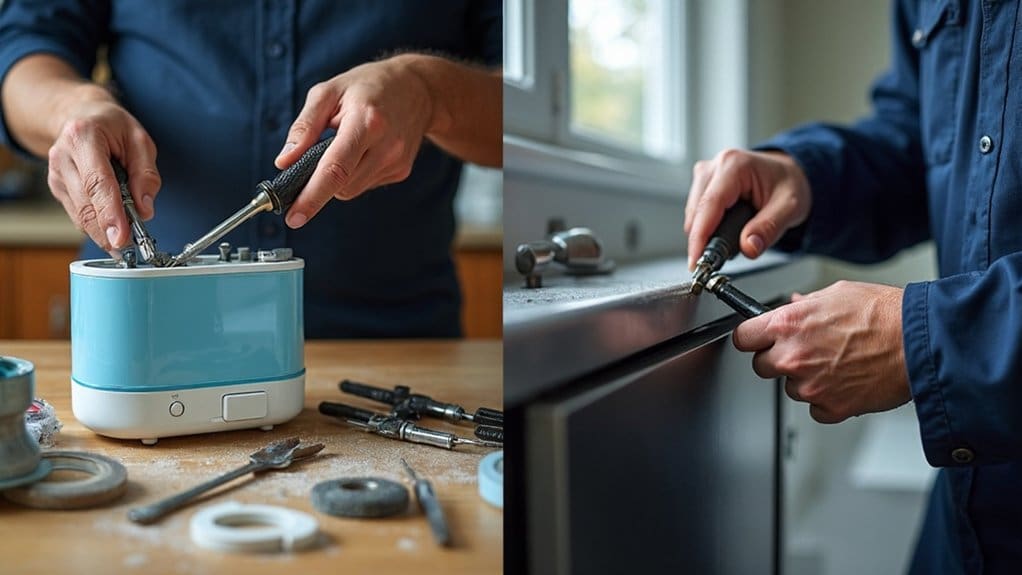
You can handle basic humidifier maintenance like replacing water panels, cleaning mineral deposits with vinegar, and clearing clogged water lines yourself. However, persistent electrical problems, water damage, grinding noises, or issues affecting your HVAC system’s performance require professional intervention. DIY attempts on complex repairs often lead to expensive component damage, voided warranties, and safety hazards. Misdiagnosis can worsen existing problems and create secondary issues like structural water damage. Understanding these boundaries will help you make informed repair decisions.
Key Takeaways
- Basic maintenance like filter replacement and mineral cleaning can be DIY, but electrical and plumbing issues require professionals.
- Warning signs like persistent leaks, burning smells, or HVAC performance issues indicate the need for professional intervention immediately.
- DIY repairs risk damaging expensive components, voiding warranties, and creating safety hazards that cost more than professional service.
- Essential DIY tools include screwdrivers, vinegar, and soft brushes, but complex diagnostics require specialized equipment and training.
- Professional technicians properly diagnose root problems and ensure repairs don’t compromise your entire HVAC system’s functionality and efficiency.
Understanding When Basic Maintenance Becomes Complex Repair
The line between basic humidifier maintenance and complex repair isn’t always clear, but understanding this distinction can save you time, money, and potential headaches. You can typically handle routine Whole-House Humidifier Maintenance tasks like replacing filters, cleaning mineral deposits, and checking water flow. These simple steps help maintain proper humidity levels throughout your home.
However, the situation becomes more intricate when you’re dealing with whole-house humidifiers integrated into your HVAC system. If you’re experiencing issues with water panels, solenoid valves, or humidistats, you’ve crossed into professional territory. These components require specialized knowledge and tools to repair safely.
Warning signs that you need professional help include persistent water leaks, electrical problems, ductwork modifications, or when repairs involve your home’s plumbing connections. Attempting these advanced repairs without proper expertise can damage your HVAC system, void warranties, and create safety hazards that’ll cost enormously more to fix later.
Common Humidifier Problems You Can Handle Yourself
Fortunately, many humidifier issues fall squarely within the DIY category and don’t require professional intervention. These Common Issues typically stem from neglected regular maintenance rather than mechanical failures.
You can easily tackle mineral buildup by soaking affected components in white vinegar for several hours, then scrubbing with a soft brush. Replace your Water Panel according to manufacturer guidelines—usually every few months during peak usage. Clogged water lines often clear with gentle flushing using clean water.
Other manageable problems include:
- Cleaning dirty sensors that cause inaccurate humidity readings
- Replacing worn gaskets that create minor leaks
- Adjusting loose connections between components
Most importantly, you’ll prevent these issues through consistent cleaning schedules. Empty standing water weekly, wipe down surfaces monthly, and inspect all components regularly. These simple steps eliminate most problems before they develop into costly repairs requiring professional attention.
Warning Signs That Require Professional Intervention
While DIY repairs handle most humidifier issues, certain warning signs indicate you’re dealing with problems beyond basic maintenance. If you notice persistent electrical problems like frequent breaker trips or burning smells, stop using your unit immediately and call a professional. Water damage around your humidifier or unusual noises like grinding or squealing suggest internal component failure that requires expert diagnosis.
When your humidity levels remain inconsistent despite a properly maintained unit, you’re likely facing control system malfunctions. These complex issues can lead to costly repairs if ignored. Strange odors that persist after cleaning indicate potential mold growth within internal components that DIY methods can’t reach.
Perhaps most importantly, if your humidifier problems affect your HVAC system’s performance or if you notice reduced system efficiency throughout your home, professional intervention becomes necessary. These interconnected issues require specialized knowledge to prevent further damage and restore ideal operation.
Essential Tools and Skills for DIY Humidifier Maintenance
Most DIY humidifier maintenance requires just a handful of basic tools you likely already own. You’ll need screwdrivers, pliers, a flashlight, and cleaning supplies like vinegar or mild detergent. Beyond tools, developing essential skills guarantees effective maintenance and prevents damage to your HVAC system’s components.
Start with understanding your unit’s water flow mechanism and how clean water circulates through the system. Learn to identify mineral buildup, which restricts proper operation. Practice gentle disassembly techniques to avoid breaking plastic components or damaging electrical connections.
Key maintenance skills include:
- Reading your owner’s manual to understand specific maintenance requirements
- Recognizing when water flow patterns indicate clogged filters or blocked passages
- Properly cleaning and reassembling components without cross-threading screws
Regular maintenance prevents costly repairs and extends your humidifier’s lifespan. However, if you encounter electrical issues, refrigerant leaks, or complex mechanical problems, don’t hesitate to contact professionals who have specialized diagnostic equipment and expertise.
The Hidden Costs of Attempting Complex Repairs Yourself
Attempting complex humidifier repairs without proper expertise can quickly drain your wallet in ways you didn’t anticipate. When you misdiagnose issues with your HVAC system’s components, you’ll often purchase unnecessary replacement parts that won’t solve the actual problem.
Maintenance Tips for Whole-House humidifiers emphasize preventing damage, but DIY attempts can worsen existing issues. You might accidentally damage expensive components like control boards or water panels while trying to fix a simple problem. Hard water deposits require specific cleaning techniques—using wrong chemicals can corrode internal parts, leading to complete system replacement.
When your humidifier becomes clogged and you attempt repairs without proper knowledge, you risk damaging connected ductwork or creating water leaks that cause structural damage. These secondary problems often cost thousands more than the original repair would’ve required. Professional technicians carry insurance and warranties, protecting you from costly mistakes that DIY repairs can’t guarantee.
How Professional Technicians Diagnose Humidifier Issues
Professional technicians zero in on humidifier problems using sophisticated diagnostic equipment that most homeowners don’t possess. They’ll measure water flow rates, humidity levels throughout your home, and your HVAC system’s overall performance to identify exactly what’s malfunctioning.
During inspection, technicians examine critical internal components:
- Water panel for mineral deposits and deterioration
- Solenoid valve for proper water control functionality
- Control board for electrical issues and calibration problems
They’ll also evaluate how your humidifier integrates with your HVAC system’s ductwork, checking airflow patterns and electrical connections. This thorough assessment reveals whether issues stem from mechanical failures, mineral buildup, leaks, or control system malfunctions.
With manufacturer-approved parts and specialized expertise, professionals can restore your unit’s peak efficiency. Their diagnostic approach prevents recurring problems and guarantees your humidifier operates reliably during Seasonal Maintenance periods when you need consistent humidity control most.
Warranty Considerations Before Starting DIY Repairs
Before you pick up that wrench or screwdriver, your humidifier’s warranty documentation deserves careful examination. Most Whole House Humidifiers require professional installation and authorized technician maintenance to keep warranties valid. Attempting DIY repairs could void your coverage entirely, leaving you responsible for future repair costs.
Manufacturers typically specify that only certified HVAC professionals can service their units without voiding protection. This requirement safeguards both your investment and your HVAC system’s integrity. If you’re dealing with indoor air quality issues, check whether potential repairs fall under warranty coverage before proceeding.
Once your warranty expires, DIY repairs become more viable, but safety and expertise remain critical. Even expired units connected to your HVAC system’s ductwork require careful handling. Consulting with an HVAC technician helps determine repair feasibility and safety considerations. They’ll assess whether the issue requires professional intervention or if it’s something you can safely tackle yourself.
Safety Risks Associated With Electrical and Plumbing Components
Whole-house humidifiers frequently involve complex electrical and plumbing connections that pose significant safety hazards when handled improperly. When you attempt DIY repairs without proper training, you’re risking serious consequences that could endanger your family and property.
Working with electrical components can result in electric shocks or create fire hazards if connections aren’t made correctly. You might also trip circuit breakers, leaving your HVAC system’s functionality compromised. Plumbing mishaps are equally dangerous—improper water supply line installation often leads to water leaks that can cause extensive damage throughout your home.
The most concerning risks include:
- Water damage and mold growth from faulty plumbing connections
- Electrical fires from incorrect wiring modifications
- HVAC system disruption from improper ductwork integration
Without specialized equipment and expertise, you’re fundamentally gambling with your home’s safety. These complex systems require professional knowledge to guarantee proper installation and prevent costly, dangerous mistakes.
Long-Term Benefits of Professional Maintenance Programs
The most compelling reason to invest in professional maintenance programs extends far beyond immediate repairs—you’re securing your humidifier’s prime performance for years to come. Professional maintenance can extend your system’s lifespan by up to 50% compared to neglected units, while annual tune-ups boost efficiency by 15-20%, directly reducing your energy costs.
These programs prevent up to 80% of potential breakdowns through proactive care, saving you from expensive emergency repairs. Technicians perform essential seasonal start-up and shut-down procedures that maximize performance and longevity while maintaining ideal humidity levels throughout your home.
Professional maintenance also protects your HVAC system’s overall health by ensuring proper integration and airflow. Regular servicing helps prevent mold growth in both the humidifier and ductwork, safeguarding your family’s health. Most importantly, following manufacturer-recommended maintenance schedules keeps your warranty valid, protecting your investment and ensuring you can prevent mold issues before they develop.
Making the Right Decision: DIY or Professional Service
When faced with humidifier issues, you’ll need to honestly assess your technical skills against the complexity of your system. Whole-house humidifiers integrate directly with your HVAC system’s ductwork, requiring specialized knowledge of plumbing and electrical connections that most homeowners lack.
Consider these factors when deciding:
- System complexity – Modern computer-driven humidifiers need professional calibration to maintain ideal indoor humidity levels
- Safety concerns – Improper repairs can lead to water damage, mold growth, or electrical hazards
- Long-term performance – Professional service guarantees consistent humidity control and prevents costly future problems
While you can handle basic tasks like replacing water panels, complex repairs involving water supply lines or electrical components require professional expertise. Attempting DIY repairs on sophisticated systems often leads to inadequate fixes that don’t address underlying issues. Professional technicians can properly diagnose problems and confirm your system effectively combats dry indoor air year-round.
Conclusion
Like Goldilocks discovering the perfect porridge, you’ll find your humidifier repair sweet spot lies between doing too little and attempting too much. You can handle basic cleaning and filter changes, but don’t play Icarus with electrical components or complex mechanical issues. Trust your instincts—when you’re unsure, call the professionals. Your wallet, warranty, and peace of mind will thank you for knowing when to fold ’em.