
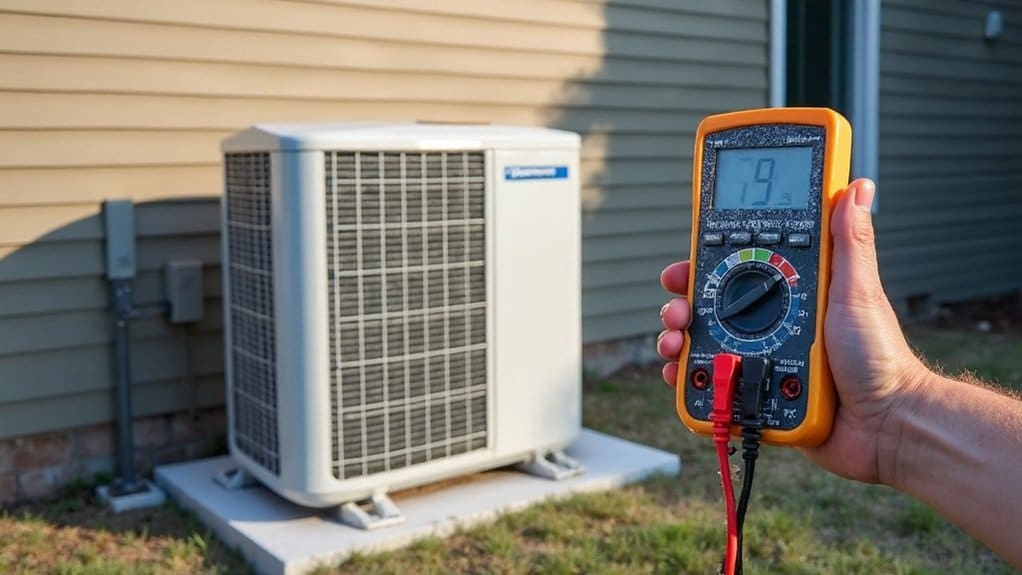
You’ll know it’s time to call a professional when your heat pump won’t start, runs continuously without cycling off, produces strange noises like rattling or hissing, or fails to heat or cool effectively. Check your thermostat settings, air filter, and circuit breaker first, but don’t attempt complex repairs yourself. Refrigerant leaks, electrical issues, and component failures require specialized expertise to diagnose safely. Understanding these warning signs helps you make informed decisions about your system’s care.
Key Takeaways
- Call a technician when you hear unusual noises like rattling, buzzing, hissing, or thumping from your heat pump system.
- Contact a professional if your heat pump won’t turn on, runs continuously without cycling, or shows poor heating/cooling performance.
- Schedule service immediately when you notice ice buildup on the outdoor unit or detect burning, chemical, or musty odors.
- Seek professional help if basic troubleshooting like checking thermostat settings, filters, and circuit breakers doesn’t resolve the issue.
- Always use licensed technicians with heat pump expertise rather than attempting complex repairs that could cause further damage.
Common Signs Your Heat Pump Needs Professional Attention
Your heat pump typically operates quietly and efficiently in the background, but certain warning signs indicate it’s time to call a professional. If you’re hearing unusual noises like rattling, buzzing, or thumping, these sounds often signal heat pump issues with the compressor, fan, or internal components that require immediate attention.
Temperature inconsistencies are another red flag. When your system can’t reach desired temperatures or maintain comfort levels, you’re likely dealing with problems involving refrigerant levels or a malfunctioning reversing valve. Short-cycling, where your unit frequently turns on and off, suggests sizing issues that impact efficiency.
Watch for ice buildup on your outdoor unit, which typically indicates defrost mode problems or low refrigerant. Additionally, unexpected energy bill spikes without usage changes signal operational inefficiency. These troubleshooting tips help identify when your common heat pump problems exceed DIY fixes. Remember, regular maintenance prevents many issues, but professional intervention becomes necessary when these symptoms appear.
Heat Pump Won’t Turn On or Start
When your heat pump refuses to turn on, the culprit often lies in simple electrical or configuration issues that you can check before calling a technician.
Start by examining your circuit breaker panel for any tripped circuit that might’ve cut power to your system. A power outage could’ve triggered this safety mechanism. Next, verify your thermostat settings are configured correctly for heating mode and set to the desired temperature.
Check for an improper thermostat connection by ensuring all wires are securely attached. Loose connections prevent proper communication between your thermostat and heat pump.
However, some issues require professional diagnosis. A faulty start capacitor can prevent startup, while a malfunctioning reversing valve may stop your system from operating entirely. These components contain electrical hazards and require specialized tools for safe repair.
If basic checks don’t resolve the problem, CALL AN EXPERT immediately to avoid costly damage or safety risks.
System Running Continuously Without Cycling Off
A heat pump that never stops running signals underlying problems that demand immediate attention. Several issues can cause this continuous operation, including a malfunctioning thermostat that doesn’t properly signal when your desired temperature’s reached. Refrigerant leaks reduce your system’s efficiency, forcing it to work harder without achieving results. Clogged air filters restrict airflow, making your heat pump struggle constantly.
An oversized unit might seem powerful, but it creates short cycling problems where the system rapidly turns on and off, eventually leading to non-stop operation. This constant running drives up your energy bills extensively while potentially damaging expensive components over time.
Start troubleshooting by replacing dirty air filters, verifying your thermostat settings, and ensuring your unit’s properly sized for your home. If these steps don’t resolve the issue, you’ll need an experienced HVAC technician to diagnose deeper problems like refrigerant leaks or mechanical failures that require professional repair.
Poor Heating or Cooling Performance Issues
Poor heating or cooling performance often accompanies continuous operation problems, but it can also occur when your heat pump cycles normally yet fails to maintain comfortable temperatures. Several factors can cause this frustrating issue.
Low refrigerant levels drastically reduce your heat pump’s ability to transfer heat effectively. A dirty or clogged air filter restricts airflow, forcing your system to work harder while delivering less comfort. Check and replace your filter monthly during peak usage seasons.
A malfunctioning reversing valve can prevent your heat pump from switching between heating and cooling modes properly. Insufficient airflow from blocked ducts or an undersized unit creates similar performance problems.
Watch for short cycling, where your system turns on and off rapidly, indicating potential compressor issues. Icing on outdoor coil enormously impacts efficiency and requires immediate attention.
If you’ve checked basic maintenance items but still experience poor performance, it’s time to call a technician for professional diagnosis and repair.
Strange Noises and Unusual Odors
Your heat pump shouldn’t sound like a haunted house or smell like a chemistry experiment. When strange noises or unusual odors emerge from your system, they’re warning signs that demand immediate attention.
Hissing sounds typically indicate a refrigerant leak requiring professional diagnosis. Rattling or banging noises suggest broken components or fan obstruction that needs inspection. Thumping sounds often point to failing motors requiring qualified technician replacement.
Unusual odors are equally concerning:
- Musty smells signal mold growth that HVAC experts should address immediately
- Burning odors can stem from dust buildup, wiring issues, or overheating components
- Chemical-like scents may indicate refrigerant problems requiring professional service
Don’t ignore these warning signs or attempt DIY repairs. Strange noises and odors often indicate serious issues that can worsen without proper intervention. Professional technicians have the expertise and tools to safely diagnose problems, prevent further damage, and restore your heat pump’s normal operation.
Refrigerant Leaks and Low Refrigerant Levels
Refrigerant leaks represent one of the most serious problems you’ll encounter with your heat pump system. These leaks cause reduced heating and cooling performance, ice buildup on coils, and environmental damage when left unrepaired.
Watch for warning signs of low refrigerant levels. You’ll notice hissing sounds or bubbling sounds coming from your unit, indicating refrigerant escaping through damaged lines or connections. Your compressor may start continuously running or exhibit rapid cycling as it struggles to maintain proper temperatures with insufficient refrigerant.
Don’t attempt to recharge refrigerant yourself without addressing the underlying leak first. This approach is unsafe and can damage your system further. Instead, contact a licensed technician immediately when you suspect refrigerant issues. They’ll locate the leak source, seal it properly, and restore the correct refrigerant charge. Professional repair guarantees your heat pump operates efficiently while preventing environmental harm from escaped refrigerant.
Electrical Problems and Component Failures
Several electrical issues can completely shut down your heat pump or cause erratic operation that leaves you without reliable climate control. When your system won’t start, a tripped circuit breaker or blown fuse might be cutting power to the unit. These electrical panel problems require an electrician’s immediate attention.
Critical electrical components like the start capacitor and contactor can fail without warning, preventing your heat pump from starting properly. You’ll need a professional technician to diagnose and replace these parts securely.
- Reversing valve malfunctions often stem from solenoid coil failures, disrupting your system’s ability to switch between heating and cooling modes
- Wiring problems including loose connections or damaged low-voltage wiring interfere with thermostat communication
- Electrical panel issues such as outdated or undersized panels limit your heat pump’s power supply and require upgrades
Don’t attempt electrical repairs yourself—these complex systems demand professional expertise to guarantee safe, reliable operation.
Basic Troubleshooting Steps You Can Try First
Before calling a professional technician, you can perform several simple diagnostic checks that might resolve common heat pump issues or help identify the problem’s source.
Start by checking your thermostat settings. Guarantee it’s set to the correct mode (heating or cooling) and desired temperature. Next, inspect your air filter. A dirty filter restricts airflow and forces your system to work harder. Clean or replace it if necessary.
Check your circuit breaker panel to verify the breaker powering your heat pump hasn’t tripped. If it has, reset it once – but if it trips again, call a professional immediately.
Listen carefully for unusual noises from both indoor and outdoor units. These sounds can indicate mechanical problems requiring expert attention.
Monitor your outdoor unit for ice buildup, especially during winter operation. While your heat pump is designed to handle some frost, excessive ice suggests malfunction. Troubleshooting these basic issues first can save time and potentially costly service calls.
Choosing the Right HVAC Professional for Repairs
When your heat pump requires professional repair, selecting the right HVAC technician becomes essential for getting your system back to ideal performance. Before checking the thermostat or attempting basic fixes, understand the importance of finding qualified professionals who specialize in heat pump service.
When it’s best to contact a professional, focus on these critical factors:
- Verify specialized training – Look for technicians with specific heat pump experience and proper licensing, bonding, and insurance coverage
- Research reputation thoroughly – Check online reviews and request references to confirm reliable service history
- Compare value intelligently – Get multiple quotes but prioritize expertise over lowest cost
The importance of regular maintenance discussions with potential contractors can give you peace of mind about their knowledge. Ask about warranty policies on parts and labor to protect your investment. When you contact a professional, guarantee they offer assurances on their work and demonstrate genuine heat pump expertise.
Conclusion
You’ve just revealed the secrets to avoiding a complete HVAC meltdown! Don’t let your heat pump turn your home into an arctic wasteland or tropical nightmare. While you can tackle basic troubleshooting like a pro, remember that some problems require serious expertise. When strange noises sound like a freight train or your system’s guzzling electricity like there’s no tomorrow, it’s time to call in the cavalry. Your comfort depends on it!