
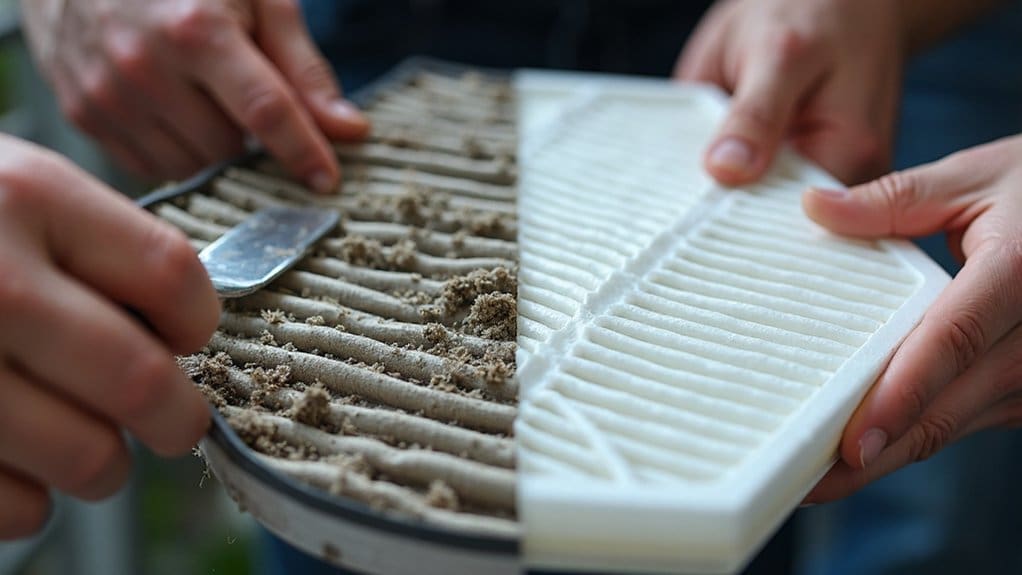
You’ll need to repair your air filtration system when it’s under 10-12 years old with minor issues like faulty capacitors or loose connections. However, replacement becomes essential for heavily clogged filters over one year old or systems consuming 30-50% more energy due to age. Watch for warning signs like spiking energy bills, visible dirt accumulation, and weaker airflow from vents. The guide below reveals exactly when each option makes financial sense for your situation.
Key Takeaways
- Air filters should be replaced every 1-3 months, while HVAC system repairs make sense for units under 10-12 years old.
- Clogged filters cause energy bills to spike, weaker airflow, and allow contaminants to circulate throughout your home.
- Minor HVAC repairs like faulty capacitors or loose connections are cost-effective compared to premature system replacement.
- Systems over 10 years old consume 30-50% more energy and require frequent repairs costing up to 50% of replacement value.
- New HVAC installations typically recoup costs within 5-7 years through energy savings and eliminated recurring repair expenses.
Understanding Your Home’s Air Filtration System
When was the last time you thought about the air you’re breathing inside your home? Your HVAC system works tirelessly behind the scenes, and air filters are its unsung heroes. These filters capture dust, pollen, pet dander, and other airborne particles before your system heats or cools the air and circulates it throughout your home.
Understanding how your filtration system operates is vital for maintaining ideal indoor air quality. Your filters act as the first line of defense, preventing contaminants from entering your living spaces and protecting your HVAC equipment from damage. When filters become clogged with debris, your system works harder to push air through, reducing efficiency and increasing energy costs.
Regular maintenance of your filtration system isn’t just about comfort—it’s about protecting your investment. Proper HVAC maintenance, including timely filter care, can greatly extend your system’s lifespan while ensuring you’re breathing cleaner, healthier air every day.
Signs Your Air Filter Needs Attention
Something’s wrong when your energy bills spike unexpectedly, and your air filter might be the culprit. A clogged filter forces your HVAC system to work overtime, driving up costs and potentially damaging components.
You’ll notice several warning signs when your old filter needs replacement. Check for visible dirt, dust, or pet hair accumulation on the surface. If airflow from your vents feels weaker than usual, or your system cycles on and off more frequently, it’s time for action.
HVAC filters that block dust and allergens lose effectiveness when dirty, allowing contaminants to circulate through your home. You might also notice your heating or cooling system struggling to maintain comfortable temperatures.
Don’t wait for problems to escalate. Inspect your filter monthly and plan filter changes every 1-3 months, depending on manufacturer recommendations. Installing a new filter immediately restores airflow, improves efficiency, and protects your system from unnecessary strain.
When Repairing Your Air Filtration System Makes Sense
Your HVAC system doesn’t always need complete replacement when filtration problems arise. If your system’s less than 10-12 years old, repairs often make financial sense. Minor issues like faulty capacitors, loose connections, or small refrigerant leaks can be fixed cost-effectively without replacing the entire unit.
Regular cleaning and maintenance greatly extend your HVAC system’s lifespan. When you’ve kept up with preventative care, including timely disposable filters changes, repairs become more viable than replacement. This diligent maintenance preserves your system’s energy efficiency and performance.
If your system’s still under warranty, repairs can save you money compared to premature replacement costs. Even out-of-warranty systems benefit from targeted fixes when problems are isolated and minor.
Consider scheduling a free consultation to evaluate your specific situation. Professional assessment helps determine whether repairs will restore ideal filtration performance or if replacement better serves your long-term needs and budget.
When Air Filter Replacement Is the Better Choice
While repairs work well for newer systems with minor issues, air filter replacement becomes the smarter choice in several key situations. If your HVAC Filter is over one year old or heavily clogged, replacement is essential for maintaining proper air filtration. You’ll also need replacement when filters can’t effectively capture airborne particles anymore.
Colorado’s challenging environment makes regular replacement particularly important. The state’s dry climate and high pollen levels demand fresh filters to keep your HVAC system’s performance ideal. If you suffer from allergies or household members have asthma symptoms, investing in quality replacement filters greatly improves indoor air quality.
Higher MERV rated filters (8-13) excel at trapping contaminants but require more frequent replacement to prevent airflow restrictions. Regular replacement protects your equipment’s internal components from excessive wear, extending your system’s lifespan. When allergies or asthma affect your family, replacement with superior filtration becomes a health necessity rather than just maintenance.
Cost Analysis: Repair vs. Replacement Over Time
Although air filter repairs might seem budget-friendly initially, you’ll discover that replacement often delivers superior long-term value when you examine the complete cost picture.
When your HVAC system’s age exceeds 15 years, you’re likely spending money on frequent repairs to keep an inefficient unit running. Here’s what impacts your decision:
- Energy costs: Older systems consume 30-50% more energy, dramatically increasing your monthly energy bills
- Repair frequency: Systems over 10 years old require repairs costing 20-50% of replacement value annually
- Payback period: New HVAC unit installations typically recoup costs within 5-7 years through energy savings
You’ll find that repairs make sense for newer systems under 10 years old, but older units become money drains. Calculate your total expenses including energy bills, maintenance costs, and repair frequency. In the long run, replacement eliminates recurring repair expenses while reducing energy consumption, making it the smarter financial choice for aging systems.
Colorado’s Unique Air Quality Challenges and Filter Performance
Colorado’s distinctive climate creates demanding conditions that put your air filtration system to the test year-round. The state’s dry air carries higher pollen concentrations and seasonal dust storms that clog filters faster than in more humid climates. If you live near farmland or have pets, expect even quicker filter deterioration.
Your HVAC system’s performance depends heavily on maintaining clean filters in these challenging conditions. While dry air reduces mold spores compared to humid regions, wildfire smoke and airborne particulates create new filtration demands throughout your home. MERV 11 or 13 filters offer the best balance, capturing Colorado’s unique pollutants without restricting airflow.
When deciding between repair and replacement, consider how Colorado’s harsh conditions accelerate wear on filtration components. Systems struggling with frequent clogs may need expert care or complete replacement to handle the state’s demanding air quality challenges effectively.
DIY Filter Maintenance vs. Professional Service
Taking on filter maintenance yourself can save money and keep your system running smoothly between professional visits. You can handle basic tasks like replacing disposable filters every three months and cleaning reusable ones. However, knowing when your HVAC system’s complexity requires professional attention is pivotal.
Replace disposable filters by turning off your system, checking the correct size, and ensuring airflow arrows point properly.
Clean reusable filters by vacuuming debris, rinsing under water, and allowing complete drying.
Keep the area around your unit clean to reduce filter workload.
Make sure to recognize when skilled technicians should step in. Complex HVAC problems, unusual noises, or persistent air quality issues indicate your system must receive professional assessment. Companies like Schultheis Brothers provide expert filter replacement and thorough evaluations, ensuring ideal performance and indoor air quality when DIY maintenance isn’t sufficient.
How to Choose the Right MERV Rating for Your Home
When selecting the perfect air filter for your home, the MERV rating determines how effectively it’ll capture airborne particles while maintaining proper airflow through your HVAC system. For most Colorado homes, MERV 11 or 13 filters offer the ideal balance between improved air quality and system efficiency.
MERV 8-13 filters excel at trapping dust, pollen, and pet dander without restricting your HVAC system’s airflow. However, ratings above 13 can strain your system, particularly in Colorado’s dry climate, leading to reduced efficiency and inconsistent temperature readings.
Your home’s air quality needs depend on factors like allergies, pets, and local environmental conditions. While higher ratings seem better, they may compromise your home’s comfort by overexerting your HVAC system.
Consult HVAC professionals to determine your most suitable MERV rating. They’ll assess your system’s capabilities and your home’s air quality requirements, ensuring you achieve clean air without sacrificing system performance or energy efficiency.
Making the Smart Decision for Your Family’s Health and Budget
The decision between repairing and replacing your air filtration system directly impacts both your family’s respiratory health and your long-term expenses. When your air conditioner’s filtration components fail, you’re faced with protecting your HVAC system’s integrity while maintaining your home’s air quality.
Consider these key factors when making your decision:
- System Age and Condition – Older systems with frequent breakdowns benefit more from replacement than continued repairs
- Cost Analysis – Compare repair expenses against replacement investment, factoring in energy savings and avoided future repairs
- Health Impact – Poor filtration allows contaminants to circulate, affecting your home’s comfort and family wellness
This maintenance step shouldn’t be delayed, as compromised filtration leads to potential damage throughout your entire system. Colorado’s challenging climate demands reliable air filtration to combat high pollen levels and dry conditions. Professional assessment helps you weigh immediate costs against long-term benefits, ensuring you make the smartest choice for both health and budget.
Conclusion
Your air filtration system is like the lungs of your home—when it’s not functioning properly, everything suffers. You’ve got the knowledge now to make informed decisions about repairs versus replacements. Don’t let poor air quality compromise your family’s health or drain your wallet through inefficient systems. Whether you’re tackling DIY maintenance or calling professionals, you’re investing in cleaner air and peace of mind. Make the choice that breathes life into your home.