
You can substantially extend your AC system’s lifespan by scheduling annual professional tune-ups, replacing air filters every 1-3 months, and keeping your outdoor unit clean with proper clearance. Set your thermostat between 25-27°C in summer and use the auto setting to prevent continuous operation. Improve your home’s insulation to reduce system workload, and strategically use ceiling fans to circulate cool air efficiently. These proven maintenance practices will help you discover additional strategies to maximize your system’s longevity.
Key Takeaways
- Schedule annual professional tune-ups to ensure thorough inspection, cleaning, and early identification of potential issues.
- Replace air filters every 1-3 months to maintain proper airflow and prevent strain on system components.
- Keep outdoor condenser unit clean with 2-3 feet clearance, removing debris that blocks airflow around equipment.
- Optimize thermostat settings between 25°C-27°C in summer and 18°C-20°C in winter for efficient operation.
- Improve home insulation and use ceiling fans to reduce system workload and enhance cooling efficiency.
Schedule Annual Professional Tune-Ups
Annually scheduling professional tune-ups guarantees your AC system receives the expert attention it needs to operate at peak performance. A qualified HVAC technician will thoroughly inspect, clean, and adjust all components of your air conditioning unit, identifying potential issues before they escalate into costly repairs that could compromise your home’s comfort.
Regular HVAC maintenance assures your system operates efficiently, substantially reducing energy consumption and lowering your monthly utility bills. Professional technicians optimize airflow, check refrigerant levels, and fine-tune overall system performance, directly contributing to extended equipment lifespan.
You should schedule these essential tune-ups before peak cooling season begins, preparing your air conditioning unit for upcoming high-demand periods. This proactive maintenance approach keeps your home comfortable while maximizing your HVAC investment. Professional attention assures your system delivers reliable performance year after year, making annual tune-ups one of the smartest decisions you can make for your home’s cooling needs.
Replace Air Filters Every 1-3 Months
While professional tune-ups handle complex maintenance needs, you can’t overlook one of the simplest yet most critical tasks: replacing your air filters every 1-3 months. Clean filters are essential for maintaining ideal airflow throughout your HVAC systems. When air filters become clogged with dirt and debris, they restrict airflow and force your air conditioning to work considerably harder.
This increased strain reduces efficiency and accelerates wear-and-tear on critical components. Dirty filters make your system running at subpar levels, consuming more energy while delivering less comfort. Regular filter replacement is an inexpensive maintenance task that delivers substantial returns on investment.
Clean filters allow proper airflow, enabling your equipment to operate at peak performance. This simple practice helps extend the life of your AC by reducing mechanical stress and preventing system malfunctions. Don’t underestimate this basic maintenance step—it’s one of the most effective ways to extend the life of your entire system.
Keep the Outdoor Unit Clean and Clear
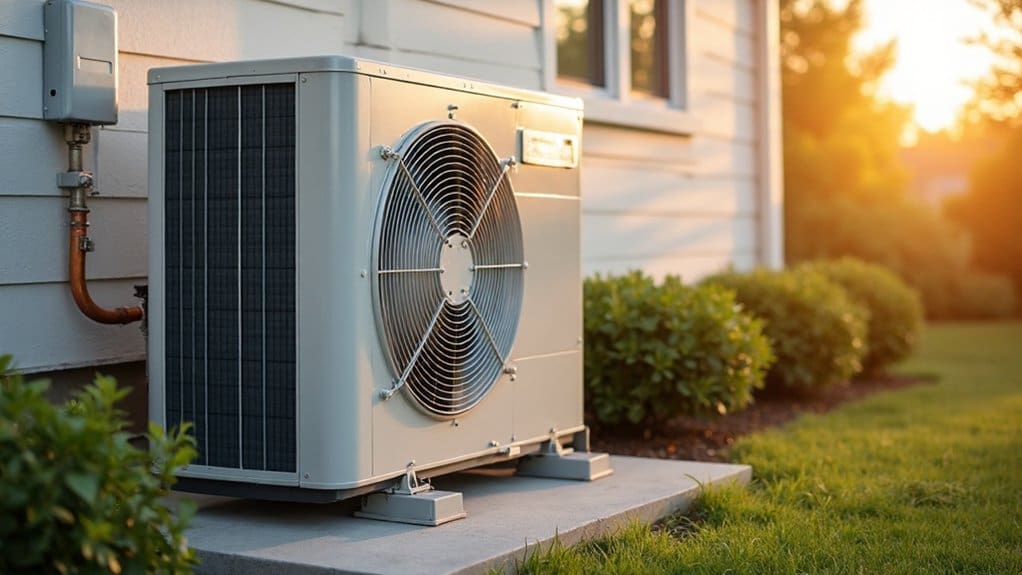
Your air conditioning system’s outdoor condenser unit requires consistent attention to maintain peak performance. This unit cools your home’s air, making regular debris removal essential for ideal function. Remove leaves, grass clippings, and branches that block airflow around the condenser unit.
Blocked condensers force your HVAC system to work harder, reducing cooling efficiency and shortening equipment lifespan. Maintain at least 2-3 feet of clearance around your outdoor unit to prevent airflow obstructions and overheating that can damage internal components.
Position the unit away from direct sunlight when possible and guarantee proper ventilation around the equipment. These steps preserve your system’s longevity while maintaining efficient operation.
Conduct visual inspections of your outdoor unit after storms or severe weather. Address any visible damage or debris accumulation promptly to prevent minor issues from becoming costly repairs. Regular attention to your condenser unit’s cleanliness and surroundings considerably extends your air conditioning system’s overall lifespan.
Use Your Thermostat’s Auto Setting
Beyond maintaining your outdoor unit’s physical condition, optimizing your thermostat settings plays a major role in system efficiency and longevity. You’ll want to keep your thermostat set to “auto” rather than “on” to maximize your air conditioner’s life. This setting allows your HVAC system to run intermittently as needed, matching cooling output to actual temperature requirements.
When you use the auto setting, your unit operates more efficiently by preventing over-cooling and reducing unnecessary wear on components. Constant operation in the “on” position forces your system to work harder than necessary, increasing energy consumption and shortening its lifespan. The intermittent cycling that comes with auto mode gives your equipment essential rest periods between cooling cycles.
Remember to pair this optimization with regular filter changes, as clean filters support your thermostat’s efficiency efforts. This simple adjustment is one of the easiest ways to enhance your HVAC system’s performance and extend its operational life.
Upgrade Your Home’s Insulation
Since your thermostat can only work as efficiently as your home allows, upgrading your insulation becomes a critical factor in extending your AC’s lifespan. Proper home insulation creates a barrier that keeps cool air inside during summer and prevents hot air from infiltrating your living space.
When you upgrade insulation in your walls, attic, and crawl spaces, you’re directly improving your system’s energy efficiency and cooling efficiency. Your HVAC unit won’t need to cycle on and off as frequently, reducing wear and tear on critical components like the compressor and blower motor.
This decreased workload means your system experiences less stress during operation, keeping it running smoothly for years longer than poorly insulated homes. You’ll notice immediate benefits through lower monthly energy bills and fewer repair calls.
Clean Air Ducts Regularly
Hidden within your home’s ductwork, accumulated dust, debris, and contaminants create a silent burden that forces your AC system to work much harder than necessary. When you clean air ducts regularly, you’re removing these obstructions that restrict airflow and strain your HVAC (Heating, Ventilation, and Air Conditioning) system.
Dirty air ducts accumulate dust, dirt, and allergens over time, degrading your indoor air quality while forcing your system into overdrive. This extra workload leads to premature wear and component failure. Regular maintenance of your ductwork guarantees ideal airflow, allowing your AC to operate efficiently without unnecessary stress.
Clean and free-flowing ducts reduce your system’s energy consumption and extend its operational lifespan immensely. You’ll notice improved performance when air moves smoothly through unobstructed pathways. Don’t neglect this essential maintenance task – schedule professional duct cleaning every three to five years to keep your HVAC system running at peak efficiency and maximize your investment.
Ensure Proper System Installation
When you invest in a new air conditioning system, the quality of installation determines whether you’ll enjoy years of reliable performance or face costly repairs and premature replacement. Proper installation by qualified Home Services professionals is essential to maintain your HVAC system running efficiently for decades.
Your new HVAC unit must be correctly sized for your home’s cooling requirements. Oversized or undersized systems experience excessive run time cycles, leading to premature wear and higher energy costs. Professional installers safeguard proper ductwork configuration, preventing air leaks that reduce system performance.
Improperly installed refrigerant lines and electrical connections often require expensive emergency repairs down the road. The type of filter housing and airflow design also affects your system’s longevity when installed incorrectly.
Investing in quality installation upfront pays dividends in the long run. Professional installation guarantees all components work harmoniously, maximizing your AC’s lifespan while minimizing maintenance costs and unexpected breakdowns.
Utilize Ceiling Fans to Reduce AC Load
Beyond proper installation, you can considerably reduce your AC’s workload by strategically using ceiling fans throughout your home. These fans circulate cool air more efficiently throughout each room, allowing you to raise your thermostat setting by 3-4 degrees without sacrificing comfort. Your air conditioning system won’t need to cycle as frequently, which minimizes strain on critical components.
Running ceiling fans alongside your AC unit creates better airflow patterns that help maintain consistent temperatures. This partnership extends the life of your air conditioning equipment by preventing premature wear and tear. You’ll also notice improved air quality as fans keep air moving, reducing stagnant pockets.
Keep an eye on your energy bills – you’ll likely see noticeable savings. The reduced workload means your system operates more efficiently and requires less maintenance. Clean your ceiling fan blades regularly to maximize their effectiveness in supporting your AC’s performance.
Invest in Smart Thermostat Technology
How can you take your AC maintenance strategy to the next level? Investing in a smart thermostat transforms how your HVAC system operates and helps extend lifespan considerably.
Smart thermostats continuously monitor your usage patterns and automatically optimize temperature settings for maximum energy efficiency. This intelligent monitoring reduces unnecessary strain on your AC components, preventing premature wear and costly repairs. You’ll gain remote control capabilities that let you fine-tune runtime schedules, ensuring your system operates only when needed.
These devices offer maintenance notifications that alert you to potential issues before they become major problems. Early detection prevents extensive damage and keeps your AC running smoothly. When integrated with other smart home devices, your thermostat makes holistic decisions that minimize your HVAC system’s workload.
Maintain Optimal Thermostat Settings
The right thermostat settings dramatically impact your AC system’s longevity and performance. You’ll help your air conditioning system operate at peak efficiency by maintaining temperatures between 25°C and 27°C during summer months. These ideal settings reduce strain on your equipment while saving you money on energy bills.
During winter, keep your thermostat between 18°C and 20°C to prevent your HVAC system from overworking. Setting temperatures closer to outdoor conditions minimizes your system’s workload, which plays a pivotal role in extending its lifespan.
Avoid extreme temperature settings that force your air conditioning system to work excessively. Constant dramatic adjustments create unnecessary wear and tear on components, shortening your equipment’s operational life.
Consider upgrading to programmable or smart thermostats that automatically adjust based on your usage patterns. These devices help keep your AC running efficiently by optimizing temperature control throughout the day, reducing energy consumption and mechanical stress on your system.
Conclusion
You’ve heard that proper AC maintenance can double your system’s lifespan—but is this really true? By following these ten essential tips, you’re not just preventing breakdowns; you’re actually proving this theory correct. Your consistent filter changes, professional tune-ups, and smart thermostat usage create a compounding effect that dramatically extends equipment life. The evidence is clear: homeowners who maintain their systems religiously often see 15-20 year lifespans versus the typical 8-12 years.