
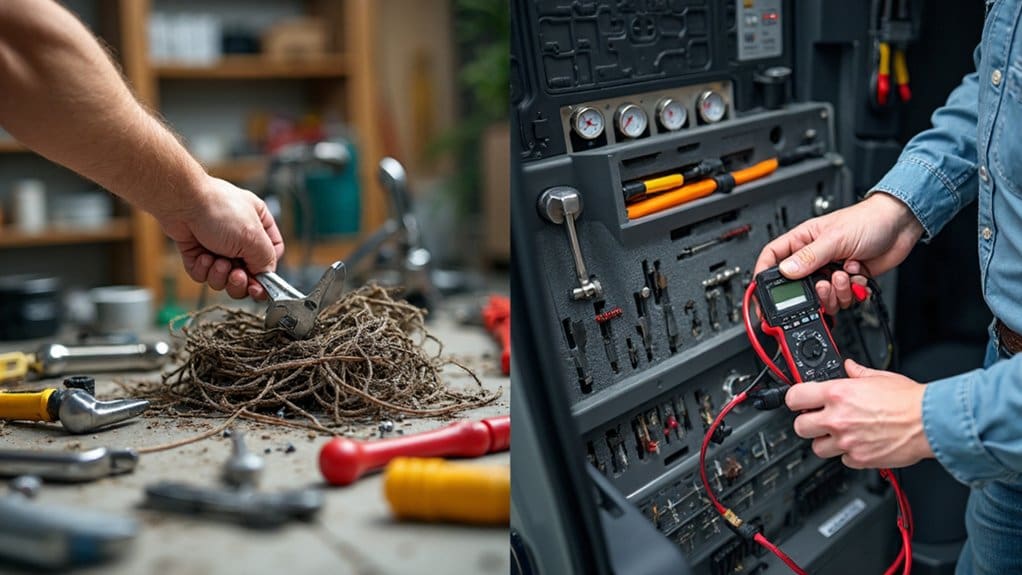
You can handle basic heat pump maintenance like replacing air filters and cleaning outdoor units, but complex repairs involving electrical components and pressurized refrigerant systems require professional expertise. DIY attempts risk serious injury, gas leaks, voided warranties, and costly damage to sensitive components. Licensed technicians possess specialized tools, understand safety codes, and provide reliable repairs that maintain efficiency ratings and extend equipment life. Understanding when to call professionals versus tackling tasks yourself protects your investment and guarantees ideal performance.
Key Takeaways
- Homeowners can safely handle basic maintenance like replacing air filters, cleaning vents, and checking thermostat settings.
- DIY heat pump repairs risk serious injury from electrical components, gas leaks, and pressurized refrigerant systems.
- Professional technicians have specialized tools, training, and knowledge of local codes required for complex heat pump systems.
- Attempting DIY repairs can void manufacturer warranties and cause expensive damage to sensitive HVAC components.
- Professional repairs ensure long-term reliability, maintain efficiency ratings, and protect your investment for decades of operation.
Understanding Heat Pump Systems and Their Complexity
Heat pumps represent one of the most sophisticated HVAC technologies in modern homes, operating as dual-purpose systems that can both heat and cool your living space with remarkable efficiency. Unlike traditional heating systems, these complex units reverse their operation seasonally, extracting warmth from outdoor air during winter and removing heat from your home during summer.
The complexity of HVAC systems like heat pumps stems from their intricate system components working in precise coordination. You’ll find compressors, evaporator coils, condensers, and electronic controls that must maintain exact refrigerant levels for ideal performance. When you attempt to perform repairs without proper training, you’re dealing with pressurized refrigerant systems that require professional handling and specialized diagnostic tools.
Incorrect handling of these components can result in costly damage, safety hazards, and voided warranties. Most heat pump issues require professional expertise to properly diagnose electrical problems, refrigerant leaks, and component failures that aren’t apparent to untrained individuals.
What Homeowners Can Handle: Basic DIY Maintenance Tasks
While professional expertise is essential for complex repairs, you can perform several straightforward maintenance tasks that’ll keep your heat pump running efficiently and help prevent costly breakdowns.
Start with air filters – replace them every 1-3 months to extend your HVAC system’s lifespan and boost performance. This simple step prevents dust buildup that forces your equipment to work harder.
Keep all vents and registers unblocked to guarantee proper airflow throughout your air conditioning systems. Blocked vents create pressure imbalances that strain components.
Regularly clean around your outdoor condenser unit, removing leaves, debris, and vegetation that restrict airflow. This basic troubleshooting prevents overheating issues.
Check your thermostat settings for accuracy and appropriate programming. Incorrect settings waste energy and reduce comfort.
These HVAC maintenance tasks form the foundation of DIY HVAC repairs you can safely handle. However, complex repairs requiring specialized tools that HVAC technicians use should remain with professionals to avoid damage or safety hazards.
The Appeal and Potential Benefits of DIY Heat Pump Repairs
Beyond basic maintenance, tackling your own heat pump repairs offers compelling advantages that draw many homeowners toward the DIY approach. You’ll save considerably on labor costs that professional HVAC services typically charge, keeping more money in your pocket for other home improvements.
DIY repairs help you understand your system’s components and operation, building valuable self-reliance. You’ll develop troubleshooting skills that let you address minor issues quickly without waiting for technician appointments. This knowledge extends the life of your system through better care and attention.
The sense of accomplishment from successfully completing repairs yourself is genuinely rewarding. Online tutorials and repair guides make complex procedures more accessible than ever before.
However, consider that warranty coverage may require professional repairs, potentially eliminating your cost savings. Additionally, improper DIY work could damage expensive components or increase energy bills through reduced efficiency. Weigh these factors carefully before attempting substantial system repairs yourself.
Significant Risks and Limitations of DIY Heat Pump Work
Several critical dangers lurk beneath the surface of DIY heat pump repairs that can transform minor issues into costly disasters. You’re dealing with complex electrical components that can cause serious injury or death when handled improperly. Gas lines present another major hazard – attempting them without proper training can lead to leaks, explosions, or carbon monoxide poisoning.
DIY repairs often void these warranties, leaving you financially exposed when problems arise. Without the proper tools and diagnostic equipment, you can’t accurately identify root causes, leading to incorrect repair attempts that worsen existing issues. Property damage from refrigerant leaks, electrical fires, or flooding can cost thousands more than professional service.
Don’t take chances with your family’s safety or your home’s value. While weighing the pros and cons of DIY repairs might seem logical, heat pumps require specialized knowledge that takes years to develop properly.
Safety Hazards Associated With Heat Pump Repair Attempts
Heat pump repair attempts expose you to multiple life-threatening dangers that can’t be overlooked or minimized. High-voltage electrical components can deliver fatal shocks without proper training and safety equipment. You’re also risking exposure to pressurized refrigerant lines that, when mishandled, can cause severe injuries or release hazardous substances harmful to your skin and respiratory system.
DIY vs professional heating and cooling repairs presents clear safety hazards. Improper handling creates gas leaks that pose fire, explosion, and carbon monoxide poisoning risks. Without specialized diagnostic tools, you’ll likely damage sensitive HVAC systems components further, escalating repair costs.
These unsafe repair attempts can void your manufacturer’s warranty, leaving you financially responsible for future professional corrections. The complexity of modern air conditioning and heating systems requires expertise that goes beyond basic mechanical knowledge. When facing these safety hazards, it’s essential to call in a professional rather than risk your wellbeing and property.
When Professional Heat Pump Service Becomes Essential
While minor maintenance tasks like filter changes fall within most homeowners’ capabilities, certain heat pump issues demand immediate professional intervention. You’ll need Professional HVAC Repair when facing electrical malfunctions, refrigerant leaks, or unusual noises that indicate internal component failures. These complex problems require specialized tools and expertise to identify the root cause safely.
Professional technicians guarantee your Heating and Cooling system operates at peak energy efficiency through proper diagnosis and repairs. They’ll keep your system running at its best while maintaining manufacturer warranties – something DIY attempts can void entirely. You should schedule professional HVAC service for frequent cycling issues, inadequate temperature control, or any gas-related concerns.
The Benefits of Professional HVAC service extend beyond immediate repairs. Licensed technicians extend the life of your equipment through proper maintenance and keep warranties valid with documented professional service. Don’t risk safety hazards or costly mistakes with complex heat pump repairs. Contact us for reliable professional service that protects your investment.
Advantages of Choosing Licensed Heat Pump Technicians
Beyond immediate problem-solving, licensed heat pump technicians bring distinct advantages that make them your best choice for system repairs and maintenance. You’ll gain peace of mind knowing your system’s warranty remains intact, as manufacturers require authorized service providers for covered repairs. When you hire a professional, you’re investing in thorough diagnostics that catch potential issues before they become costly problems.
Professional maintenance includes refrigerant checks, component cleaning, and system tune-ups that keep your heat pump running efficiently. This translates to real cost savings through lower utility bills and extended equipment lifespan. Licensed technicians understand local codes and safety requirements, ensuring compliant installations and repairs.
Rather than wondering whether to attempt complex repairs yourself, contact a professional who has specialized tools and training. When you schedule an appointment with a licensed technician, you’re choosing expertise that protects your investment. Call a professional for reliable, efficient heat pump service.
Making the Right Decision for Your Heat Pump’s Long-Term Health
How do you guarantee your heat pump operates reliably for decades rather than breaking down prematurely? The decision between DIY and professional repair determines your system’s future performance and lifespan.
When your pump needs attention, consider the cons of DIY approaches carefully. While saving money initially seems attractive, improper repairs often void manufacturer warranties and reduce energy efficiency. A small issue can escalate into major system failure without proper expertise.
Professional technicians keep your HVAC system operating at the highest level through precise diagnostics and quality repairs. They understand complex refrigerant systems, electrical components, and calibration requirements that maximize heating or cooling performance. Licensed professionals also provide maintenance to keep warranties valid, protecting your investment.
Weighing DIY and professional options requires honest assessment of your skills and the repair’s complexity. Money in the long run is better spent on qualified technicians who prevent recurring problems, maintain efficiency ratings, and extend equipment life considerably.
Conclusion
Your heat pump’s heartbeat shouldn’t become your headache. While you can handle the small stuff, don’t let DIY dreams turn into costly nightmares. Complex repairs are like walking a tightrope without a net—one wrong move can send your system crashing down. Trust the professionals when the stakes are high. Your wallet and your family’s comfort will thank you when winter’s icy fingers come knocking at your door.