
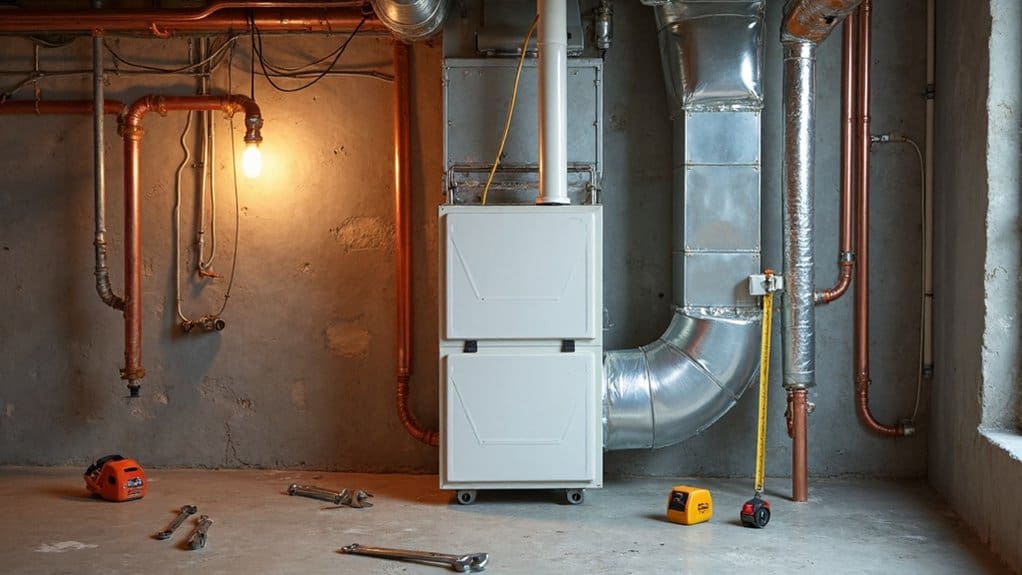
Your furnace installation typically takes one to three days, depending on your home’s complexity and infrastructure needs. The process involves initial assessment, safety preparations, removing your old system, and installing the new furnace with proper electrical and gas connections. Technicians will test all components, calibrate performance settings, and provide training on your new system. Several factors can extend this timeline, including ductwork modifications, electrical upgrades, and the complexity of your chosen furnace model—comprehending each phase guarantees you’re fully prepared.
Key Takeaways
- Furnace installation timeline depends on home infrastructure complexity, ductwork modifications, electrical upgrades, and new furnace size.
- Pre-installation assessment includes inspecting existing systems, evaluating ductwork, determining proper sizing, and planning installation logistics.
- Installation day begins with safety measures including shutting off power, water, and gas utilities with homeowner communication.
- Old furnace removal involves systematic utility disconnection, navigating removal challenges, proper disposal, and cleaning the area.
- New furnace installation includes assembly, electrical connections, pipe configuration, ductwork mapping, and testing startup functionality.
Factors That Affect Your Furnace Installation Timeline
Several key factors typically influence how long your furnace installation will take. The complexity of your home’s infrastructure plays an essential role in determining the timeline.
If your existing ductwork is outdated or damaged, you’ll need modifications or replacements that extend the process. Similarly, electrical wiring upgrades may be necessary if your current system can’t handle the new furnace’s requirements. Gas lines often require adjustments or rerouting, especially when switching furnace types or locations.
The installation of the new unit itself varies based on the model’s complexity and size. High-efficiency systems typically take longer due to additional venting requirements and condensate drainage setup.
Removing the old furnace can add additional time, particularly if it’s been in place for decades or requires special disposal procedures. Your home’s accessibility also matters – tight spaces, basement installations, or multiple-story configurations can slow down the work considerably.
Initial Assessment and Pre-Installation Planning
The initial assessment serves as the foundation for your entire furnace installation project. Your HVAC contractor will conduct a comprehensive inspection of your existing furnace, examining its current condition and identifying removal requirements. They’ll evaluate your air ducts and sheet metal components to determine if modifications or replacements are necessary for optimal performance.
The HVAC company’s technician will assess your home’s insulation levels and analyze factors that impact heating efficiency. This evaluation helps determine proper furnace sizing and identifies areas where additional vents might be needed, especially if you’ve completed recent remodeling projects.
During this planning phase, your contractor will map out installation day logistics, including whether new utility lines need running or existing ductwork requires modifications. They’ll also examine vent placement throughout your home to guarantee proper airflow distribution. This thorough pre-installation assessment allows your HVAC systems professional to create a detailed installation plan that minimizes surprises and guarantees efficient project completion.
Preparation and Safety Measures on Installation Day
Once your HVAC contractor completes the assessment and finalizes the installation plan, preparation and safety protocols take center stage on installation day. Your technicians will immediately shut off power fuses dedicated to the furnace or your entire house to guarantee complete safety during the removal process and new system installation.
You’ll need to avoid using appliances or electronics during this power outage, as multiple outlets may be connected to your furnace’s electrical system. Additionally, technicians might temporarily shut off water pipes as part of the installation, so you should prepare for potential water disruptions throughout the day.
These electrical and plumbing shut-offs are critical safety measures that prevent hazards during your old furnace removal and new HVAC system installation. Your technicians will keep you informed about the process and notify you immediately when power is fully restored after your installation is complete.
Disconnecting and Removing Your Old Furnace
After completing safety preparations, your technicians will begin systematically disconnecting all utilities connected to your old furnace. Your HVAC technician will carefully disconnect power lines, gas connections, and ventilation systems to safeguard removal. This methodical approach prevents potential hazards during the extraction process.
The actual removal process typically requires several hours, though the timeline depends on your existing system’s condition and accessibility. Older units or those in tight spaces may present complications that extend the removal timeframe. Your technicians will navigate these challenges while maintaining safety protocols throughout the installation day.
Once your old furnace is completely disconnected, proper disposal becomes essential. Professional technicians handle this responsibility, ensuring environmentally compliant disposal methods. After removal, they’ll thoroughly clean the installation area and inspect all existing connections for damage or wear. This preparation step establishes ideal conditions for your new furnace installation, setting the foundation for the next phase of the replacement process.
Preparing the Installation Area and Inspecting Connections
How thoroughly should your installation area be prepared before your new furnace arrives? Your technicians will meticulously clean and prepare the space, guaranteeing your HVAC system installation proceeds smoothly. They’ll examine existing connections like gas lines and ductwork, identifying potential issues that could affect your new furnace’s performance.
During this pivotal phase of the furnace installation process, your technicians will:
- Inspect existing connections – checking gas lines, electrical connections, and air ducts for leaks or damage
- Modify ductwork – adjusting air pathways to accommodate your new furnace specifications
- Measure installation space – ensuring your new furnace fits perfectly in the designated area
- Address inefficiencies – resolving problems that could impact your air conditioner or overall HVAC system performance
Proper alignment becomes essential for safe operation, so technicians take time positioning everything correctly. This thorough preparation prevents future complications and guarantees your new furnace operates efficiently from day one.
Installing and Positioning Your New Furnace
Your technicians will carefully unpack and assemble your new furnace according to the manufacturer’s specifications, taking extra care to position it precisely in the designated installation area. This professional furnace installation process guarantees your home’s heating system operates efficiently from day one.
During the actual installation, your technician will establish proper electrical connections. If issues arise with your fuse box or an overloaded electrical grid, they’ll coordinate with an electrician to resolve them safely.
Next, pipe connections are configured based on your furnace type and existing home heating system. The technician maps your ductwork layout to deliver efficient heat throughout every room. Make sure all pipe connections have tight seals—this prevents costly leaks and maintains optimal heating efficiency.
Finally, your technician tests the startup sequence, verifying thermostat functionality and checking that each room reaches proper temperatures. Make note of your new Furnace Filter location during this walkthrough for future maintenance needs.
Connecting Ductwork, Gas Lines, and Electrical Components
With your new furnace properly positioned and tested, the installation team moves to connect the three critical infrastructure components that’ll power and operate your heating system.
Ductwork Connection Process:
- Airflow Integration – Technicians carefully connect your new system to existing ductwork, creating tight, efficient seals that maximize airflow throughout your home. This guarantees your Air Conditioning and heating maintain proper temperature distribution.
- Gas Line Safety – Gas lines receive precise connections with mandatory leak testing to verify safe fuel delivery to your HVAC equipment.
- Electrical Configuration – Professional wiring connects electrical components, including circuit breakers specifically configured for your new furnace’s power requirements.
- Grounding and Safety – Proper grounding and dedicated circuit breakers guarantee safe, reliable operation when you install a new heating system.
Before declaring the job complete, technicians perform thorough testing of all connections. This final verification step confirms your system functions correctly and safely, preventing the need to remove the furnace for corrections later.
System Testing and Performance Calibration
The final phase of furnace installation centers on thorough system testing and performance calibration to guarantee your new heating system operates at peak efficiency. Your technician will check the furnace’s startup, operation, and temperature reach throughout your home to verify everything functions properly.
During this critical phase, airflow and thermostat calibration receive careful attention to optimize Energy Efficiency and climate control. Gas pressure, vent systems, and other essential connections undergo inspection and validation. Your technician will perform a complete testing cycle to identify potential issues before considering the installation finished.
Technicians may need to make adjustments during this process to meet your home’s specific heating requirements. Fine-tuning ensures your system delivers excellent performance tailored to your space. This inclusive testing phase prevents future problems and confirms anything else requiring attention is addressed. Once testing concludes successfully, you can expect a smooth installation completion and reliable heating system operation.
Commissioning Your HVAC Equipment
Following successful system testing, commissioning your HVAC equipment represents the thorough evaluation that validates your furnace’s performance against manufacturer specifications. This critical phase guarantees you’re getting optimal/ideal efficiency and safety from your investment.
The commissioning process involves detailed calculations and measurements that determine your system’s actual performance:
- Static pressure analysis – Technicians measure airflow resistance throughout your ductwork to guarantee proper system balance and efficiency.
- Temperature rise verification – Your furnace’s heating capacity gets validated by measuring the temperature difference between return and supply air.
- CFM calculations – Airflow volume measurements confirm your system delivers the right amount of conditioned air to each room.
- Performance parameters documentation – All critical measurements get recorded for future reference and warranty purposes.
You’ll receive a complete/full walkthrough of your new equipment, including operation instructions and maintenance requirements. Proper commissioning directly impacts your system’s longevity and energy efficiency.
Final Walkthrough and Homeowner Training
Once your furnace passes commissioning, you’ll receive thorough training that guarantees you can confidently operate and maintain your new heating system. The Home Services technician will provide a complete walkthrough of your new unit, explaining all features, controls, and maintenance requirements specific to your heating and cooling equipment.
You’ll learn proper thermostat operation, including temperature adjustments and scheduling heating cycles. The technician will demonstrate filter replacement procedures and recommend appropriate change frequencies for ideal performance. They’ll emphasize the critical importance of annual professional maintenance to safeguard your new equipment operates safely and efficiently.
When installing a furnace, reputable companies prioritize customer education as the final step. Before technicians arrive at your home for future service calls, you’ll already understand your system’s basics. The installation team will provide their contact information and encourage you to reach out with any questions or concerns after they’ve completed the installation process.
Frequently Asked Questions
What to Expect During Furnace Installation?
You’ll see technicians check safety precautions, verify electrical requirements, make ductwork modifications, and guarantee proper ventilation. They’ll handle thermostat calibration, discuss energy efficiency considerations, then test your system thoroughly before explaining operation procedures.
How Long Does It Typically Take to Install a Furnace?
You’ll need 4-8 hours typically, though labor requirements, electrical requirements, ductwork modifications, thermostat configuration, venting considerations, and fuel supply changes can extend installation time considerably, sometimes requiring a full day.
How Long Does It Take to Break in a New Furnace?
Breaking brings benefits: your furnace’s initial startup duration spans 24-48 hours for proper acclimation period. During this temperature adjustment timeline, you’ll monitor efficiency while avoiding maximum capacity. Follow break-in troubleshooting tips and recommended maintenance for ideal performance.
What Is the Basic Sequence of Operation for a Furnace?
Your furnace’s sequence starts when thermostat configuration signals heating demand. Safety controls verify proper conditions, initiating the combustion process. Heat exchanger design transfers warmth while fan operation mode circulates air through ductwork integration, distributing heated air throughout your home efficiently.
Conclusion
You’ve now got a clear roadmap for your furnace installation journey. While the process typically takes 4-8 hours, here’s something fascinating: properly installed furnaces can boost your home’s energy efficiency by up to 20% compared to older models. That translates to significant savings on your utility bills. Remember, each installation’s unique, so don’t stress if yours takes longer. You’re investing in years of reliable comfort and improved home value.