
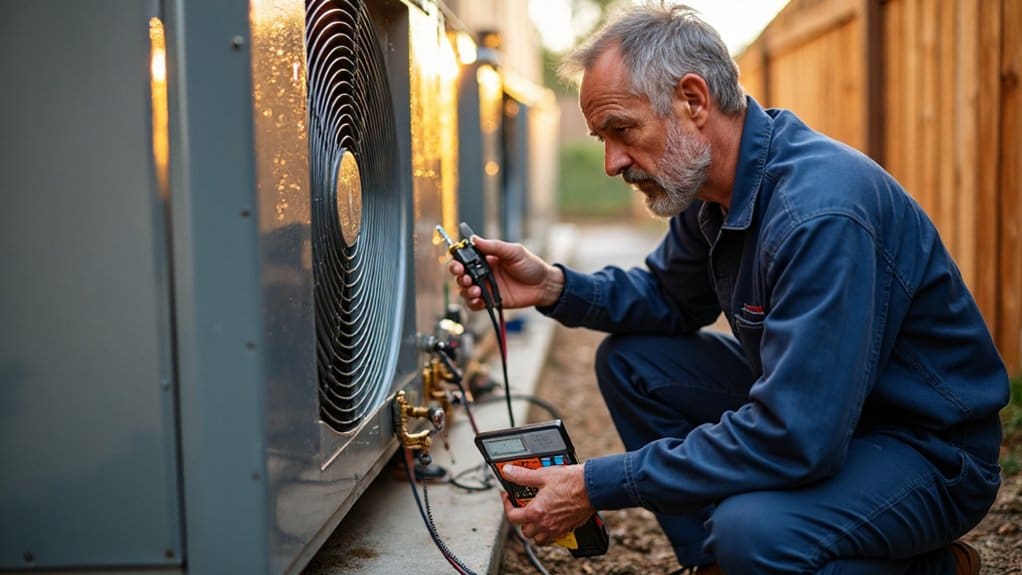
Your heat pump’s performance relies on consistent maintenance to prevent costly breakdowns. Replace air filters monthly during peak seasons, keep your outdoor unit clear of debris with two feet of clearance, and schedule professional tune-ups twice yearly. Watch for warning signs like unusual noises, frequent cycling, or reduced heating efficiency that signal immediate attention’s needed. Regular maintenance reduces energy consumption by 10-25% and extends your system’s lifespan considerably. Understanding these fundamentals will help you optimize your investment.
Key Takeaways
- Replace air filters monthly during peak seasons and maintain 2 feet clearance around outdoor unit for optimal airflow.
- Schedule professional tune-ups twice yearly in spring and fall to inspect refrigerant levels and electrical components.
- Keep outdoor unit clear of debris, vegetation, and ice buildup while ensuring indoor vents remain unblocked.
- Watch for warning signs like unusual noises, frequent cycling, or electrical issues that require immediate professional attention.
- Regular preventive maintenance reduces energy consumption by 10-25% and extends system lifespan to 10-15 years.
Understanding Your Heat Pump System Components
Before you can properly maintain your heat pump, you’ll need to understand its key components and how they work together. Your heat pump consists of two main units: the outdoor unit housing the compressor, condenser coil, and fans, plus the indoor unit containing the evaporator coil and air handler.
The refrigerant circulates between these units, absorbing and releasing heat to warm or cool your home. The reversing valve is what makes your heat pump unique—it changes refrigerant flow direction to switch between heating and cooling modes.
Electrical components like your thermostat, capacitors, and contactors control system operation and provide power. Proper airflow is essential for efficient operation, so your outdoor unit needs adequate clearance around it.
For effective maintenance, focus on regularly cleaning or replacing air filters, keeping the outdoor unit clear of debris, and scheduling professional inspections of electrical components and refrigerant levels.
Essential Routine Maintenance Tasks Every Homeowner Should Know
Taking care of your heat pump doesn’t require professional expertise for every task—you can handle several pivotal maintenance steps yourself to keep your system running efficiently. Replacing air filters stands as the most critical routine maintenance responsibility. You should clean or replace filters monthly during peak usage seasons to maintain suitable airflow and system performance.
Basic maintenance tasks include inspecting outdoor units for cleaning and debris removal. Clear leaves, grass clippings, and other obstructions from around the unit, maintaining at least two feet of clearance. These simple steps prevent airflow restrictions and improve efficiency.
Changing air filters regularly reduces strain on your system and extends its lifespan. Check thermostat settings and guarantee vents remain unblocked throughout your home.
While these maintenance tasks help preserve your heat pump’s performance, you should schedule a professional technician for thorough inspections and complex repairs. Filter changes and basic cleaning complement professional servicing perfectly.
Seasonal Care Guidelines for Optimal Performance
Since your heat pump operates year-round in varying weather conditions, you’ll need to adjust your maintenance approach with each season to maintain peak performance. Spring preparation involves scheduling professional service to inspect refrigerant levels and electrical components while cleaning or replacing filters after winter’s heavy usage.
Summer focuses on keeping your outdoor unit clear of vegetation and debris that restricts airflow. Clean the coils monthly during peak cooling season to maximize energy efficiency and system performance.
Fall requires another professional tune-up before heating season begins. Check thermostat calibration and clear any accumulated debris around the unit.
Winter maintenance centers on removing ice and snow buildup from the outdoor unit after storms. Maintain consistent indoor temperatures rather than dramatic setbacks, which strain your heat pump unnecessarily.
This seasonal preventative maintenance approach guarantees optimal airflow, protects critical components, and maintains energy efficiency. Regular maintenance tailored to each season’s demands keeps your system running smoothly while preventing costly repairs.
Warning Signs That Your Heat Pump Needs Professional Attention
Several unmistakable warning signs indicate when your heat pump requires immediate professional intervention rather than routine DIY maintenance.
Unusual noises like grinding, squealing, or banging sounds signal mechanical problems that need expert diagnosis. Frequent cycling on and off indicates thermostat issues or system inefficiencies that’ll worsen without professional attention.
Electrical issues such as tripped breakers, flickering lights during startup, or burning odors require immediate shutdown and professional assessment. Low refrigerant levels cause inadequate heating and cooling while potentially damaging your compressor.
When your system’s malfunctioning heat output can’t maintain comfortable temperatures despite proper thermostat settings, you’ll need professional diagnosis. Increased energy consumption reflected in higher utility bills often indicates declining efficiency.
Water damage around your unit suggests drainage problems or refrigerant leaks. Contact a professional for heat pump service immediately when you notice these symptoms. Most issues are repairable when caught early, preventing costlier replacements later.
Benefits of Regular Preventive Maintenance Vs Emergency Repairs
Your heat pump’s system performance improves dramatically with consistent care. Regular maintenance reduces energy consumption by 10-25% compared to neglected systems, delivering immediate cost savings on your monthly electric bills. Well-maintained units achieve efficient operation for 10-15 years—40% longer than systems without proper care.
Preventive maintenance catches minor issues before they escalate into major problems. Emergency repairs typically cost 2-3 times more than routine service visits, making scheduled maintenance a smart financial investment. You’ll extend your system lifespan considerably while avoiding unexpected breakdowns during extreme weather.
Regular maintenance guarantees reliable year-round comfort and provides peace of mind. Instead of dealing with costly emergency repairs when your heat pump fails, you’ll enjoy consistent energy-efficient operation and lower utility bills.
Professional Service: What to Expect During a Maintenance Visit
When you schedule professional heat pump maintenance, you can expect a thorough inspection that typically takes 1-2 hours to complete. Certified technicians arrive with special tools and training to perform extensive system diagnostics that you can’t accomplish alone.
During your annual service, professionals will inspect electrical connections, test safety controls, and examine all mechanical components for wear. Checking refrigerant levels requires specialized equipment and certification, ensuring your system operates at peak efficiency. Technicians also clean coils, replace filters, and lubricate moving parts as needed.
Professional heat pump maintenance includes calibrating your thermostat, testing system cycling, and identifying potential issues before they become costly problems. Your reliable heat pump service provider documents all findings and recommends any necessary adjustments or repairs.
Schedule professional maintenance twice yearly for best performance. When repair services become necessary, you’ll already have an established relationship with qualified technicians who understand your system’s history and specific needs.
Maximizing Energy Efficiency and Extending System Lifespan
Professional maintenance visits set the foundation for perfect heat pump performance, but the real benefits emerge through consistent care that maximizes your system’s efficiency and durability. Proper heat pump maintenance can slash your energy use by 10-25%, delivering substantial monthly savings while extending your system lifespan by up to 40%.
Your heat pump’s energy efficiency depends heavily on clean coils and unobstructed airflow. Dirty coils force your system to work harder, reducing heat transfer efficiency by 10-15%. Regular filter changes and coil cleaning maintain excellent airflow, while sealing ductwork can boost efficiency by an impressive 20%.
Annual service and professional tune-ups catch small issues before they become expensive problems. Technicians check refrigerant levels, inspect electrical connections, and address potential concerns like leaks or fan motor issues. This proactive approach helps your well-maintained heat pump operate efficiently for 10-15 years, vastly outlasting neglected systems.
Frequently Asked Questions
What Is Done During Heat Pump Maintenance?
You’ll get cleaning air filters, adjusting refrigerant levels, inspecting coils, testing electrical components, lubricating moving parts, checking thermostat operation, monitoring system performance, examining condensate drainage, verifying heat pump reversibility, and scheduling annual tune-ups.
How Much Does Heat Pump Maintenance Cost?
Like a telegraph operator calculating service fees, you’ll pay $75-150 per service call for typical maintenance. Your average annual cost runs $150-300 with professional tune-up expenses, including filter replacements and coil cleaning costs on your maintenance schedule.
What Is Preventive Maintenance on a Heat Pump?
You’ll perform preventive maintenance including coil cleaning procedures, refrigerant monitoring, sensor calibration, thermostat optimization, airflow adjustments, ductwork inspection, electrical safety checks, compressor performance evaluation, system efficiency upgrades, and noise reduction techniques to prevent breakdowns.
What Servicing Does a Heat Pump Need?
Like a well-oiled machine, you’ll need regular inspections, refrigerant charge checks, coil cleaning, filter replacement, thermostat calibration, blower motor inspection, ductwork inspection, compressor testing, electrical component checks, and airflow optimization for peak performance.
Conclusion
You’ve learned about essential components, mastered routine maintenance tasks, and discovered seasonal care requirements. You’ve identified warning signs, understood preventive benefits, and explored professional services. Now you’ll maximize efficiency, extend your system’s lifespan, and minimize costly repairs. Don’t wait for breakdowns—schedule regular maintenance today. Don’t ignore warning signs—address them promptly. Don’t skip seasonal preparations—complete them thoroughly. Your heat pump’s performance depends on consistent care, and your comfort depends on reliable operation.