
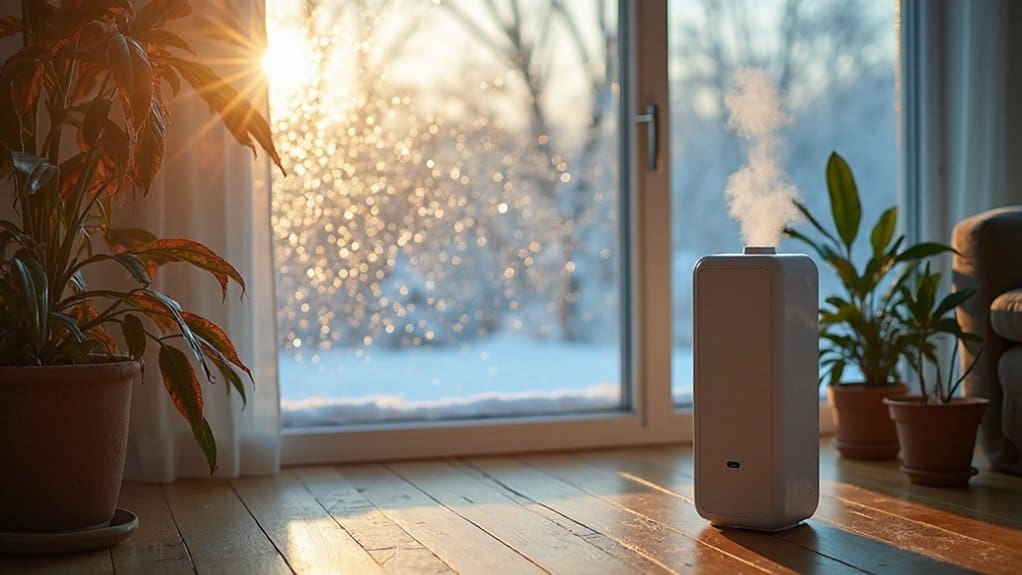
Missouri’s continental climate creates extreme seasonal humidity swings that dramatically impact your St. Louis home’s indoor air quality. During winter months, frigid outdoor air holds minimal moisture, and when your HVAC system heats this dry air, indoor humidity levels plummet to an uncomfortable 15-20%. This desert-like environment causes respiratory issues, dry skin, nosebleeds, and can damage wooden fixtures and flooring. Whole-house humidifiers restore proper moisture balance, protecting both your family’s health and home’s structural integrity throughout Missouri’s challenging climate extremes.
Key Takeaways
- Missouri’s continental climate creates extreme seasonal humidity swings that make maintaining comfortable indoor air quality challenging year-round.
- Cold winter air holds less moisture, and heating systems further strip humidity, often dropping levels below 30%.
- Low humidity causes health issues including respiratory problems, dry skin, nosebleeds, and worsened asthma or allergies.
- Dry air damages wooden fixtures, flooring, and furnishings through warping and cracking when humidity falls below 40%.
- Whole-house humidifiers maintain optimal 40-45% humidity levels, protecting both family health and home structural integrity.
Understanding Missouri’s Climate Challenges for Indoor Air Quality
While Missouri’s continental climate brings beautiful seasonal changes, it creates significant challenges for maintaining healthy indoor air quality in your St. Louis home. You’ll face dramatically different humidity conditions throughout the year that directly impact your comfort and health.
During winter months, Missouri’s cold, dry air naturally contains less moisture. When your heating system draws this outdoor air inside and warms it, the relative humidity drops even further. This process leaves your home’s humidity levels dangerously low, often falling below the recommended 30% threshold.
Your furnace compounds this problem by continuously cycling dry air through your living spaces, stripping away what little moisture remains. The result is uncomfortably dry air that affects everything from your respiratory system to your wooden furniture. Without proper humidity control, you’re fighting an uphill battle against Missouri’s climate extremes, making whole-home humidification essential for year-round comfort.
The Science Behind Humidity and Seasonal Weather Changes
As Missouri’s seasons shift, the fundamental physics of air moisture creates a natural cycle that dramatically affects your home’s humidity levels. When temperatures drop during St. Louis winters, cold winter air naturally holds less moisture than warm air. This scientific principle means outdoor humidity plummets as winter arrives, creating bone-dry conditions that infiltrate your living space.
Your home’s HVAC system compounds this problem by continuously drawing in that moisture-depleted outdoor air while heating it further. This process strips away even more moisture in the air, leaving your indoor environment uncomfortably dry. Meanwhile, summer brings the opposite challenge – hot, muggy conditions that can oversaturate indoor spaces.
Understanding this seasonal humidity rollercoaster explains why your skin feels parched in January but sticky in July. The dramatic swings between winter’s desert-like conditions and summer’s tropical humidity create ongoing comfort and health challenges that require active management to maintain suitable indoor humidity levels year-round.
How St. Louis Winters Create Problematic Dry Air Conditions
When St. Louis temperatures plummet during winter months, you’re dealing with more than just cold weather. The frigid air outside can’t hold much moisture, creating a cascade effect that impacts your indoor comfort. As your home’s HVAC system pulls in this dry outdoor air and heats it, the relative humidity drops even further.
This process strips moisture from the air inside your home, often pushing humidity levels well below the comfortable 40-45% range. You’ll start noticing the effects when indoor humidity falls below 30% – dry, cracked skin, frequent nosebleeds, and worsened asthma or allergy symptoms become common complaints.
The low humidity conditions persist throughout St. Louis’s extended winter season, making your home feel uncomfortable despite adequate heating. Without intervention, these problematic dry air conditions continue until spring arrives. That’s why many homeowners turn to a whole-house humidifier to restore proper moisture balance and eliminate winter’s harsh indoor environment.
Health Impacts of Low Humidity Levels in Missouri Homes
Beyond the immediate discomfort you feel from dry winter air, low humidity levels create serious health consequences that affect your entire household. When humidity levels drop below 30% in Missouri homes, you’ll notice increased respiratory issues affecting everyone from children to elderly family members. The dry air in your home allows flu viruses to survive longer and spread more easily between household members, making winter illness outbreaks more frequent and extreme.
You’ll also experience uncomfortable physical symptoms like dry skin, chapped lips, and painful nosebleeds. If anyone in your family suffers from asthma or allergies, low humidity levels will worsen their symptoms extensively. Existing conditions like eczema become more problematic when indoor air lacks adequate moisture. Chronic respiratory diseases also flare up more frequently in overly dry environments.
Maintaining humidity levels between 40-45% helps protect your family’s health by reducing virus transmission, alleviating respiratory distress, and preventing the cascade of problems caused by insufficient moisture in your living space.
Protecting Your Home’s Structure From Humidity-Related Damage
Your home’s structural integrity depends heavily on maintaining proper indoor humidity levels throughout Missouri’s extreme seasonal changes. When humidity in your home drops below 40%, wooden fixtures, flooring, and furnishings begin warping and cracking. Conversely, excessive moisture above 60% promotes mold growth that damages drywall, paint, and building materials.
You’ll need to monitor your home’s humidity levels using a hygrometer to determine when action’s necessary. During Missouri’s dry winters, low humidity threatens your investment in hardwood floors, custom cabinetry, and wooden furniture. A whole house humidifier integrated with your home’s HVAC system provides consistent moisture control throughout every room.
This all-encompassing approach prevents costly structural repairs and extends your home’s lifespan. Rather than relying on portable units that only treat single rooms, whole-home solutions maintain ideal conditions year-round. Proper humidity management protects both your property’s value and your valuable furnishings from Missouri’s challenging climate extremes.
Whole-House vs. Portable Humidifiers: What Works Best for St. Louis
While portable humidifiers offer a quick solution for individual rooms, St. Louis homeowners need thorough moisture control throughout their entire home. Whole-house humidifiers integrate seamlessly with your HVAC system, delivering consistent humidity levels to every room without the limitations of portable units.
You’ll save time and energy with central humidifiers that automatically maintain your desired humidity level. Portable humidifiers require constant monitoring, refilling, and repositioning, making them impractical for covering your entire home. Running multiple portable units becomes expensive and inefficient compared to a single whole-house system.
Professional installation guarantees proper sizing for the St. Louis climate and safe integration with your HVAC system. This prevents potential issues while optimizing performance for your home’s specific needs.
Your investment in whole-house humidifiers pays off through improved indoor air quality, reduced heating costs, and better protection for wood furnishings—essential benefits for weathering Missouri’s harsh winters.
Optimal Humidity Levels for Year-Round Comfort and Safety
Maintaining indoor humidity between 30-50% creates the perfect balance for your St. Louis home’s comfort and safety throughout the year. You’ll protect both your health and your home’s furnishings when you keep levels of humidity within this ideal range.
Your home’s HVAC system, particularly traditional gas furnaces, can considerably lower indoor moisture by pulling air from inside and replacing it with drier outdoor air. This makes it essential to use a humidifier during Missouri’s harsh winter months when outdoor air contains minimal moisture.
You can monitor your home’s humidity levels using a hygrometer or perform a simple ice cube test to detect overly dry conditions. When humidity drops below 30%, you’ll notice static electricity, dry skin, and potential damage to wood furniture. Conversely, levels above 50% invite mold growth and moisture problems. Sealed combustion furnaces help maintain better humidity balance by avoiding the air exchange issue common with traditional systems.
Summer Humidity Management: Balancing Moisture With Air Conditioning
St. Louis summers present unique challenges for managing your home’s humidity levels alongside air conditioning systems. While your air conditioner works to cool and dehumidify indoor air, adding moisture through humidifiers might seem counterproductive. However, maintaining proper humidity in the air between 40-60% can actually make your space feel cooler and more comfortable.
Different types of central humidifiers can help you attain this balance effectively. When humidity drops too low, you’ll feel less comfortable even at cooler temperatures, forcing your air conditioner to work harder. Conversely, running humidifiers excessively during summer can strain your cooling system, potentially causing repair issues.
The key is active monitoring with a hygrometer and strategic adjustments. Proper humidity control secures efficient air conditioning operation while reducing energy costs. This balanced approach offsets humidifier operating expenses through overall energy savings, creating year-round comfort without overworking your HVAC system.
Energy Efficiency Benefits of Proper Humidity Control Systems
Proper humidity control systems deliver substantial energy savings that extend far beyond simple comfort improvements. When you maintain indoor humidity between 40-60%, you’ll reduce the workload on your home’s HVAC system considerably. Your air conditioning won’t struggle as hard to cool properly humidified spaces, since humid air feels cooler at higher thermostat settings.
This means you can set your thermostat a few degrees higher while maintaining the same comfort level, directly cutting your energy bills. Dry air creates additional problems that waste energy – wooden fixtures shrink and warp, creating drafts and air leaks that force your heating and cooling system to work overtime.
Installing a whole-home humidifier integrated with your HVAC system provides more efficient humidity control than scattered portable units. Regular maintenance of both your humidifier and heating and cooling equipment guarantees peak performance year-round, maximizing your energy savings throughout Missouri’s variable climate conditions.
Professional Installation and Maintenance for Missouri Homeowners
Three critical factors determine whether your whole-home humidifier will deliver the energy savings and comfort benefits you’re expecting: expert installation, regular maintenance, and proper sizing for your specific home. Professional installation guarantees your humidifier integrates seamlessly with your home’s HVAC system while preventing costly failures of pipes, joints, and seals that can occur with improper setup.
Experienced contractors like Scott-Lee Heating Company offer free consultations to determine the right humidification system for your home. They’ll assess your square footage, existing ductwork, and specific moisture needs to recommend the ideal equipment size and type.
Regular maintenance keeps your system running efficiently throughout Missouri’s demanding weather conditions. Professional services include routine inspections, parts replacement, and performance adjustments. You can also rely on specialists for new equipment estimates, repairs, or complete system replacements when needed, ensuring your home maintains perfect humidity levels year-round.
Frequently Asked Questions
Do I Need a Dehumidifier in Missouri?
You’ll likely need a dehumidifier during Missouri’s humid summers to maintain ideal humidity levels. Place it in basements or damp areas. Seasonal humidity changes require different humidity control methods throughout the year for comfort.
Why Does St. Louis Get so Humid?
You’ll practically swim through St. Louis air because seasonal rainfall patterns, proximity to large bodies of water, air mass influences from the Gulf, and the urban heat island effect create incredibly muggy conditions that’ll leave you drenched.
What Are the Symptoms of Too Much Humidity in Your House?
You’ll notice mold growth on walls, experience uncomfortable breathing, and face increased respiratory issues. High humidity can also lead to bacterial infections, musty odors, condensation on windows, and that sticky, clammy feeling throughout your home.
What Happens if I Don’t Use a Humidifier?
Without a humidifier, you’ll experience dry skin, chapped lips, and worsened respiratory issues like asthma. Your wooden furniture will crack and warp, static electricity increases, and heating costs rise as dry air feels colder.
Conclusion
You can’t afford to ignore humidity control in your St. Louis home. Take the Johnson family from Webster Groves—they installed a whole-house humidifier after their hardwood floors developed gaps and their son’s asthma worsened during winter. Within weeks, they noticed fewer respiratory issues and no new floor damage. Don’t wait until you’re facing costly repairs or health problems. Invest in professional humidity management to protect your family and home year-round.