
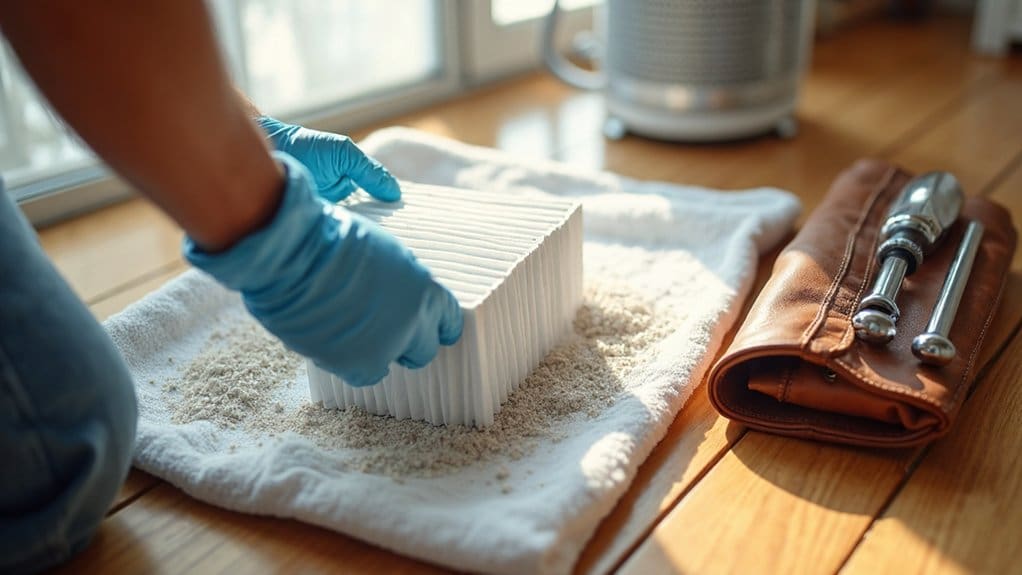
Your air filtration system loses effectiveness when dirty filters reduce efficiency, malfunctioning purifiers fail to clean air, or ductwork leaks bypass filtration entirely. You’ll notice increased allergy symptoms, visible dust buildup, unusual HVAC noises, and persistent respiratory issues despite regular maintenance. HEPA filters need replacement every 6-12 months, while dehumidifiers require proper humidity settings and clean coils to control mold and dust mites. Understanding these repair solutions will help you optimize your home’s air quality.
Key Takeaways
- Replace dirty air filters every 6-12 months to maintain 99.97% particle removal efficiency for optimal allergy relief.
- Repair ductwork leaks to prevent unfiltered air from bypassing your filtration system and triggering respiratory symptoms.
- Clean clogged dehumidifier filters and maintain 30-50% humidity levels to control mold growth and dust mites.
- Address HVAC system malfunctions causing unusual noises or odors that compromise indoor air quality and worsen allergies.
- Schedule professional inspections when persistent allergy symptoms occur despite regular filter maintenance and replacements.
Common Air Filtration System Problems That Impact Allergy Relief
When your air filtration system isn’t functioning properly, you’ll notice allergy symptoms becoming more frequent and severe. Several common issues can compromise your HVAC system’s ability to maintain good air quality and protect your respiratory health.
Dirty air filters represent the most frequent problem, drastically reducing filtration efficiency and allowing allergens to circulate freely throughout your home. When air filters become clogged, they can’t capture pollen, dust mites, and pet dander effectively.
Malfunctioning air purifiers and electronic air cleaners also fail to trap microscopic particles that trigger allergic reactions. Poor air circulation results from improperly sized or installed systems, creating stagnant areas where allergens accumulate.
Ductwork leaks allow unfiltered air to bypass your filtration system entirely, undermining its effectiveness. Without proper filter maintenance and regular replacements, even the best systems lose their capacity to remove allergy-inducing particles, leaving you vulnerable to respiratory irritants.
Signs Your HVAC Air Filter Needs Professional Repair or Replacement
Recognizing the warning signs of a failing HVAC air filter can save you from costly repairs and worsening indoor air quality. When your air filter becomes clogged, it restricts airflow and forces your HVAC system to work harder, reducing energy efficiency and increasing utility costs.
Visual inspection reveals the most obvious sign: dust buildup on the filter surface. Replace filters every 1-3 months to maintain proper filtration. You’ll also notice increased allergy symptoms like sneezing, coughing, or breathing difficulties when your filter can’t effectively remove airborne particles that impact respiratory health.
Listen for unusual noises from your HVAC system or detect strange odors circulating through your home. These indicate compromised filtration performance. If you’re experiencing persistent allergy symptoms despite regular filter replacement, consult an HVAC professional. They’ll assess your system’s condition and recommend appropriate repairs or upgrades to restore ideal air quality and protect your family’s health.
HEPA Filter Maintenance and Repair for Maximum Allergen Removal
Why settle for standard filtration when HEPA filters deliver superior allergen removal that transforms your indoor air quality? These specialized filters trap 99.97% of particles from the air as small as 0.3 microns, including dust, pollen, and mold spores that trigger allergy and asthma symptoms.
You’ll need to replace your HEPA filters every 6-12 months to maintain peak performance. When filters clean properly, they improve indoor air quality by up to 90% compared to standard options. However, clogged or damaged filters reduce airflow and compromise your air purification system’s effectiveness.
Professional inspection guarantees your air cleaner operates at maximum efficiency. Technicians can identify when filters trap particles beyond capacity and require replacement. They’ll also check for proper sealing and airflow restrictions.
Don’t let neglected maintenance undermine your investment in high-quality air. A thorough approach to HEPA filter care protects your family from indoor pollutants while maximizing your system’s allergen-fighting capabilities.
Troubleshooting Dehumidifier Issues to Control Mold and Dust Mites
Although dehumidifiers play an essential role in maintaining ideal humidity levels below 50% to prevent mold growth and dust mite proliferation, these units frequently develop problems that compromise their effectiveness.
When your dehumidifier stops working properly, dust mites and mold spores quickly multiply in your indoor environment, triggering allergies and worsening symptoms. Start troubleshooting by checking the water collection tank – if it’s full, the unit won’t operate. Clean clogged air intake filters monthly, as blocked airflow reduces moisture removal and allows airborne particles to circulate freely.
If your dehumidifier runs constantly without lowering humidity, inspect the coils for ice buildup or dirt accumulation. Replace damaged drain hoses that leak water back into your space. Check humidity settings – they should stay between 30-50% to relieve symptoms effectively.
When integrated with your filtration system, properly functioning dehumidifiers drastically improve indoor air quality for people with asthma or allergies by controlling moisture-dependent allergens.
Humidifier Repair Solutions for Optimal Indoor Air Quality
Three critical components determine whether your humidifier maintains ideal indoor air quality: the water tank, filtration system, and moisture distribution mechanism. When these parts malfunction, you’re not just losing humidity control—you’re potentially creating breeding grounds for mold, bacteria, and dust mites that trigger allergy and respiratory symptoms.
Professional repair services target mineral buildup, leaks, and control failures that compromise your humidifier’s effectiveness. They’ll restore proper moisture output to achieve the suitable 30-55% humidity range that prevents allergen proliferation while maintaining comfortable indoor air quality.
Consider these upgrade benefits for enhanced respiratory health:
- Automatic shut-off prevents dangerous over-humidification that creates mold-friendly environments
- Antimicrobial protection actively fights bacteria growth in water reservoirs
- Easy-to-clean designs reduce maintenance burden while improving filtration efficiency
- High-efficiency moisture distribution guarantees consistent humidity throughout your home
Regular maintenance, including filter replacements and thorough cleaning, extends your humidifier’s lifespan while protecting your family’s respiratory wellness.
Professional Duct Cleaning and System Inspection Benefits
When dust, pet dander, and microscopic debris accumulate in your home’s ductwork, they don’t just sit there quietly—they’re continuously circulated throughout every room, compromising the air your family breathes daily. Professional duct cleaning removes up to 40 pounds of these contaminants from your average home’s HVAC systems, dramatically improving air quality for those suffering from allergies.
Regular system inspection by qualified technicians identifies efficiency issues that compromise your air filtration performance. They’ll detect problems before they worsen respiratory health conditions or reduce your system’s effectiveness against allergens and pollutants.
Proper duct sealing enhances air circulation, boosting filtration efficiency throughout your home. Upgrading to HEPA filters captures 99.97% of particles as small as 0.3 microns, while integrating air purifiers with your HVAC system provides thorough filtration and distribution. This combination offers superior protection for family members with asthma or allergies, creating healthier indoor environments.
When to Call Experts for Air Purification System Repairs
How do you know if your air purification system needs professional repair attention? Several warning signs indicate it’s time to contact certified HVAC professionals before your family’s health suffers.
Watch for these critical indicators that demand immediate action:
- Reduced airflow that leaves rooms stuffy and uncomfortable, forcing your loved ones to breathe stagnant air
- Unusual noises like grinding or rattling that signal mechanical failure threatening your system’s lifespan
- Persistent odors that won’t disappear, potentially exposing your family to harmful contaminants
- Humidity levels that fluctuate wildly, creating breeding grounds for mold and allergens
Don’t attempt DIY repairs—you’ll risk voiding warranties and compromising safety. Expert technicians identify root causes while restoring full filtration capabilities. Prompt repairs guarantee optimal performance and energy efficiency, protecting both your investment and indoor air quality. Professional repair services maintain the healthy environment your family deserves.
Frequently Asked Questions
Will Changing the Air Filter Help With Allergies?
Yes, you’ll reduce allergens by following proper filter replacement schedules and choosing high filter efficiency ratings. However, you’ll need detailed allergen identification and possible HVAC system upgrades for complete allergy relief.
Do Air Purifiers Help With Respiratory Issues?
You’ll breathe easier knowing air purifiers markedly improve indoor air quality through superior HEPA filter performance, delivering allergen elimination and particulate matter reduction that provides respiratory improvement and allergy symptom relief for your home.
What Type of Air Filter Is Best for Allergies?
You’ll find HEPA filter performance beats other options for allergies, capturing 99.97% of particles. Carbon filter effectiveness handles odors, while pleated filter quality with high efficiency ratings provides excellent protection requiring regular disposable filter replacement.
Do Air Purifiers Really Help With Allergies and Asthma?
Like David conquering Goliath, you’ll find air purifiers truly combat allergies and asthma through efficient air circulation, HEPA filter effectiveness for pollen removal, dust mite reduction, pet dander mitigation, and mold spore filtration—delivering real respiratory relief.
Conclusion
You can’t put a price on breathing easy, and as they say, an ounce of prevention is worth a pound of cure. Don’t wait until you’re wheezing or sneezing to address your air filtration problems. Regular maintenance keeps allergens at bay, while timely repairs guarantee your system’s running at peak performance. When you’re dealing with persistent respiratory issues despite your efforts, it’s time to call professional technicians who’ll restore your home’s air quality.