
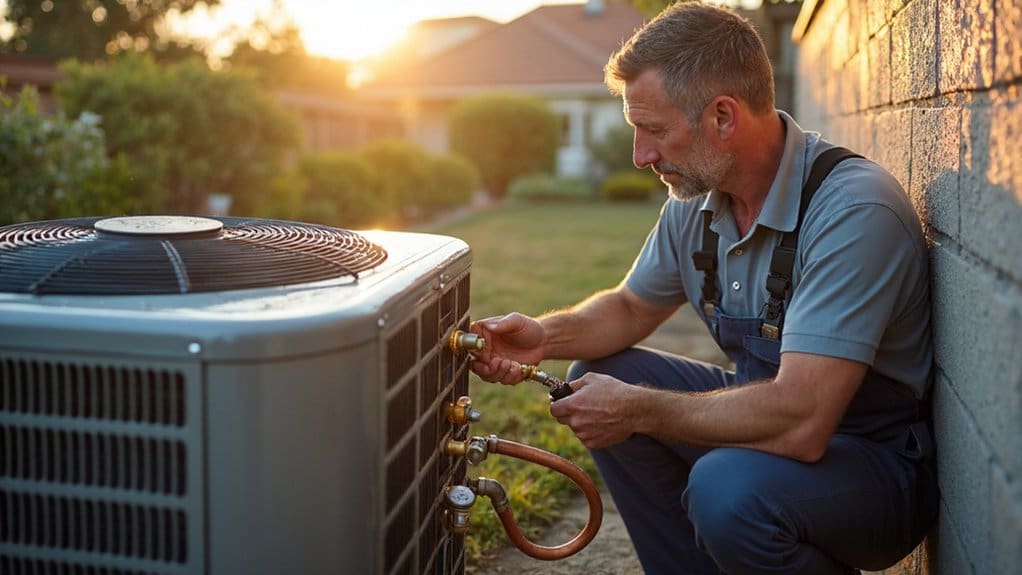
Installing a new air conditioning system requires you to first choose between central air, ductless mini-splits, window units, portable units, or geothermal systems based on your home’s layout. You’ll need to measure your square footage, assess insulation quality, and calculate BTU requirements using 20 BTUs per square foot as your baseline. Professional installation guarantees proper sizing, ductwork modifications, electrical connections, and ideal outdoor unit placement for maximum efficiency and performance throughout the process.
Key Takeaways
- Choose the right system type (central, mini-split, window, or portable) based on your home’s layout and cooling needs.
- Calculate proper BTU capacity using 20 BTUs per square foot, adjusting for insulation, occupancy, and sun exposure.
- Position outdoor units away from direct sunlight with adequate clearance and proper drainage on level ground.
- Hire licensed professionals for installation, electrical work, ductwork modifications, and comprehensive system testing.
- Maintain efficiency through regular filter changes, biannual professional service, and programmable thermostat installation.
Understanding Different Types of Air Conditioning Systems
When choosing an air conditioning system for your home, you’ll encounter several distinct options, each designed to meet specific cooling needs and spatial requirements. Central air conditioning systems excel at distributing cool air through existing ductwork, delivering superior temperature control and indoor air quality across multiple rooms simultaneously.
Ductless mini-split systems offer targeted cooling without requiring extensive HVAC installation, making them perfect when you need zone-specific climate management. These systems provide excellent energy efficiency while maintaining precise temperature control in individual spaces.
Window units represent the most accessible option for apartments and smaller areas, requiring minimal installation effort while delivering adequate cooling capacity for single rooms.
Portable air conditioners give you flexibility to move cooling power wherever it’s needed most, though they typically consume more energy than fixed installations.
Geothermal systems harness the earth’s stable underground temperatures, offering exceptional long-term energy efficiency despite higher upfront installation costs.
Assessing Your Home’s Cooling Requirements and Space
Before you can select the ideal air conditioning system, you’ll need to conduct a thorough assessment of your home’s unique cooling demands and physical characteristics.
Start by measuring your home’s square footage, as this directly impacts the size and type of AC unit required. The layout of the space profoundly affects cooling needs—high ceilings, large windows, and open floor plans all influence your system requirements. Consider whether you need a multi-zone or ductless system based on your home’s room arrangement and usage patterns.
Evaluate these key factors during your assessment:
- Insulation quality – Well-insulated homes retain cool air more effectively
- Heat-generating appliances or electronics – These increase your cooling load
- Window size and orientation – South-facing windows create additional heat gain
- Ceiling height – Rooms above 8 feet require larger capacity units
- Home occupancy patterns – More people generate more heat
Professional contractors use Manual J load calculation methods to determine precise cooling requirements for the best system sizing.
Calculating BTU Capacity and System Sizing
Once you’ve assessed your home’s physical characteristics, you’ll need to calculate the precise BTU (British Thermal Unit) capacity required to cool your space effectively. Start with the baseline of 20 British Thermal Units per square foot, then adjust for additional factors affecting your home’s cooling load.
Add extra BTUs for multiple occupants, excessive sun exposure, and poor insulation. High ceilings, large windows, and open floor plans also increase requirements. An accurate load calculation prevents costly mistakes when selecting the right size unit for your new central AC system.
Oversized units cause short cycling, reducing the Seasonal Energy Efficiency Ratio and compromising proper ventilation. Undersized systems struggle to maintain comfortable temperatures. Consider your existing ductwork capacity when determining the suitable size unit. Obtaining the right size guarantees your home’s cooling system operates as an energy efficient solution that maintains comfort without wasting electricity or money.
Selecting the Optimal Location and Placement
After determining your system’s BTU requirements, you’ll need to identify the perfect spot for your outdoor condenser unit. Strategic placement directly impacts your system’s efficiency and longevity.
Position your outdoor unit away from direct sunlight, preferably in a shaded area. This reduces workload and improves cooling performance. Maintain adequate clearance around the unit—typically three feet on sides and five feet above—guaranteeing proper heat dissipation and airflow.
Consider these essential placement factors:
- Keep the area around your unit free from debris, vegetation, and obstructions
- Avoid locations near heat-generating appliances like dryers or grills that force your system to work harder
- Choose accessible spots for routine maintenance and filter changes
- Check local building codes regarding setback requirements from property lines
- Guarantee level ground with proper drainage to prevent water damage
Smart placement reduces energy costs, extends equipment life, and minimizes repair needs while maintaining ideal comfort levels.
Professional Installation Process and Timeline
When you hire certified HVAC professionals, they’ll execute a systematic installation process that transforms your home’s climate control within one to two days. The timeline depends on your system’s complexity and your home’s layout requirements.
Your technicians will start by performing a thorough load calculation to determine the correct air conditioning unit size for ideal performance. This guarantees your system efficiently cools your space without wasting energy.
Next, they’ll install or modify existing ductwork to assure proper airflow throughout your home. Electrical work often follows, which may include upgrading your panel or wiring to support your new unit’s power requirements.
The installation process concludes with extensive testing to verify everything operates correctly. Your HVAC professionals will conduct a detailed walkthrough, explaining your system’s features, controls, and essential maintenance procedures. This ensures you understand how to operate your new air conditioning system effectively and maintain its peak performance for years to come.
Maintenance Requirements and Performance Optimization
While your new air conditioning system delivers immediate comfort, its long-term performance depends entirely on how well you maintain it. Proper maintenance transforms your investment into years of reliable service while maximizing energy efficiency and indoor air quality.
Essential maintenance practices guarantee optimal performance:
- Replace your air filter every 1-3 months to maintain proper airflow and indoor air quality
- Schedule professional maintenance twice yearly for refrigerant level inspection and coil cleaning
- Invest in duct sealing to prevent efficiency losses up to 30% from air leaks
- Install a programmable thermostat to automate temperature control and reduce cooling costs by 10%
- Keep your outdoor unit free from debris with adequate clearance for unrestricted airflow
These maintenance requirements aren’t optional—they’re investments in your system’s longevity. Professional maintenance catches minor issues before they become costly repairs, while regular air filter replacement and outdoor unit care maximize daily performance and minimize energy consumption.
Frequently Asked Questions
What Is the $5000 AC Rule?
The $5000 AC rule’s your budgeting baseline for central air installation, but you’ll need HVAC contractor qualifications assessment, unit sizing requirements evaluation, energy efficiency considerations, and ductwork modifications estimates for accurate pricing determination.
What Should Be Done Before Installing the Air Conditioning Unit?
Don’t let installation nightmares haunt you! You’ll need to evaluate energy efficiency, research qualified contractors, obtain necessary permits, inspect existing ductwork, consider system capacity, choose appropriate placement, and schedule professional consultation before installing.
What Is the 3 Minute Rule for Aircon?
You’ll wait three minutes between thermostat adjustments to prevent system cycling issues. This protects your unit’s compressor while maintaining ideal fan speed and energy efficiency ratings during periodic maintenance schedule operations.
Conclusion
You’ve now got the essential knowledge to make informed air conditioning decisions for your home. Remember, a properly installed system can slash your energy bills by up to 40% compared to outdated units. Don’t let another sweltering summer drain your wallet and comfort. Take action now—assess your needs, choose the right system, and invest in professional installation. Your future self will thank you every time you walk into your perfectly cooled home.