
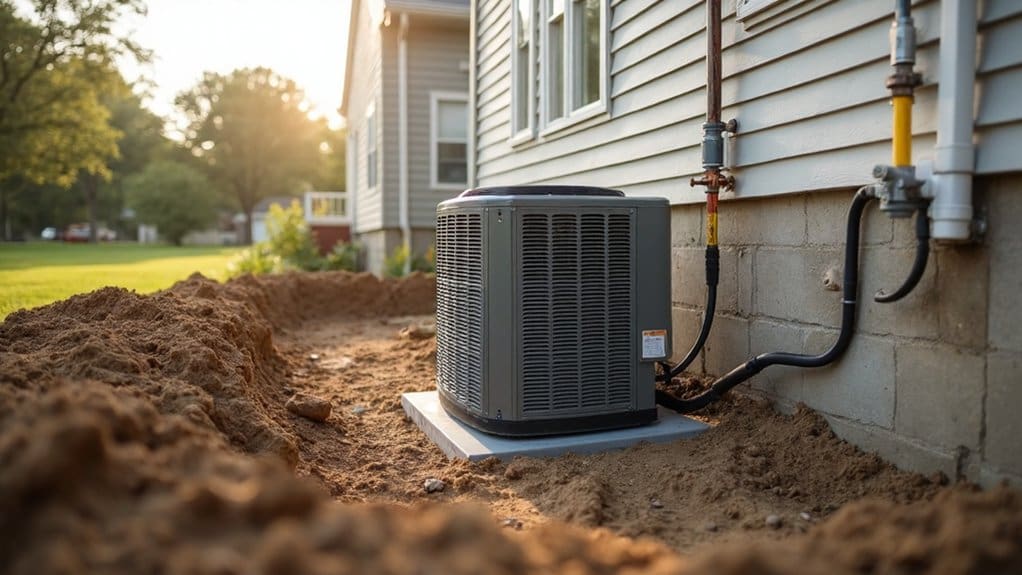
You’ll need specific permits for heat pump installations, with requirements varying by system type. Closed-loop systems require heat pump permits, while open-loop systems need water well permits in addition to general HVAC contractor permits. Your equipment must meet UL safety standards, and electrical work requires professional installation with proper circuit protection. Permits expire annually and must be displayed during work. Foundation requirements, proper clearances, and condensate disposal systems must comply with local building codes for successful project completion.
Key Takeaways
- Heat pump installations require specific permits that match the technology type, with permits expiring annually and requiring renewal.
- Electric heat pumps must meet UL 1995 or UL/CSA/ANCE 60335-2-40 safety standards and listing requirements.
- Licensed electricians must handle all wiring installations, including properly sized circuit breakers, disconnects, and grounding systems.
- Outdoor equipment needs weather-resistant listing and proper foundations that prevent vibration, settlement, and water accumulation issues.
- Missouri landowners can perform DIY well work without state permits, though professional consultation remains recommended.
Understanding Heat Pump Permit Types and Applications
Before you begin any heat pump installation project, you’ll need to secure the appropriate permits based on your specific system type and installation requirements. Understanding which permit applies to your situation prevents delays and guarantees compliance with local regulations.
For most heat pump installations, you’ll need a heat pump permit that covers drilling, plugging, and repairing heat pump wells. This permit excludes open-loop systems, which require different documentation. The permit also authorizes construction of trenched systems and loop installations that your heat pump system depends on.
If you’re installing an open-loop heat pump system that draws water from wells, you’ll need a water well permit instead. This permit covers drilling, repairing, reconstructing, and plugging wells for open-loop supply and return systems.
Unlike older air conditioner systems that are no longer supported by simplified permitting processes, modern heat pump installations require specific permits that match your chosen technology and installation method.
General Permit Requirements for HVAC Contractors
When working as an HVAC contractor in Missouri, you’ll need either a non-restricted or restricted permit depending on your specific role and responsibilities. If you’re drilling, constructing, repairing, reconstructing, plugging wells, or installing pumps and equipment, you’ll require a non-restricted permit. This covers the primary installation work for geothermal heat pump systems.
Restricted permits apply when you’re contracting or sub-contracting work regulated by Missouri Well Construction Rules. Whether you’re the primary contractor or serve as an on-site drilling supervisor, you’ll need this permit type to legally perform regulated activities.
Remember that all permits expire one year after issuance, so you’ll need to renew annually to maintain compliance. Plan your renewal schedule accordingly to avoid work interruptions. Unlike other browsers such as Internet Explorer, modern permitting systems typically offer online applications for faster processing. Keep your permit documentation readily available during inspections and maintain current copies for your records.
Landowner Rights and Self-Installation Guidelines
Missouri landowners enjoy significant flexibility when it comes to well construction on their own property. Under section 256.607(2), RSMo, you’re permitted to handle various well-related tasks without obtaining permits from state authorities.
Your well construction options as a property owner include:
- Drilling new wells on your land
- Repairing and reconstructing existing wells
- Plugging wells that are no longer needed
This regulatory framework gives you considerable autonomy over DIY well maintenance projects. You can perform construction, repair, reconstruction, or plugging work without maneuvering complex permit processes that typically apply to commercial contractors.
However, while Missouri’s local well regulations grant you these rights, you should still safeguard your work meets safety standards and doesn’t impact neighboring properties. Consider consulting with professionals when tackling complex installations, even though you’re not legally required to hire licensed contractors for well work on your personal property.
Equipment Specifications and Safety Standards
Once you’ve determined your installation approach, your heat pump equipment must meet specific safety certifications before you can proceed. All electric heat pumps require listing and labeling to UL 1995 or UL/CSA/ANCE 60335-2-40 standards. These certifications guarantee your equipment meets rigorous safety requirements for electrical components and operational performance.
Your heat pump’s refrigeration cooling equipment must comply with Section M1411 provisions, which govern refrigerant recovery procedures and system integrity. You’ll need to maintain proper clearances around your equipment to allow maintenance access and assure safe operation.
Follow manufacturer’s instructions precisely during installation, as they’re developed to meet safety standards and local code requirements. During commissioning and testing, verify all safety systems function correctly before final startup. Proper startup and operational safety protocols protect both your investment and household safety. These specifications aren’t optional – they’re mandatory requirements that protect you and warrant your system operates reliably for years.
Exterior Installation Requirements and Foundation Guidelines
After completing your equipment safety certifications, you’ll need to address specific requirements for outdoor heat pump installations. Your equipment must be listed and labeled specifically for outdoor use to guarantee proper weather resistance and performance.
Foundation requirements are critical for long-term operation. You’ll need to design supports that prevent excessive vibration, settlement, or movement while complying with Section M1305.1.4.1. Proper foundations also support drainage requirements that prevent water accumulation around your unit.
Key installation considerations include:
- Following manufacturer’s instructions and equipment listing specifications exactly
- Installing equipment above flood levels in designated flood hazard areas per Section R322.1.6
- Ensuring adequate clearances for seasonal maintenance access and airflow
Your heating load calculations will determine ideal placement for efficiency. Remember that exterior installations face unique challenges from weather exposure, so you’ll need accessible locations for routine seasonal maintenance while maintaining structural integrity through proper foundation design.
Access and Clearance Standards for Heat Pump Systems
While proper foundation work establishes your heat pump’s structural stability, maintaining adequate access and clearance around your system guarantees you can perform essential HVAC system maintenance and service operations throughout its lifespan.
You must follow manufacturer specifications and local codes when establishing clearances around your unit. These requirements aren’t arbitrary—they’re designed to provide sufficient space for heat pump filter cleaning, component replacement, and routine adjustments. Without proper clearances, you’ll struggle to access critical parts during servicing.
Your ductwork connections require special attention, ensuring both proper airflow and easy access for future maintenance needs. Additionally, you’ll need adequate space for heat pump lubrication of moving parts and electrical component servicing.
Don’t forget thermostat placement requirements. Install your thermostat in the same room as your heat pump register to confirm accurate temperature readings and effective system performance. This strategic positioning prevents temperature fluctuations that could compromise your system’s efficiency.
Refrigerant Handling and Condensate Management
When your heat pump system circulates refrigerant and produces condensation during operation, you’ll need to verify both substances are handled according to strict safety and disposal standards.
Your refrigerant must conform to ANSI/ASHRAE 34 provisions, and proper refrigerant recovery procedures are essential during maintenance or system replacement. You can’t install cooling coils upstream from heat exchangers unless they’re specifically listed and labeled for that configuration.
For condensate management, you must address these critical requirements:
- Condensate drain sizing must accommodate proper flow with a minimum 1% slope toward approved disposal locations
- Condensate disposal methods require routing to acceptable drainage points that meet local codes
- Secondary drain systems must alert occupants when primary drains become blocked
You’ll need to configure your condensate drain lines for easy blockage clearing and maintenance access without cutting the lines. This accessibility validates long-term system reliability and compliance with installation standards.
Electrical and Connection Code Compliance
You must install appropriate electrical protection devices, including properly sized circuit breakers and disconnects. These safety components protect your heat pump from electrical faults and provide necessary isolation points for maintenance. Your electrical circuits require professional sizing based on equipment specifications and NEC requirements.
Thermostat wiring techniques demand precision to guarantee reliable communication between your indoor and outdoor units. You’ll need a licensed electrician to handle all wiring installations and local building authority inspections to validate compliance.
Don’t forget proper grounding and bonding throughout your heat pump system. Additionally, refrigerant line connections between units must follow manufacturer’s instructions exactly to avert costly leaks and system failures.
Permit Expiration and Display Requirements
How long do your heat pump installation permits remain valid? All permits issued will expire exactly one year after issuance, so you’ll need to plan accordingly for any ongoing projects that extend beyond this timeframe.
You must properly display and carry your permits at all times:
- Personal permits – Carry your permit card with you during all drilling, plugging, and repair work
- Vehicle permits – Place machine and vehicle cards in each registered vehicle you’re using
- Work site permits – Keep permits accessible for construction of trenched systems and loop installations
Understanding permit renewal process requirements helps you maintain continuous authorization for your heat pump projects. While permits cover drilling, plugging, repairing wells, and installing loop systems, you should also research permit transfer policies if ownership changes occur. Don’t forget to budget for permit application fees when planning your installation costs, as these expenses directly impact your project’s overall financial requirements.
Frequently Asked Questions
Do I Need Permission to Install a Heat Pump?
You’ll need permits from your local building department for heat pump installation. Check local zoning laws, obtain utility company approval for electrical connections, and review home owners association guidelines before proceeding with installation.
What Is the Minimum Clearance Around a Heat Pump?
You’ll need 24 inches minimum clearance on all sides around your heat pump. This spacing guarantees proper ventilation requirements, maintains energy efficiency, and reduces noise levels while allowing adequate airflow and service access.
Conclusion
Your heat pump installation journey resembles traversing a complex maze—each permit, code, and regulation serves as a vital waypoint guiding you toward success. You’ve now mapped the essential pathways through contractor requirements, equipment standards, and safety protocols. Don’t let your permit expire like a forgotten lighthouse beacon. Display it proudly as your beacon of compliance, ensuring your investment doesn’t become a costly detour requiring expensive backtracking through regulatory waters.