
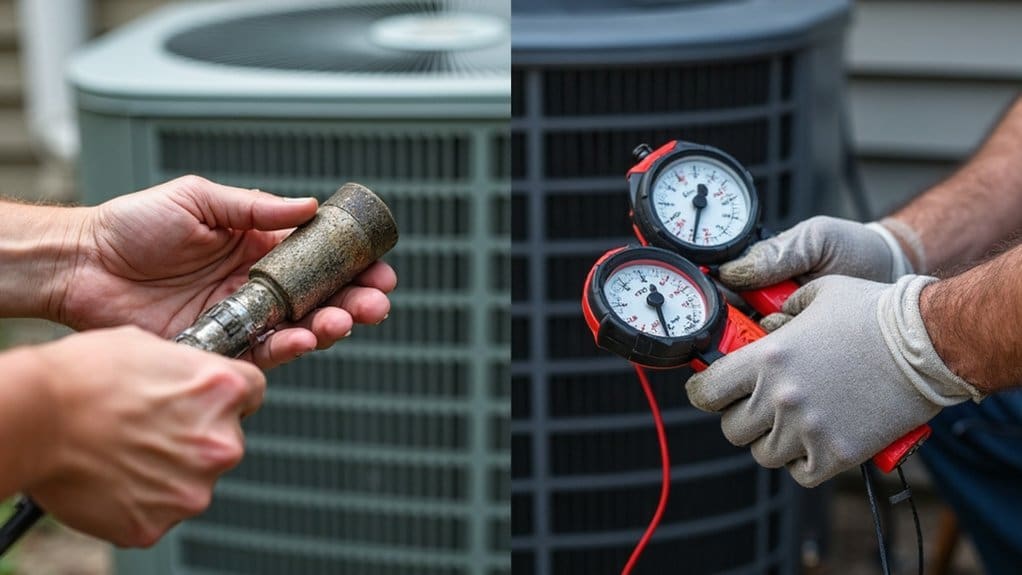
You can handle basic AC maintenance like changing filters monthly, clearing outdoor unit debris, and inspecting condensate drains quarterly to save $50-100 annually. However, you’ll need professional help for refrigerant leaks, strange noises, electrical issues, or complex repairs that could void warranties. DIY filter changes cost $5-20 versus $75-150 professionally, but improper repairs often create expensive problems. Strategic maintenance timing maximizes your investment while ensuring ideal performance and discovering when each approach delivers the best value.
Key Takeaways
- Homeowners can handle basic tasks like changing filters monthly and clearing debris, saving $50-100 annually on simple maintenance.
- Professional service is required for refrigerant leaks, electrical issues, strange noises, and complex repairs involving compressors or controls.
- DIY maintenance risks include voiding warranties and creating expensive service calls if repairs are attempted improperly.
- Annual professional tune-ups preserve system warranties, optimize efficiency, and prevent costly breakdowns through specialized diagnostics and tools.
- Balance DIY basic upkeep with professional expertise based on task complexity, safety requirements, and long-term system reliability.
Essential AC Maintenance Tasks Every Homeowner Can Handle
While professional HVAC technicians handle complex repairs and system diagnostics, you can tackle several fundamental maintenance tasks that’ll keep your air conditioning unit running efficiently.
The most essential DIY maintenance tasks start with changing the air filter monthly during peak usage seasons. Check your air filter regularly—a clogged filter reduces airflow and forces your system to work harder. Replace it every one to three months depending on usage and household conditions.
Next, confirm your outdoor condenser unit stays clean and unobstructed. Remove debris, leaves, and vegetation within two feet of the unit. Tasks homeowners should periodically check include clearing supply and return vents—make sure furniture, curtains, or other objects aren’t blocking airflow so vents are clear.
Finally, inspect your condensate drain line quarterly. Pour a cup of white vinegar down the drain to prevent algae buildup and ensure water is flowing freely. These simple steps prevent costly repairs and maintain system efficiency.
When Professional HVAC Service Becomes Necessary
Although DIY maintenance handles routine upkeep, certain situations demand professional HVAC expertise that goes far beyond basic homeowner capabilities. You’ll need professional technicians when your air conditioning system produces insufficient cooling, strange noises, or musty odors that indicate internal component problems.
Refrigerant leaks require immediate professional attention, as handling refrigerant without proper certification is illegal and dangerous. Complex repairs involving electrical components, compressors, or system operating controls shouldn’t be attempted without specialized training and tools.
Annual professional maintenance service is essential for preserving manufacturer warranties and ensuring your HVAC system operates at peak efficiency. Certified technicians possess diagnostic equipment to identify potential issues before they become costly breakdowns.
In high-use climates, professional maintenance prevents inefficiency and frequent repairs. Attempting complex necessary repairs without expertise can void warranties and create safety hazards. Professional service ultimately proves more cost-effective than risking damage to expensive HVAC system components through improper DIY attempts.
Cost Comparison: DIY Maintenance Vs Professional Service
Understanding the financial implications of each approach helps you make informed decisions about your HVAC maintenance strategy. DIY maintenance offers immediate cost savings, with air filter replacements costing just $5-20 compared to professional HVAC maintenance services ranging from $75-$150. Homeowners can save $50-$100 annually by handling basic AC tasks themselves.
However, professional maintenance service provides long-term value through improved system efficiency and reduced energy costs. The upfront investment often pays dividends through better performance and fewer breakdowns.
Key cost considerations include:
- DIY risks: Attempting complex repairs without proper training can void warranties and create expensive professional service calls
- Time value: Factor in your time investment when comparing DIY versus professional costs
- System complexity: Older or more complex AC systems may require professional expertise that outweighs DIY savings
Your cost-benefit analysis should weigh immediate savings against potential long-term consequences and your comfort level with maintenance tasks.
Warning Signs That Require Expert Attention
Smart cost management goes beyond comparing prices—it includes recognizing when professional intervention becomes necessary to avert costly disasters.
Strange sounds like banging, hissing, or screeching indicate your system needs immediate attention from professional HVAC technicians. These noises signal internal component damage that requires proper tools and expertise to diagnose correctly.
Musty or burning odors shouldn’t be ignored during your maintenance visit. These smells often indicate mold growth or electrical problems that can compromise your family’s safety and demand specialized knowledge to resolve.
Refrigerant leaks cause insufficient cooling and higher energy costs. Only licensed professionals can safely handle refrigerant and guarantee your system is operating at peak efficiency.
Unexplained spikes in utility bills suggest overall inefficiency in HVAC systems. Professional inspections identify hidden issues before they escalate into major repairs.
Attempting DIY fixes on these warning signs often worsens problems, leading to expensive breakdowns and shortened equipment lifespan.
Finding the Right Balance Between DIY Care and Professional Maintenance
While recognizing serious warning signs helps you avoid costly mistakes, developing a strategic approach to HVAC care maximizes both savings and system performance. The key to successful air conditioner maintenance lies in understanding what DIY AC maintenance tasks you can safely handle versus when Professional AC Maintenance becomes essential.
You can tackle basic upkeep like changing filters monthly, clearing debris around outdoor units, and checking thermostat batteries. These simple steps prevent your system to work harder while keeping your system running smoothly between professional visits. However, technicians use specialized tools and training for complex diagnostics, refrigerant handling, and electrical work that guarantee system running efficiently.
Strategic maintenance scheduling helps extend the lifespan of your equipment while protecting warranties:
- Schedule professional tune-ups annually for optimal performance and indoor air quality
- Handle monthly filter changes and seasonal cleaning yourself
- Balance DIY vs. professional tasks based on complexity and safety requirements
This approach maximizes your investment while assuring reliable comfort year-round.
Frequently Asked Questions
The $5000 AC Rule
The $5,000 AC rule means you’ll save money replacing your entire unit instead of expensive repairs like compressor replacement. You’ll avoid ongoing energy efficiency concerns while gaining better seasonal maintenance, improved refrigerant systems, and enhanced unit replacement value.
Can I Do AC Maintenance Myself?
Like tending a garden, you can handle basic seasonal maintenance: filter replacement, coil cleaning, thermostat settings, and condensate drain clearing. However, refrigerant levels, electrical connections, and complex unit troubleshooting require professional expertise for safety.
Can a Handyman Install an AC Unit?
You shouldn’t hire handymen for AC unit installation due to DIY AC installation risks and local AC installation regulations. Professional AC installation benefits include proper AC unit sizing considerations, avoiding homeowner AC installation mistakes, and ensuring safety through qualified HVAC contractor selection.
Can I Service My Air Conditioner Myself?
Like medieval knights maintaining armor, you can handle basic DIY maintenance tips including air filter replacement and condenser coil cleaning, but leave refrigerant level checks and thermostat calibration to professional HVAC service technicians.
Conclusion
You don’t need to be Atlas carrying the world’s weight when it comes to AC maintenance. While you can tackle basic tasks like filter changes and cleaning, know when to call in the cavalry for complex repairs. Think of it as a dance between DIY diligence and professional expertise – you’ll keep your system humming efficiently while your wallet stays happy. Master this balance, and you’ll beat the heat without breaking the bank.