
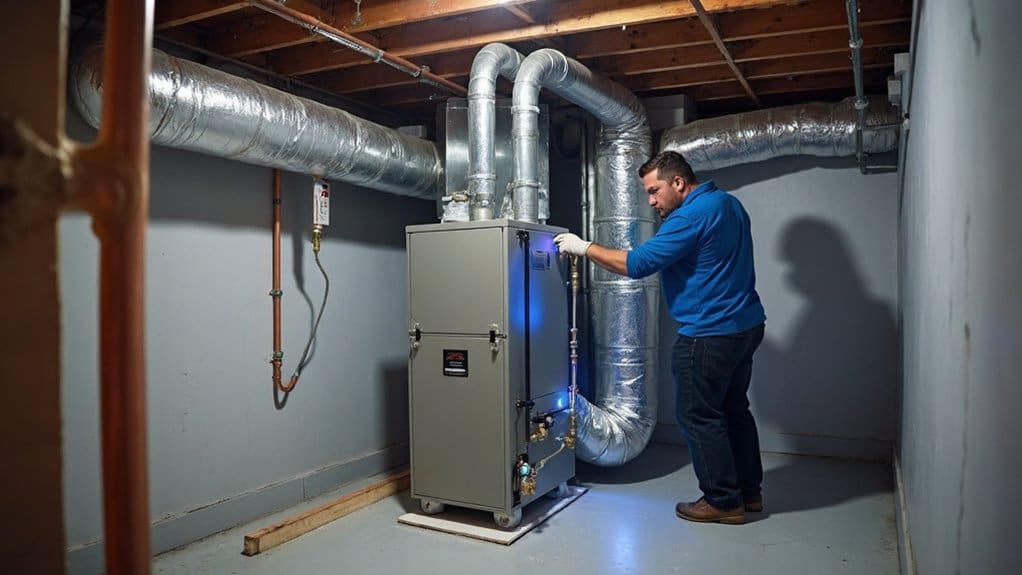
Replacing your furnace requires careful planning and professional expertise to guarantee ideal performance and safety. You’ll need to recognize replacement signs like frequent repairs and rising energy bills, then select the right type and size based on your home’s specifications and local climate. Professional installation typically pays for itself through proper setup, warranty protection, and safety compliance. The process involves pre-installation assessments, old unit removal, new system installation, ductwork integration, and thorough testing. Continue below to master each critical step.
Key Takeaways
- Frequent repairs, rising energy bills, and uneven heating indicate it’s time to replace your current furnace system.
- Choose gas furnaces for efficiency and lower costs, sizing based on home specifications and climate conditions.
- Professional installation ensures safety, warranty protection, and optimal performance despite higher upfront costs than DIY.
- Pre-installation requires ductwork evaluation, load calculations, and safety inspections of gas lines and electrical connections.
- Installation involves removing old equipment, positioning new furnace, connecting utilities, and conducting comprehensive safety testing.
Signs It’s Time to Replace Your Current Furnace
Although your furnace may seem to be running fine, several warning signs can indicate it’s time for a replacement. If your old furnace requires frequent maintenance and costly repairs, you’re likely dealing with an aging system that’s becoming unreliable. Rising energy bills often signal declining energy efficiency, meaning your HVAC system is working harder to heat your homes.
Furnaces over 15 years old typically lack the advanced energy efficiency found in modern heating systems. Check your unit’s Annual Fuel Utilization Efficiency (AFUE) rating – older models often operate at 60-80% efficiency compared to today’s high-efficiency units reaching 90-98% AFUE.
Additionally, if your current furnace size doesn’t adequately heat your home or creates uneven temperatures throughout different rooms, replacement becomes necessary. A new, properly-sized furnace can reduce your heating costs by up to 30% while eliminating frequent breakdowns and providing consistent comfort year-round.
Selecting the Right Furnace Type and Size for Your Home
Once you’ve determined that your furnace needs replacement, selecting the right type and size becomes your next priority. The process of installing a new furnace requires careful consideration of multiple factors to guarantee optimal performance.
Gas furnaces offer superior energy efficiency and lower operating costs, though they require higher upfront investment. Electric systems cost less initially but typically result in increased monthly bills due to electricity rates. Right sizing your new system is essential for even Air distribution and preventing premature wear.
Key factors to evaluate when selecting your heating capacity:
- Home specifications – Square footage, insulation levels, and number of windows directly impact heating requirements
- Local climate conditions – Regional temperature patterns influence the system demands throughout heating season
- Energy efficiency ratings – Higher-rated units reduce long-term operating costs despite increased initial investment
Make sure to consult an HVAC professional who can perform proper load calculations and recommend the ideal furnace type and size for your specific home requirements.
Professional Installation vs. DIY: Cost Analysis and Safety Considerations
The upfront professional installation cost often pays for itself through ideal performance, warranty protection, and peace of mind. Your furnace’s longevity and your family’s safety depend on proper installation techniques that only certified professionals can guarantee.
Pre-Installation Assessment and Preparation Steps
Before any furnace installation begins, you’ll need a thorough assessment of your home’s heating requirements and existing infrastructure. An experienced HVAC contractor will evaluate your home’s size and square footage to determine proper heating capacity. This first step guarantees you’re selecting equipment that matches your home’s heating needs.
Your HVAC contractor will examine several factors to ponder during the assessment:
- Existing ductwork evaluation – inspecting current ducts for damage, leaks, or inadequate sizing that affects efficiency
- Load calculation analysis – determining precise BTU requirements based on insulation, windows, and climate zone
- Safety inspections – checking gas lines, electrical connections, and ventilation systems for code compliance
The assessment also covers ductwork requirements for your new system. Your contractor will identify necessary modifications or upgrades to accommodate the new furnace. Proper preparation prevents installation delays and guarantees optimal performance. This all-encompassing evaluation protects your investment and assures safe, efficient operation.
Step-by-Step Furnace Installation Process
Professional furnace installation typically follows a systematic sequence that guarantees safety and proper operation. The furnace installation process begins with removing the old furnace, which involves removing connections to gas lines, electrical wiring, and ductwork. You’ll need these components disconnected and capped properly before the old unit’s removal.
Installing the New furnace starts with positioning it correctly and securing appropriate clearances. Your technician connects the gas supply line first, followed by electrical connections to power the system. Next, they’ll attach supply and return ductwork, ensuring airtight connections that prevent air leaks.
Critical safety checks follow each connection phase. Gas line pressure testing verifies leak-free operation, while electrical connections undergo continuity testing. The newly installed system requires calibration of controls and thermostat programming.
Once professionally installed, your furnace undergoes final testing including ignition sequences, heat exchanger inspection, and airflow measurements. These thorough checks ascertain your heating system operates safely and efficiently.
Ductwork Modifications and System Integration
How does your new furnace integrate seamlessly with your home’s existing ductwork system? When installing a furnace, your HVAC technician must carefully evaluate your home’s ductwork to guarantee optimal performance. The new system requires proper integration with existing air ducts to deliver even heating throughout your home.
Your technician will assess ductwork size, condition, and layout during furnace installations. They’ll modify connections where necessary and check for leaks that could compromise efficiency. Proper sealing ensures your HVAC system operates at peak performance.
Key modifications may include:
- Resizing ducts to match your new furnace’s airflow requirements
- Adding return air ducts to improve circulation and system balance
- Installing dampers to control airflow distribution to different zones
After modifications, your technician will test the entire system to verify everything’s running smoothly. They’ll measure airflow, temperature distribution, and system pressure to certify your new furnace delivers consistent comfort throughout your home.
Safety Inspections and Performance Testing
Safety remains the top priority once your new furnace installation is complete. Your HVAC professional will conduct extensive safety inspections of all gas and electrical connections to ensure everything runs properly. These checks are indispensable during any typical furnace installation process.
During startup testing, technicians verify your right furnace operates correctly and make necessary adjustments for ideal performance. They’ll monitor for potential safety hazards, including carbon monoxide leaks, and address any efficiency issues immediately. The annual fuel utilization efficiency rating gets validated through meticulous testing procedures.
Ductwork airflow receives thorough balancing to guarantee even heat distribution throughout your home. This step ensures you’re getting maximum value from installing your new system.
After installation, you’ll need to schedule regular maintenance visits. These appointments maintain your warranty coverage and keep your furnace operating at peak efficiency levels, protecting both your investment and your family’s safety.
Post-Installation Setup and Thermostat Configuration
Once safety inspections confirm your furnace operates correctly, proper thermostat configuration becomes the next priority for maximizing your system’s efficiency and comfort. Thermostat calibration guarantees accurate temperature readings and enables customized heating schedules that match your home’s specific needs.
Work closely with your HVAC technician to understand your thermostat’s programming options and features. Programmable thermostats allow you to set automatic temperature adjustments throughout the day, while smart thermostats offer advanced capabilities including remote access and energy usage monitoring. These features contribute enormously to energy savings and enhanced temperature control.
Key configuration steps include:
- Setting up heating schedules that align with your daily routines
- Calibrating temperature sensors for accurate readings
- Programming automatic temperature adjustments for occupied and unoccupied periods
Regular testing and minor adjustments help maintain ideal furnace operation over time. Don’t hesitate to ask questions during setup—proper thermostat configuration directly impacts your system’s long-term performance and efficiency.
Maintenance Tips for Long-Term Furnace Performance
While proper installation and thermostat setup establish your furnace’s foundation, consistent maintenance determines whether your system delivers reliable performance for decades or requires costly repairs within a few years.
Maintenance Tips start with replacing filters every three months. Clean filters improve airflow and indoor air quality while extending your system’s lifespan. Choosing the Right filter type matters—consult your manual for specifications.
Schedule annual professional inspections to catch potential issues early. Technicians optimize performance and prevent thousands in future replacement costs compared to your old unit. Between visits, lubricate moving parts yourself, making certain they operate smoothly with minimal wear.
Keep vents and ducts clear for ideal airflow and energy efficiency. This provides an additional layer of protection against system strain. It’s critical to guarantee your thermostat stays calibrated for accurate temperature control and energy savings.
Consistent maintenance to keep your furnace running efficiently through regular maintenance practices ensures long-term reliability and comfort.
Frequently Asked Questions
How to Prepare for Furnace Installation?
You’ll need heating load calculations to determine furnace size requirements, obtain HVAC permit requirements, check for electrical panel upgrades, inspect ductwork, plan thermostat placement, and schedule permit inspections before installation begins.
What Is the Average Labor Cost to Install a Furnace?
Your wallet’s about to feel lighter—expect $2,000-$4,000 in labor costs. You’ll face hidden installation costs like upgrading electrical panels, permits, disposal fees, and ventilation work when hiring HVAC contractors, depending on furnace size requirements.
Can a Homeowner Install His Own Furnace?
You can attempt DIY furnace installation, but it’s risky. You’ll face furnace installation safety concerns, electrical requirements, gas line connections, code compliance issues, warranty implications, and permit requirements that professionals handle better.
Is a 96% Furnace Better Than an 80% Furnace?
You’ll benefit from a 96% furnace’s superior energy efficiency ratings and fuel savings potential. It offers better environmental impact, long-term cost savings, and climate zone suitability despite higher installation complexity.
Conclusion
You’ve now got the roadmap to navigate your furnace installation journey like a seasoned pioneer charting new territory. Whether you’re replacing an aging unit or upgrading your entire system, you’ll make informed decisions about professional installation versus DIY approaches. Remember, proper sizing, safety inspections, and regular maintenance aren’t optional—they’re essential for maximizing your investment. With your new furnace installed correctly, you’ll enjoy reliable warmth and improved energy efficiency for years ahead.